
 Worksheets
ESS - Scientific Method and Measurement practice
Total questions: 64
Worksheet time: 46mins
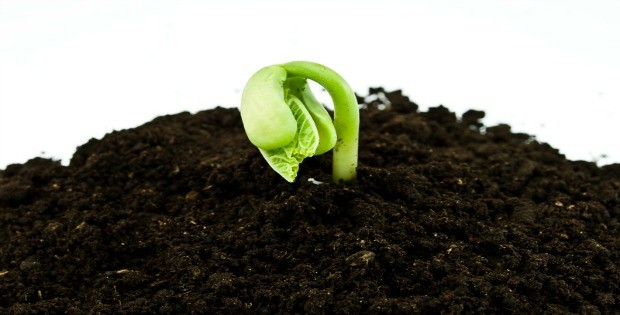
Stephen predicted that seeds would start to grow faster if an electric current traveled through the soil in which they were planted. What did Stephen do?
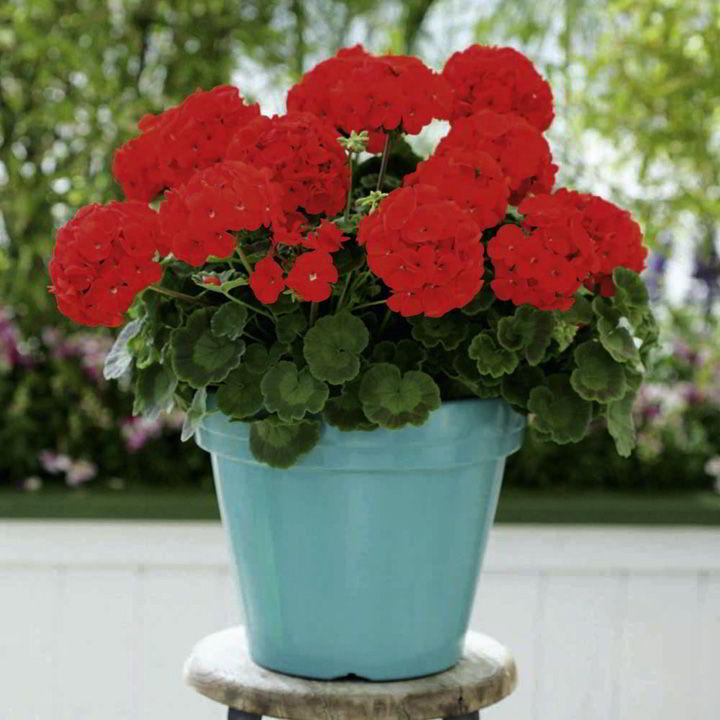
Susan said, “If I fertilize my geranium plants, then they will have more flowers.” What did Susan do?
recognize a problem
test the hypothesis with an experiment
form a hypothesis
draw conclusions
A prediction or possible answer based on observations.
What is the last step of scientific method?
hypothesis
observe
communicate
question
What is an observation?
A scientific statement based on ideas
Using your senses to notice what is going on around you
To be unaware of your surroundings
The question that you want an answer to.
Well tested
Should experiments be repeated over and over by many scientists to see if the results are the same each time?
The information you collect while doing your experiment is called
conclusions
data
hypotheses
procedures
A(n) ___________________________ is what you can learn about an object by using your 5+ senses.
Qualitative Observation
Quantitative Observation
Inference
Hypothesis
Something that you keep the same in an experiment is called a(n) _________________________.
variable
control
procedure
conclusion
I want to know if low strength bleach, medium strength bleach, or maximum strength bleach will get Heinz ketchup stains out of white T-shirts the best. What is the independent variable in this experiment?
the type of stain
the strength of the bleach
the color of shirt
the brand of ketchup
The plastic bottle holds two liters of soda. Is this a Qualitative Observation, Quantitative Observation, or an Inference
Qualitative Observation
Quantitative Observation
Inference
What is an independent variable?
What a scientist changes in an experiment to test their hypothesis
What scientist measure to see if it responded to a change
What happens when you do an experiment
What you keep the same throughout all experimental groups
How many independent variables should you have in an experiment?
two
as many as possible
four
one
What is the first step in the scientific method?
Data
Conclusion
No Horse Play
Observe a problem
Which of the following is an appropriate aim for an investigation
I aim to investigate whether the sky is blue
To see what happens when I add mentos to coke
To investigate the relationship between caffeine intake and reaction time
To investigate how long it takes for a cart to roll down a ramp
Does pipe material affect the temperature of flowing water? What is a controlled variable? (choose 2!)
Temperature of water
Thickness of pipe
Pipe material
Diameter of pipe
The dependent variable is
The variable that you change in an investigation
The variable that you measure in an investigation
A variable that you keep the same in an investigation
The independent variable is
The variable that you change in an investigation
The variable that you measure in an investigation
A variable that you keep the same in an investigation
If I floss more, then I will have fewer cavities. What is the independent variable?
Number of cavities
Amount of flossing
Type of floss used
Amount of brushing
If I put on a higher factor sunscreen, then I will burn less. What is the dependent variable?
Severity of sunburn
Factor of sunscreen
Time spent in the sun
Weather conditions
What is the purpose of controlled variables
To control what happens in the investigation
To make the investigation valid by knowing exactly that one variable that causes the change.
To make the investigation reliable
If I put my batteries in the fridge, they will last longer. What is the control group?
Batteries in the fridge
Batteries on the desk
Batteries in the oven at 150 degrees
Which of the following should you include in your conclusion? (choose 2)
Whether the investigation was valid
A statement of the results of the investigation.
Whether the investigation was reliable
Comparison with the hypothesis
How many ESTIMATED digits should there be when reading a measurement from a piece of lab equipment?

Which of the following choices best represents the length reading from the metric ruler pictured?
87 mm
87.4 mm
87.40 mm
87.400 mm

Which of the following choices best represents the length reading from the metric ruler pictured?
0.8 cm
0.80 cm
0.800 cm
8 cm

A student correctly reads a thermometer as 37.9oC. Which one of these would still be a correct reading from another student?
37.8
40.0
38.9

Which of the following choices best represents the volume reading from the graduated cylinder pictured?
61 mL
61.5 mL
66.5 mL
63.0 mL

Type in the measurement on the graduated cylinder to the correct number of significant digits. No unit.
6.300 mL
6.3 mL
6.30 mL
7.70 mL

Read the graduated cylinder
76.0 mL
76.15 mL
71.9 mL
71.0 mL

How much liquid is in the graduated cylinder?
12 mL
12.0 mL
16.0 mL
None of the above

272.10 cm
270.21 g
272.10 g


What is the reading in the burette above?
33.40cm3
32.60cm3
17.40cm3
16.60cm3

What is the temperature in this thermometer?
-2 degree celsius
-4 degree celsius
-6 degree celsius
-8 degree celsius

What is the temperature of this thermometer?
70 degree celsius
72 degree celsius
74 degree celsius
76 degree celsius
What is the length in meters if the length is 25.2 cm?
252 m
25.2 m
0.252 m
2.52 m
2520 m
your finger is 1.23 cm thick. That is equivalent to
1.23 m
0.123 m
0.0123 m
123 m
You are 1.65 m tall. That is also ---
165 cm
1650 cm
16.5 cm
0.0165 cm
The ceiling is 3.05 m tall. That is also
3.05 cm
30.5 cm
305 cm
0.0305 cm

Find the mass.
5.0 g
0.50 g
0.2 g

What is the mass on this triple beam balance?
576.20g
576g
570g
What is the surface area if the length is 25.0 cm and the width is 17.0 cm?
425 cm2
25 cm2
17 cm2
42.5 cm2
What are the length and width in meters if they are 35.0 cm and 12.0 cm?
35.0 cm and 12.0 cm
35.0 m and 12.0 m
0.35 m and 0.12 m
3.5 m and 1.2 m
Find the surface area the length and width are 0.350 m and 0.120 m
0.0420 m2
0.420 m2
Find the surface area if the length and width are 1.24 m and 0.65 m. Type in only the number with no spaces.
(a)
When we tested the length of the pendulum vs the swing rate, the controls were
length
swing angle
mass
swing rate
When we tested the mass of the pendulum vs the swing rate, the controls were
length
swing angle
mass
swing rate
When we tested the mass of the swing angle vs the swing rate, the controls were
length
swing angle
mass
swing rate
When we performed the pendulum experiment the only dependent variable was the
length
swing angle
mass
swing rate
The only variable that affects swing rate is
length
swing angle
mass
swing rate
Next time you go to the park, swing with a friend and test the experiment with 2 swings of the same length. Your skinny friend will ___ fat friend.
swing at the same rate with your
swing faster than your
swing slower than your
Match the following tools with what they are used to measure.
Ruler
Length
Thermometer
Temperature
Graduated Cylinder
Volume
Electronic Scale
Mass
Stephen predicted that seeds would start to grow faster if an electric current traveled through the soil in which they were planted.
recognize a problem
test the hypothesis with an experiment
form a hypothesis
draw conclusions

