Worksheets
1st Semester 8th Grade Science
Total questions: 52
Worksheet time: 4hrs 20mins
Which factor tends to increase the solubility of a solid in water?
lower mass
greater volume
reduced pressure
higher temperature
Household dish soap is a slightly basic solution. Into which pH range would household dish soap fall?
0.5 - 2.5
4.0 - 5.5
7.5 - 8.0
12.5 - 13.0
The characteristic properties of an acid are due to the presence of
oxide ions.
hydride ions.
hydroxyl ions.
hydrogen ions.
Why does the chloride ion have a -1 charge?
Chlorine atoms gain an electron.
Chlorine atoms lose an electron.
Chlorine atoms share electrons
Chlorine atoms have no electrons.
An aluminum isotope consists of 13 protons, 13 electrons and 14 neutrons. What is its mass number?
13
14
27
30
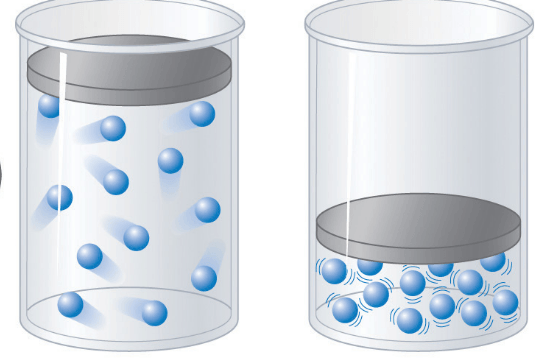
If a gas stays at a constant pressure as the temperature of the gas is decreased, what will happen?
The volume will increase
The volume will decrease
The volume will stay the same
The volume will double in size
In a chemical reaction, how does the total mass of the products compare to the total mass of the reactants?
They are always equal.
The reactants are always smaller
The reactants are always larger.
They are never equal.
Paul made a list about alkaline earth metals.
Alkaline Earth Metals
● gain two electrons
● are found in group two
● ions will be positive two
● include elements Be, Mg, Ca Paul made a mistake on his list.
Which BEST describes the mistake Paul made?
Alkaline earth metals do not gain two electrons; they lose two electrons.
Alkaline earth metals are not found in group two; they are found in group one.
Alkaline earth metal ions will not be positive two; the ions will be negative two.
Alkaline earth metals do not include elements Be, Mg, and Ca; they include Co, Ni, and Cu.
What type of reaction is displayed below?
2NaBr + BaCl2 → 2NaCl + BaBr2
synthesis
decomposition
single replacement
double replacement
Which three elements have the most similar chemical properties?
O, N, Si
K, Rb, Cs
Ar, Kr, Br
B, C, N
The group of elements called the noble gases typically do not chemically react with other elements. This is true because noble gases tend to have
more protons than other elements.
fewer neutrons than other elements.
a full outer shell of valence electrons.
a single valence electron in the outer shell.
Which of the following does NOT increase the rate of dissolving of a solid in water?
constant agitation
raising the temperature
decreasing the surface area
crushing the solid to small pieces
A container of gas is kept at constant pressure. Which best explains what will happen to the volume if the temperature of the gas is increased?
The volume will increase as the temperature increases.
The volume will decrease as the temperature increases.
The volume will increase twice as quickly as the temperature.
The volume will remain the same as the temperature increases.
Lemon juice and coffee are both acidic solutions. Lemon juice has a pH of 2, and coffee has a pH of 5. Which of these solutions is the stronger acid and why?
Lemon juice is the stronger acid, because of the lower pH number and higher concentration of H +.
Coffee is the stronger acid, because of the higher pH number and higher concentration of H +
Lemon juice is the weaker acid, because of the lower pH and higher concentration of OH-.
Coffee is the weaker acid, because of the lower pH number and higher concentration of OH-
As the temperature of a gas increases at constant pressure, the volume of the gas
increases, then decreases.
decreases.
increases.
remains the same.
A substance is classified as an electrolyte because
its aqueous solution conducts an electric current.
it has a high melting point.
its aqueous solution has a pH value of 7.
it contains covalent bonds.
The particles surrounding the nucleus have
a neutral charge.
a negative charge.
a positive charge.
an alternating charge.
Which term refers to a solution to which more solute can be added at the same temperature?
stable
unstable
saturated
unsaturated
Which type of chemical bond is formed by the force between a positive ion (metal) and a negative ion (nonmetal)?
cooperative
covalent
ionic
metallic
What subatomic particles are contained inside an atom?
Atoms contain neutrons and protons inside the nucleus and electrons in a space outside the nucleus.
Atoms contain electrons and protons inside the nucleus and neutrons in a space outside the nucleus.
Atoms contain nuclei and neutrons inside the electron and protons in a space outside the electron.
Atoms contain electrons and nuclei inside the proton and neutrons in a space outside the proton.


Fe is the ___________________ for iron
Letters
Chemical Symbol
Equation
A(n) ______________ is formed when two or more elements chemically combine.
Compound
Element
Mixture
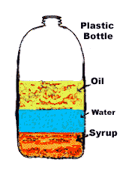

density = volume / mass

.14 g/cm3



Find the mass.
285.3 g
275.5 g
275.3 g


H2SO4
Mg(NO3)2