
 Worksheets
Module 2 Atomic Theory
Total questions: 50
Worksheet time: 29mins
What did Rutherford discover in his experiment?
nucleus
electrons
neutrons
protons
In which model are atoms imagined as tiny balls?
Dalton
Thomson
Rutherford
Bohr
Who proposed a model with electrons moving in specific layers?
Dalton
Rutherford
Bohr
Thomson
What did Thomson's atomic theory model look like?
A ring with gold foil in the middle.
Electrons orbiting the nucleus like the planets around the sun.
A cloud of electrons floating around the nucleus.
A scoop of chocolate chip ice cream. It had electrons scattered within a ball of positive charge.
What is the mass of a proton?
1840 amus
1 amu
1/1840 amus
It has no mass.
What is a particle with no charge?
neutron
electron
proton
atom
What is a negatively charged particle?
neutron
electron
proton
atom

What two particles would you find in the nucleus of an atom?
Protons and electrons
Neutrons and electrons
Protons and neutrons
Electrons and negatrons
Who first came up with the idea of an atom and called them "atomos"?
o Democritus
o Thomson
o Rutherford
o Bohr


How many protons are in all atoms of Sodium?
11
22
12
33

How many electrons are in a neutral atom of Aluminum?
40
27
13
14

How many neutrons are in the average atom of Magnesium?
36
12
24
6

How many electrons are in a neutral Sulfur atom?
32
16
48
8

How many protons are in Chlorine?
35
18
17
52

How many neutrons are in an average atom of Argon?
18
40
58
22

How many neutrons would Iron-55 have?

Copper-92

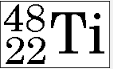
What are the building blocks of matter?
Atoms
Protons
Cells
Neutrons
What charge does an atom have when it GAINS electrons?
Positive
Negative
Neutral
What subatomic particle changes in an ion?
The number of electrons
The number of protons
The number of neutrons
If an atom gains electrons, the charge will be positive.
true
false

Cations are...
Positive
Negative
Neutral

Anions are...
Positive
Negative
Neutral
I am shiny and a good conductor of heat.
metals
nonmetals
metalloids
I am dull... Which element am I?
metals
nonmetals
metalloids
I am a bad conductor of electricity and heat.
metals
nonmetals
metalloids
I am a good conductor of electricity and am malleable.
metals
nonmetals
metalloids
I can be found on the stair-step line on The Periodic Table of Elements.
metals
nonmetals
metalloids
I can be found to the right of the stair-step line on The Periodic Table of Elements.
metals
nonmetals
metalloids
I can be found to the left of the stair-step line on The Periodic Table of Elements.
metals
nonmetals
metalloids
I have properties of both metals and nonmetals.
metals
nonmetals
metalloids

Metal
Nonmetal
Metalloid

Metal
Nonmetal
Metalloid

Metal
Nonmetal
Metalloid

Metal
Nonmetal
Metalloid

Metal
Nonmetal
Metalloid
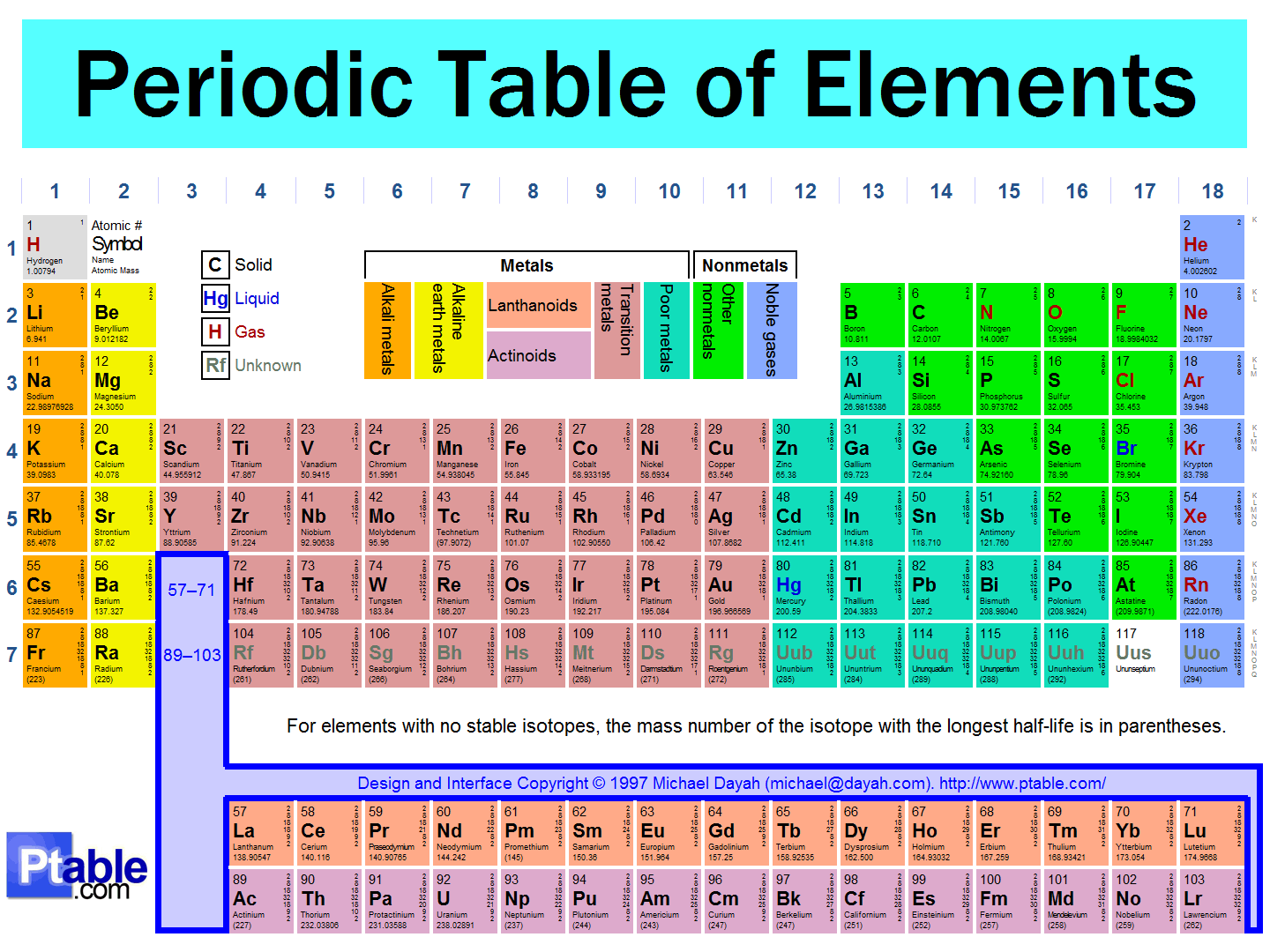
The vertical (up and down) columns in the Periodic Table are called
groups
towers
periods
atomic numbers
Name this group: These metals are the second most reactive.


Name this group: These metals contain familiar metals such as gold, iron, and copper.



