
 Worksheets
Human Biology Exam 1
Total questions: 52
Worksheet time: 27mins
You document vital signs you obtained on a resident. This information is:
Objective
Subjective
"My head hurts when I stand up", is what type of information?
Objective
Subjective
A hypothesis _______while a prediction________.
is a testable and falsifiable statement....is an expectation of a certain result
is an expectation of a certain result...explains the result
describes the process of an experiment....is the analysis of the experiment
is a description of natural phenomena...an inquiry about why the phenomena behaves in a certain way
an inactive substance or fake treatment used to control for confounding variable
Causation
Evolution
Placebo
Independent Variable
A type of reasoning that uses general facts, definitions, and accepted properties in a logical order to write a logical argument.
Inductive
Deductive
Logic
Reasoning

What is the difference between the number of frogs in the pond when the rainfall was 5cm and when the rainfall was 20cm?
20
40
50
60

How many more average daily calories are needed by a 17 year old male than by a 17 year old female?
300
500
2700
3000
Which particle has a positive electrical charge?
proton
neutron
electron
Which particles make up the nucleus of an atom? (you can choose more than one answers)
proton
electron
neutron
Protons have a negative electrical charge
true
false
What is the atomic mass of an atom with 32 protons and 31 neutrons?
31
32
62
63
How many neutrons are there for an atom with a mass of 20 and 11 protons?
9
11
20
31
Which of the following has a double bond?


What is the number of valence electrons of Oxygen?
1
2
6
8

How many electrons are being shared between the two carbon atoms in the compound ethyne?
1
2
3
6
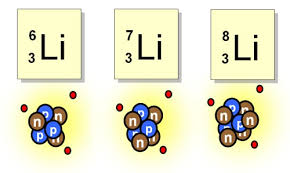

Atoms have a total charge of zero if the number of protons and the number of electrons are equal.
true
false
If the atom as more electrons, it is left with a negative charge.
true
false
Which of these is an ion?
H2O
CO2
Li +2
4(C6H12O6)
Because water is polar, it is able to dissolve most substances that are polar or ionic.
True
False
Why is it difficult to wash oil from your hands with plain water?
Both substances are polar. Like polarities repel.
Both substances are nonpolar. Like polarities repel.
Water is nonpolar, and oil is polar, so they will not combine.
Water is polar, and oil is nonpolar, so they will not combine.
Name the type of bonding in which the electrons are shared.
Ionic bonding
Covalent bonding
Metallic bonding
In a(n) _____ bond, an atom takes/gives an electron.
covalent
hydrogen
ionic
metallic
Ice has less density as compared to water due to ___________ bonds.
ionic
hydrogen
covalent
metallic
Water molecules tend to make _____________ bonds with each other.
ionic
polar covalent
metallic
hydrogen
What is cohesion?
The ability of a molecule to "stick" to itself
The ability of a molecule to "stick" to other molecules
Large amounts of energy are required to change the temperature of a substance
A well-organized and efficient team

What property of water causes these Alka-Seltzer tablets to dissolve?
Universal Solvent
Expansion Upon Freezing
Cohesive Behavior
High Specific Heat
A solution with a pH of 6 is 100 times less acidic than a solution with a pH of
(a)
Which of the following pH values represent the highest concentration of hydronium ions?
8
4
14
2
A pH of 4 is how many times more acidic than pH of 6?
(a)
Following the release of insulin - the conversion of excess glucose in the bloodstream to glycogen for storage in the liver and skeletal muscles is known as:
Glycolysis
Glycogenolysis
Lipolysis
Glycogenesis
Lipids are made up of_______ (3 ANS)
Hydrogen
Nitrogen
Oxygen
Helium
Carbon
What are different examples of lipids?
triglycerides, waxes, phospholipds
monosaccahrides, disaccharides, starch, cellulose
dipetide, polypeptide, amino acids
DNA, RNA, ATP
hydrophilic
water loving
hydrophobic
water fearing
polar
has a charge
non polar
no charge


carbohydrate
monosaccharide
protein
amino acid
lipid
fatty acid
nucleic acid
nucleotides

What is the following molecule?
triglyceride
phospholipid
steroid
protein
How would you classify a hormone that is made from cholesterol, such as a sex hormone?
steroid hormone
amine hormone
peptide hormone
protein hormone
1. Which type of hormone is fat soluble?
Steroid Hormone
Non-steroid Hormone

