
 Worksheets
Foundations of Constitutional Government
Total questions: 66
Worksheet time: 2hrs 0mins
What were the big three natural rights according to John Locke?
Pursuit of happiness
Liberty
Property
Money
Life
Which of the following answer choices describes an Authoritarian government?
A government that controls all aspects of its citizens lives
A system of government in which the people rule
A type of government without a Constitution
Which of the following answer choices describes a Democratic government.
A government that is not limited
A system of government in which the people rule
A government that controls all aspects of its citizens lives
North Korea: One man leads North Korea and controls its government. He also controls the ruling political party. The ruling political party chooses candidates for an Assembly, and citizens vote. The candidates do not have opponents, so citizens have no real choices.
Direct Democracy
Dictatorship
Monarchy
Representative Democracy
A monarchy can be like a dictatorship or it can be part of a democracy.
True
False
A democracy can have both representatives and direct characteristics at the same time.
True
False
There are ___ branches of government.
5
4
3
2
The president works under ___.
the legislative branch
the judicial branch
all branches
the executive branch
The Legislative Branch is made up of ___.
the President and Vice President
the Supreme Court and President
judges and police
the Senate and House of Representatives
There are ___ Senators in the Senate.
435
100
535
50
There are ___ Representatives who work in the Legislative Branch.
435
100
535
50
There are ___ Supreme Court Justices.
10
9
8
7
The job of the Legislative Branch is to ___ laws.
carry out
administer
make
interpret
Supreme Court Justices work under ___.
the Executive Branch
the Legislative Branch
the Judicial Branch
all branches
The 3 branches of government are ___.
Executive, Legislative, and Judicial
Judges, Senators, and Secretaries
President, Vice President, and the Cabinet,
City, State, and County
Members of ___ may serve until they die or retire.
the Legislative Branch
the Executive Branch
the Judicial Branch
no branch
It is ___ that the number of Senators is the same for all states.
true
false
The number of Representatives a state has is based on the its ___.
location
economy
population
size
What system of government is based on dividing power?
Federal
Confederate
Unitary
None of these
In this form of democracy, DIRECTLY elect whatever they are voting for
Direct Democracy
Representative Democracy
Republic
None of These
In these elections, representatives speak on behalf of the citizens that elected them
Direct Democracy
Representative Democracy
Town Hall Meetings
None of These
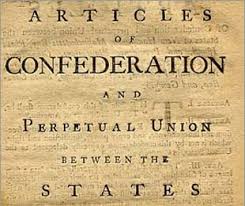

Which document was the United States' first official constitution?
Articles of Confederation
Declaration of Independence
Mayflower Compact
Magna Carta
Why did the colonists write the Declaration of Independence?
To officially break away from Britain
As a final attempt at peace with Britain
To form the U.S. military
To get France on their side
What are unalienable rights?
rights that can't be taken away
rights that can be denied
rights that are temporary
rights that can be removed at any time
Which country did the colonists declare independence from?
France
Spain
Great Britain
United States
How many grievances are in the Declaration of Independence?
3
4
13
27
Who was the leader of the Second Continental Congress
Thomas Jefferson
Thomas Paine
John Hancock
John Locke
When was the Declaration of Independence signed?
July 4 1776
July 17, 1776
July 4, 1774
August 2, 1776
Based on the US Constitution, the government is run by _________.
The President
Congress
The Supreme Court
"The People"
What was the purpose of the Constitution?
It was created to break away from England.
It was a plan for how the government would run that guaranteed our rules, rights, and responsibilities.
It freed the slaves
It said that England and the U.S. would always be enemies.
A system of __________ and __________ is used to keep any one branch of the government from being dominant, or having too much power.
checks and balances
power and authority
politics and philosophy
life and liberty
When was the Constitution written?
1776
1781
1787
1789
How many articles are there in the Constitution?
27
7
10
3
Ratification means...
To Approve
To Deny
To Block
To Allow
Which are the two steps of the amendment process?
proposal
ratification
executive confirmation
Which can officially propose an amendment?
Congress alone
state legislatures alone
state legislatures via Congress and National Conventions
the executive
Which can officially ratify an amendment?
Congress alone
state legislatures alone
state conventions
the executive
Which statement accurately reflects the Amendment process to the U.S. Constitution so far?
All 50 states must approve the Amendment in their legislatures.
The majority of the U.S. Congress must approve the amendment; state involvement isn’t necessary.
The process starts in the U.S. Congress and final approval rests with the states.
The process starts in the State Legislature and final approval is given by the U.S. Congress.
Which amendment gives Americans the right to own a weapon?
4th
7th
11th
2nd
Which of the following rights and freedoms is specifically guaranteed by the first 1st amendment?
Right to an education
Right to bear arms
Freedom of press
Right to privacy
Lin is a Buddhist. He just moved to a new town in Iowa that has banned all religions. The sheriff has threatened to arrest him if he didn’t take an oath against his religion. Which amendment has the sheriff violated?
1st
3rd
5th
7th
Bob wrote a letter to the editor complaining about the way the government is treating convicts in federal prisons. Because of his letter, Bob was arrested and placed in jail. Which amendment was violated?
2nd
5th
8th
1st
An Anti Federalist believed...
There should be a weak central government
There should be a powerful central government
An anti-federalist
Supported checks and balances, separation of powers
Wanted the executive branch to have ultimate power
These were the people who wanted to ratify the new Constitution
Federalists
Anti-Federalists
These people argued that the Constitution did not protect individual rights, and that a bill of rights was needed to protect freedom of speech, religion, and the press
Federalists
Anti-Federalists

