
 Worksheets
Unit 1 Test Review
Total questions: 118
Worksheet time: 30hrs 30mins


A flat surface made up of points that has two dimensions and extends without end.


Line q
Line p
Line r


True or False: Points B, C, and D are coplanar.
True
False

Which among a point, a line, or a plane does a floor represent?
point
line
plane

plane FKD
Any 2 collinear points on the plane or a lowercase script letter.
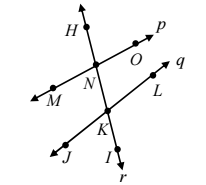


Give another name for line k.
Line BC
Line BCF
Line ED
Line k is the only name, there isn't another name.


A _____ is a specific location. It has no dimension width or height.
Plane
Line Segment
Point
Ray
___ _____ is a point at either end of a line segment or the starting point of a ray.
End point
Midpoint
Starting point
Plane
A ______ is a connected straight path. It has no thickness, and it continues forever in both directions.
Ray
Line Segment
Line
Plane
A _____ is a portion of a line that starts at a point & continues forever in one direction.
Ray
Line Segment
Line
Plane
A _____ is a 2D surface that extends infinitely.
Ray
Line Segment
Line
Plane
Points that fall on the same line.
Coplanar
Collinear
Objects that fall within the same plane.
Coplanar
Collinear

What is the correct name of the plane?
N
n
AE
C

Name the 3 Collinear points on this plane.
C, B, & D
C, B, & A
A, B, & E
E, C, & D

List objects that are Coplanar.
B, C, & E
A, B, & D
B, D, & E
C, B, & D

What is the missing value of segment DE?
15
16
44
26

Find the value of TU
-12
32
12
20

25
13
16
28

9
13
22
4

19
30
12
43

Solve for X
3
12
4
5

Given X = 3
Solve for Segment ST
2
7
5
10

Solve for X
-18
2
6
3

Find the value of HF
11
-7
18
12

Find the value of FG
7
-6
13
11
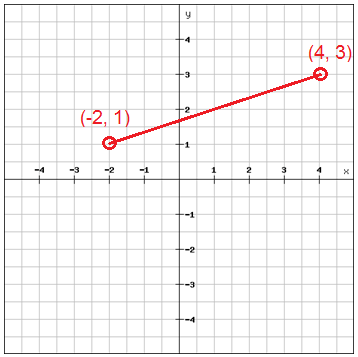
A(3,1) B(-2,-1) written correctly is:
(−2−3)2 + (−1−1)2
(1−3)2 + (−1−2)2
(−2−3)2 − (−1−1)2
(−2−3)2 − (−1−1)2
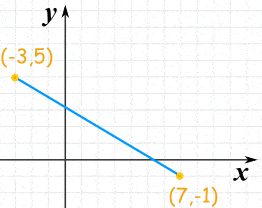
How is the distance formula correctly written:
d = (y1 − y2)2 −(x2 − x1)2
d = (x2 − x1)2 + (y2 − y1 )2
d = (y1 − y 2)2 + (x2 − x1)2
d = (x)2− (y)2
Use the Distance Formula to find the distance between:
(8,8) and (3,-4)
(a)
Use the Distance Formula to find the distance between:
(-6,-3) and (-4,-8)
5.3
7.1
6.6
4.8
Use the Distance Formula to find the distance between:
(1,5) and (3,8)
7
5.4
2.2
3.6
Use the Distance Formula to find the distance between:
(3,7) and (-5,-8)
(a)
Use the Distance Formula to find the distance between:
(-2,-1) and (6,5)
(a)
Which of the following is the correct midpoint formula given two endpoints (x1, y1) and (x2, y2)?
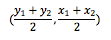
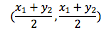
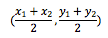

Find the endpoint of the segment with the endpoint of (-4, 5) and midpoint of (7, 9)
(18, 13)
(13, 18)
(11,4)
(1.5, -2)


Find the midpoint:
(−1,3)
(3,4)
(4,3)
Find the distance between the points (4, 3) and (0, 6).
3
4
5
7

Find the distance.
9.7
10.7
11.7
12.7
What is the midpoint of the line segment connecting (-2, 6) and (4, 14)?
(1, 4)
(3, 10)
(1, 10)
(2, 8)
∠ABC and ∠CBD are supplementary angles, m∠ABC = (5x + 12)° and m∠CBD = (13x + 24)°. Find x.
(a)
∠ABC and ∠CBD are supplementary angles. m∠ABC = (5x + 12)° andm∠CBD = (13x + 24)°. Find m∠ABC.
(a)
Find midpoint: (2, -11) (-9, 0)
Find midpoint: (5,9) (-1,9)
Find the other endpoint of the line segment with the given endpoint (1,-9) and midpoint (-9,3)
(-19,15)
(5,-6)
(-4,-3)
(6,2)
Find the other endpoint of the line segment with the given endpoint (4,0) and midpoint (-2,8)
(3,-4)
(-8,16)
(2,3)
(5,9)

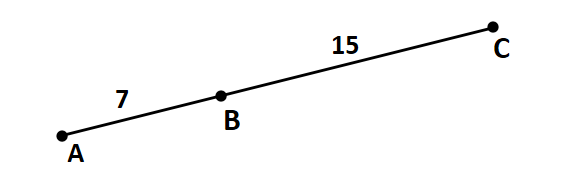


Use the picture to write the correct Segment Addition statement.
AB + BC = AC
BC + BA = BC
BA + AC = BC
AB + BA = AC


Find x
DE + EF = DF
(a)


Name a point in the interior of <PQR.
P
Q
W
R

160
130
30
8

Calculate m∠ABC.
45°
60°
105°
15°

Calculate m∠DEF.
180°
60°
120°
80°

x = 6°
x = 7°
x = 12°
x = 144°

x = 5°
x = 11°
x = 33°
x = 55°

50°
58°
115°
226°

If m∠RST = (12x -1)°, m∠RSU = (9x -15)°,
and m∠UST = 53°, find each measure.
x = 13
m∠RST = 155°
m∠RSU = 102°
x = 3
m∠RST = 35°
m∠RSU = 12°
x = 22
m∠RST = 263°
m∠RSU = 183°
x = 8
m∠RST = 95°
m∠RSU = 57°


∠1 and ∠2 form a linear pair.
If m∠1 = (5x + 9)° and m∠2 = (3x + 11)°, find the measure of each angle.
m∠1 = 110° and m∠2 = 70°
m∠1 = 109° and m∠2 = 71°
m∠1 = 70° and m∠2 = 110°
m∠1 = 71° and m∠2 = 109°
∠K and ∠L are complementary angles.
If m∠K = (3x + 3)° and m∠L = (10x -- 4)°, find the measure of each angle.
m∠K = 24° and m∠L = 66°
m∠K = 66° and m∠L = 24°
m∠K = 40° and m∠L = 50°
m∠K = 30° and m∠L = 60°
What are complementary angles?
Angles that add up to 180°
Angles that add up to 90°
Angles that are equal to each other
Angles that are opposite of each other when lines intersect.


Find the missing angle
65
75
55
50


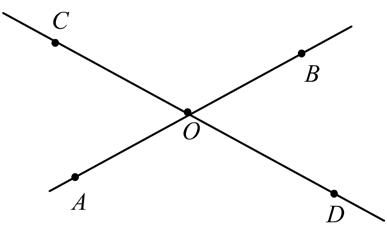
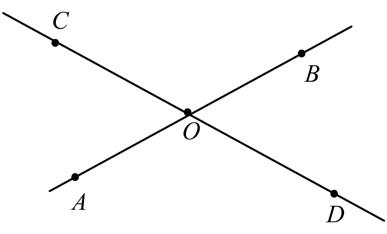
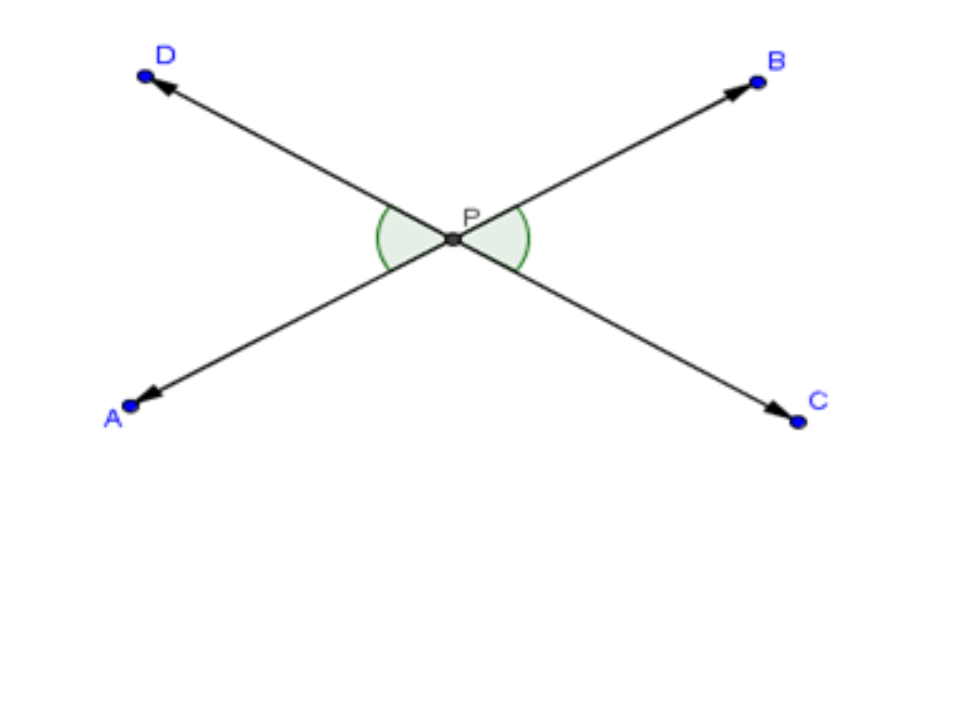
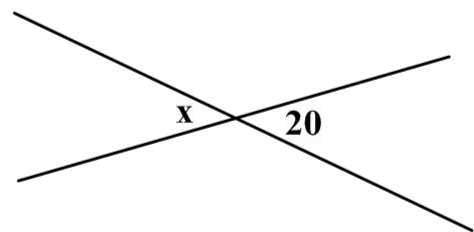

If AB = 2x −5, and BC = 3x+12 and AC =27, solve for x.
5
3
4
24

If M is the midpoint of AB, which statement must be true?
The sum of AM and MB are equal.
AM≅AB
AB −AM =MB
AB +AM =MB

Which angle is adjacent to ∠1?
∠3
∠6
∠5
∠4
The measure of an angle is 47° .
What is the measure of it's supplementary angle?
133°
47°
43°
90°
The measure of an angle is five times the measure
of it's complementary angle. What is the measure of the angles?
15° and 75°
171° and 9°
18° and 72°
36° and 144°

Solve for w.
9
11
27
3

Solve for n.
13.5
8
8.5
-8

Apply rules for angle relationships to solve for m.
9
18
45
90
∠A and ∠B are supplementary angles. If m∠A=(3x+18)°, and m∠B=(2x+17)° then find the measure of ∠A.
75°
105°
87°
29°
∠A and ∠B are vertical angles. If m∠A=(3x−29)°, and m∠B=(2x+26)° then find the measure of ∠B.
136°
55°
87°
29°

Which angle is a vertical angle to ∠EGD
∠AGB
∠AGF
∠CGE
∠CGB

