
 Worksheets
Biological Macromolecules
Total questions: 33
Worksheet time: 17mins
The element (a) is found in all of the organic compounds.

What are the single sugars that are the building blocks of carbohydrates?
(a)

Carbon, Hydrogen, Oxygen, and Nitrogen are elements that makes up in what biomolecule?
(a)

Which biomolecule is this a picture of?
Lipids
Carbohydrates
Proteins
Nucleic acids

What is the purpose of an enzyme?
Control how many reactions occur
Raise activation energy
Speed up reactions
Give permission to the reaction

What is the function of nucleic acids?
store energy (long term)
store energy (short term)
build skin, hair, nails, and mucles
store genetic information
Proteins are made of monomers called _________.
Glycerol and fatty acids
Monosaccharides
Nucleotides
Amino acids
Which biomolecules are significant features of the cell membrane?
carbohydrate and nucleic acid
lipids and nucleic acid
nucleic acids and proteins
proteins and lipids
Atom is the basic unit of the chemical element. what are the atoms that makes up carbohydrates.
C and H
C, H and N
C, H and O
C, H, N and O

What is the best explanation for a meniscus of water in a capillary tube?
Cohesive property is stronger than adhesive
Adhesive property is stronger than cohesive
Surface tension is causing water molecules to be pulled down
Adhesive and cohesive properties are of the same strength
Which of the following functional groups would you always find in an amino acid?
-OH
-NH2
-CO
-CH3
Which of the following is true of RNA?
Double stranded helix
Has the base Thymine
Is single stranded
Has the sugar deoxyribose
Amino acids are classified according to
the properties of the amine group
the properties of the carboxyl group
the properties of the R group
The tertiary structure of a protein is dependent on
the sequence of amino acids
interactions between the amino acid backbone
the interactions of the R groups
Binding of two or more polypeptides together

The image shows two different fatty acid chains which might be part of a phospholipid. Which one would most likely be found in a fish living in the Arctic?
Fatty acid A because it is saturated and will give fluidity to the membrane
Fatty acid B because it is saturated and will give rigidity to the membrane
Fatty acid A because it is unsaturated and will give fluidity to the membrane
Fatty acid B because it is unsaturated and will give the membrane more fluidity
Which statement describes an ionic bond?
Two atoms share a pair or electrons equally
Two atoms share a pair of electrons unequally
One atom gives up an electron to another, and oppositely charged atoms form a bond

What type of reaction is shown in the image?
Dehydration reaction
Hydrolysis reaction
DNA replication
Which of the following might denature proteins?
Increased temperature
Change in pH
Ultraviolet light
All of these would denature proteins
Why is water considered polar?
Nonpolar covalent bonds in structure
Ionic bonds in structure
Polar covalent bonds in structure
Hydrophobic interaction in structure

What gives rise to the cohesiveness of water molecules?
hydrophobic interactions
nonpolar covalent bonds
ionic bonds
hydrogen bonds

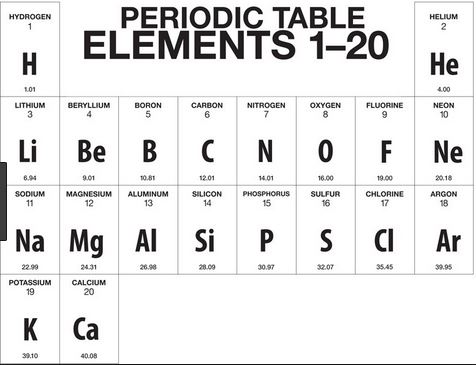
How many valence electrons does Nitrogen Have?
1 Valence electron
2 Valence electron
3 Valence electron
4 Valence electron
5 Valence electron

What functional group is shown?
carbonyl
hydroxyl
carboxyl
amino


