
 Worksheets
Organic Chemistry Chy 32
Total questions: 70
Worksheet time: 3585secs
Is the study of nonorganic substances, many of which have organic fragments bonded to metals (organometallics).
Organic chemistry
Inorganic chemistry
Analytical chemistry
Physical chemistry
Contain primarily carbon and hydrogen atoms, plus nitrogen, oxygen, sulfur, and atoms of other elements.
Inorganic chemistry
Analytical chemistry
Organic chemistry
Physical chemistry
Is the parent compound of all organic compounds.
Carbon
Hydrocarbon
Hydrogen
Heteroatoms
What are the types of hydrocarbons?
Containing only single bonds.
Alkanes
Alkenes
Alkynes
Aromatic Hydrocarbons
Containing carbon-carbon double bonds.
Alkanes
Alkenes
Alkynes
Aromatic hydrocarbons
Containing carbon-carbon triple bonds.
Alkanes
Alkenes
Alkynes
Aromatic hydrocarbons
Containing the benzene ring.
Alkanes
Alkenes
Alkynes
Aromatic Hydrocarbons
Is the chemistry of compounds that contain the element.
Chemical chemistry
Physical chemistry
Analytical chemistry
Organic chemistry
It is one branch in the entire field of chemistry, which encompasses many classical subdisciplines including inorganic, physical, and analytical chemistry, and newer fields such as bioinorganic chemistry, physical biochemistry, polymer chemistry, and materials science.
Inorganic chemistry
Analytical chemistry
Organic chemistry
Physical chemistry
It is the study of the compounds that contain carbon, many of which are found in living organisms.
Analytical chemistry
Organic chemistry
Inorganic chemistry
Physical chemistry
What are examples of organic chemistry?
What are examples of biomolecules?
What are examples of synthetic?
By studying the principles and concepts of organic chemistry, you can't learn more about compounds and how they affect the world around you.
True
False
Organic chemistry provides both comforts and necessities that were previously nonexistent, or reserved for only the wealthy.
True
False
Organic chemistry has found a way to increase in life span, from 47 years in 1900 to over 70 years today.
True
False
Organic chemistry allowed us to increase insect populations that spread diseases.
True
False
Organic chemistry helps decrease food production.
True
False
What are the products of organic chemistry that are commonly used in medicine?
As a group 4A nonmetal, carbon atoms have the unique ability to form five strong covalent bonds.
True
False
Carbon forms strong π-bonds.
True
False
Carbon atoms can bond together, forming short chains and rings.
True
False
What are the 3 Major Structural Units of Carbon? (answer in the format: sp = structure, bond angle = answer)
What are some Representative Organic Molecules? (answer in the format: formula - name)
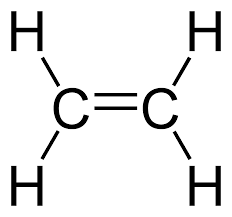
Classify the compound based on the functional group present.
Alkane
Alkene
Alkyne
Aromatic hydrocarbons

Classify the compound based on the functional group present.
Methane
Ethane
Propane
Butane

Classify the compound based on the functional group present.
Methane
Ethane
Propane
Butane

Classify the compound based on the functional group present.
Acetylene
Ethanol
Methane
Isocrophyl

Classify the compound based on the functional group present.
Acetylene
Ethanol
Methane
Isocrophyl
Complicated organic compounds contain many carbon atoms that organic chemists have devised a shorthand notation to draw them.
True
False
Are actual, three-dimensional entities. Their structure is a major factor that determines their physical properties and the way one molecule interacts with another molecule.
Compounds
Particles
Molecules
Substances
Normally too small to see.
Molecules
Particles
Substances
Compounds
A devised way to visually represent molecules.
Molecular formula
Empirical formula
Structural formula
Condensed formula
Is a graphical representation of the molecular structure, showing how the atoms are arranged.
Structural formula
Condensed formula
Empirical formula
Molecular formula
What are the common representations of organic structure used?

Classify the compound based on the functional group present.
Methane
Ethanol
Heptane
Acetylene
Provides the backbone of all organic compounds. Each carbon atom in a hydrocarbon forms a total of FOUR BONDS.
Carbon
Heteroatoms
Hydrocarbons
Hydrogen
Hydrocarbons provide the backbone of all organic compounds. Each carbon atom in a hydrocarbon forms a total of FOUR BONDS. These bonds are combinations of single bonds with hydrogen atoms and single or multiple bonds with other carbon atoms.
Two-dimentional structural formula
Condensed structural formula
Bond-line structural formula
A common notation developed to abbreviate the drawing without sacrificing the clarity of the structure.
Two-dimensional structural formula
Condensed structural formula
Bond-line structural formula
Shows all the atoms explicitly and the bonds between them are inferred.
Two-dimensional structural formula
Condensed structural formula
Bond-line structural formula
Condensed formulas for linear structures are straightforward.
True
False
Condensed formulas for branched molecules are done by enclosing branching group(s) in commas.
True
False
Both the ends and the angles of the structure represent the carbon atoms. C—H bonds are not shown, but
you should assume that the appropriate number of hydrogen atoms is present to complete the four bonds
required by carbon to have its octet of electrons.
Two-dimentional structural formula
Condensed structural formula
Bond-line structural formula
In drawing bond-line structures, each carbon is represented by the end of a line segment or the junction between a two line segments.
True
False
All hydrogens attached to carbons are drawn.
True
False
All other atoms (heteroatoms and hydrogens attached to heteroatoms) are SHOWN explicitly.
True
False

Classify the bond-line structure.
Butane
Ethane
Ethene
2-methylpropane

Classify the bond-line structure.
Butane
Ethane
Ethene
2-methylpropane
Hydrogen atoms attached to heteroatoms are shown vulgarly.
True
False
These are atoms other than carbon and hydrogen.
Heteroatoms
Hydrogen
Hydrocarbon
Carbon
Hydrogen atoms bonded to carbons must be inferred.
True
False
Contains carbon.
Organic compounds
Inorganic compounds
Contains oxides of carbon like CO, CO2, carbonates such as CaCO3, K2CO3, MgCO3, and CaC2
Organic compounds
Inorganic compounds
Involves almost all of the elements in the
periodic table
Organic chemistry
Inorganic chemistry
Link with ionic bonds.
Organic compounds
Inorganic compounds
Link with covalent bonds.
Organic compounds
Inorganic compounds
Need for catalyst and nearly always side reactions occur.
Organic compounds
Inorganic compounds
Form ions in solution and therefore known as electrolytes.
Organic compound
Inorganic compound
Molecules easily melted.
Organic compounds
Inorganic compounds
Can be synthesized in the lab.
Organic compounds
Inorganic compounds
Molecular weights.
Organic coumpounds
Inorganic compounds
Readily soluble in water.
Organic compounds
Inorganic compounds
Volatility.
Organic compounds
Inorganic compounds
Combustibility.
Organic compounds
Inorganic compounds
Nature of molecules (how easy to melt).
Organic compounds (covalent)
Inorganic compounds (Ionic)
How does an organic compound react when temperature is raised.
React rapidly
React moderately fast
No reaction
How does an inorganic compound react when temperature is raised.
React rapidly
React moderately fast
No reaction
Organic compounds melting temperature.
Usually melts at temperatures above 700°C
Usually melts at temperatures lower than 300°C
Doesn't melt at all
Inorganic compounds melting temperature.
Usually melts at temperatures above 700°C
Usually melts at temperatures lower than 300°C
Doesn't melt at all

