Wayground logo

Free Printable Worksheets

Font size

S
M
L
XL
Worksheets

Week 5 Review Quiz

Total questions: 37

Worksheet time: 28mins

Name
Class
Date
1.
The proton is _____
a)
heavy and neutral
b)
heavy and negatively charged
c)
heavy and positively charged
d)
light and negatively charged
2.
The neutron is _____
a)
heavy and neutral
b)
heavy and negatively charged
c)
heavy and positively charged
d)
light and neutral
3.
The electron is _____
a)
heavy and positively charged
b)
light and positively charged
c)
light and neutral
d)
light and negatively charged
4.

Which subatomic particles determine the identity of an element?

a)

electrons

b)

protons

c)

neutrons

d)

photons

5.
The number of protons in an element is its _____
a)
atomic weight
b)
relative atomic mass
c)
atomic number
d)
mass number
6.
In chemistry, how many types of subatomic particles are considered to form everything?
a)
two
b)
three
c)
92
d)
billions
7.
Atoms of the same element have the same number of _____
a)
electrons in their nuclei
b)
orbiting protons
c)
neutrons in their nuclei
d)
protons in their nuclei
8.
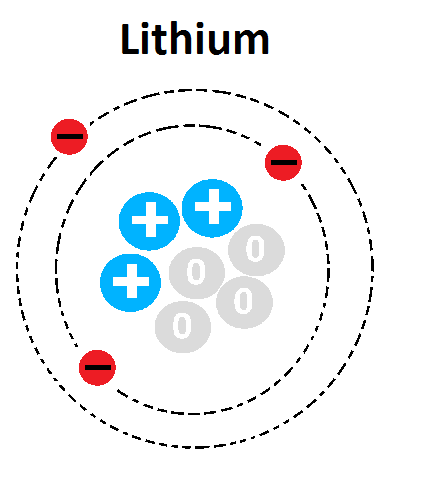
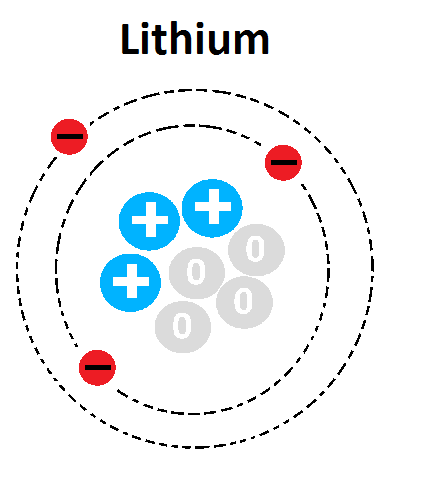
What is the atomic number of this atom?
a)
1
b)
3
c)
4
d)
7
9.

What is the mass number of this atom?

a)

1

b)

3

c)

4

d)

7

10.

Atoms of the same element which have a different number of neutrons are called _________________.

a)

ions

b)

isotopes

c)

quarks

d)

molecules

11.

How many electrons are in an neutral atom with an atomic number of 50?

a)

5

b)

8

c)

50

d)

2

12.
Outside the nucleus of an atom are these
a)
protons
b)
neutrons
c)
quarks
d)
electrons
13.
The term "neutral" means
a)
having only a little bit of charge
b)
having a positive charge
c)
having a negative charge
d)

having an equal balance of positive and negative charges

14.

The atomic mass of an atom is equal to

a)

number of protons plus number of neutrons

b)

number of protons plus number of electrons

c)

number of electrons plus the number of neutrons

15.

What is the atomic number?

a)

35

b)

18

c)

17

d)

52

16.

How many neutrons does calcium have?

a)

20

b)

40

c)

60

d)

0

17.

What is the atomic mass of Neon?

a)

10

b)

20

c)

30

18.

What is the atomic mass of Arsenic?

a)

33

b)

107

c)

75

19.
How many electron shells/levels does this atom have?
a)
1
b)
2
c)
3
d)
4
20.

An atom is electrically neutral because

a)

the numbers of protons and neutrons are equal.

b)

the numbers of protons and electrons are equal.

c)

neutrons balance the protons and electrons.

21.
What is the atomic number of this nucleus?
a)
1
b)
3
c)
4
d)
7
22.
What is the atomic number of this atom?
a)
9
b)
10
c)
19
d)
27
23.
What is the atomic number of this atom?
a)
2
b)
4
c)
6
d)
none of the above
24.
What is the atomic number of this atom?
a)
1
b)
2
c)
3
d)
4
25.
What is the atomic number of this atom?
a)
7
b)
14
c)
21
d)
none of the above
26.
What is the atomic number of this atom?
a)
8
b)
16
c)
24
d)
none of the above
27.
How many electrons does Boron have?
a)
5
b)
11
c)
6
28.
How many neutrons does Sodium have?
a)
11
b)
23
c)
12
29.
What is the atomic number of Fluorine?
a)
9
b)
19
c)
10
30.

Two atoms that are different isotopes of the same element have

a)

the same number of protons and same number of neutrons

b)

the same number of protons but a different number of neutrons

c)

a different number of protons but the same number of neutrons

d)

a different number of protons and a different number of neutrons

31.

If an atom has 9 protons and 10 electrons it has a charge of ____.

a)

0

b)

-1

c)

+1

d)

-2

32.

If an atom has 4 protons and 2 electrons it has a charge of ____.

a)

0

b)

-2

c)

+2

d)

+1

33.

If an atom has a charge of 0 (neutral) and an atomic number of 8 it should have ____ electrons.

a)

0

b)

8

c)

7

d)

9

34.
Adding or subtracting neutrons (charge = 0, mass = 1) makes the element change into an...
a)
ion
b)
mixture
c)
isotope
d)
neutral atom
35.

What charge does an atom have when it GAINS electrons?

a)

Positive

b)

Negative

c)

Neutral

36.

The parts of an atom are known as the the __________ __________.

a)

molecules

b)

particles

c)

subatomic particles

d)

pieces

37.

The positively charged protons are located ____________________.

a)

in the compounds

b)

in the neutrons

c)

on the electron shells

d)

inside the nucleus