wayground logo

Free Printable Worksheets

NEW

Font size

S
M
L
XL
Worksheets

Atomic Structure Spiraled Test Review

Total questions: 72

Worksheet time: 1hrs 8mins

Name
Class
Date
1.
Which subatomic particle has a positive (+) charge?
a)
Neutron
b)
Proton
c)
Electron
2.
True or False - Protons and Neutrons have about the same mass.
a)
True - They have about the same mass
b)
False - They do not have about the same mass
3.
Which subatomic particle has a negative (-) charge?
a)
Proton
b)
Electron
c)
Neutron
4.
Which subatomic particle has a neutral or no charge?
a)
Proton
b)
Electron
c)
Neutron
5.
Which two subatomic particles make up the nucleus of an atom?
a)
Protons and Electrons
b)
Neutrons and Electrons
c)
Electrons and Protons
d)
Protons and Neutrons
6.
Where are the Electrons found in the structure of an atom?
a)
In the nucleus
b)
In spaces around the nucleus
7.
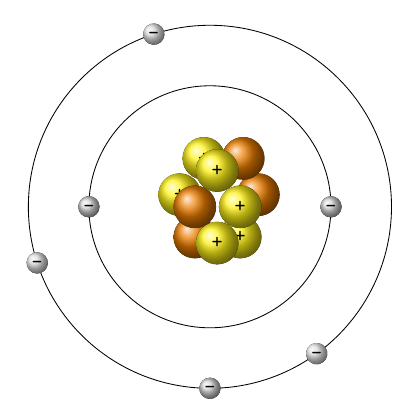
How many electron shells/levels does this atom have?
a)
1
b)
2
c)
3
d)
4
8.
How many protons does this atom have?
a)
3
b)
6
c)
4
d)
2
9.

The name of this particle means indivisible and it is the building block of matter

a)

molecule

b)

compound

c)

atom

d)

isotope

10.

At what part of the atom is the arrow pointing?

a)

nucleus

b)

energy level

c)

electron

d)

proton

11.

The mass of an atom is

a)

equal to the number of protons

b)

the protons + electrons

c)

the protons + neutrons

d)

the protons + neutrons + electrons

12.

In a neutral atom,

a)

protons = electrons

b)

protons = neutrons

c)

neutrons = electrons

d)

protons = neutrons = electrons

13.
Value representing the number of protons in an element
a)
Atomic Mass
b)
Mass Number
c)
Valence Electrons
d)
Atomic Number
14.
All ____________ are made up of two or more atoms bonded together.
a)
atoms
b)
molecules
c)
electrons
d)
elements
15.
What is the mass number?
a)
the number of protons
b)
the number of protons and neutrons
c)
the number of neutrons
d)
the number of protons and electrons
16.
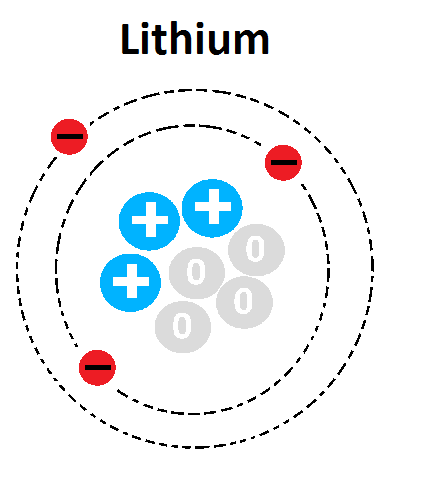
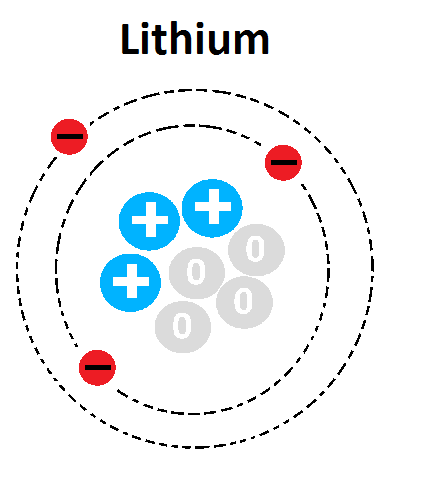
What is the atomic number of this atom?
a)
1
b)
3
c)
4
d)
7
17.

What is the atomic mass of this atom?

a)

1

b)

3

c)

4

d)

7

18.
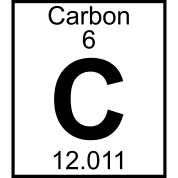
What does the C represent?
a)
atomic mass
b)
atomic number
c)
element name
d)
chemical symbol 
19.
what does the 6 represent?
a)
Atomic mass
b)
atomic number
c)
chemical symbol
d)
element name
20.
How is the number of neutrons in the nucleus of an atom calculated?
a)
Add the number of e- and p+ together
b)
Subtract the number of e- from p+
c)
Subtract the number of p+ from the mass number
d)
Add the mass number to the number of e-
21.

Subatomic particles with a negative charge

a)

Electrons

b)

Neutrons

c)

Protons

d)

Quarks

22.
Subatomic particles with a positive charge
a)
neutrons
b)
atomic mass
c)
protons
d)
isotopes
23.
Subatomic particles that are neutral in charge
a)
Neutrons
b)
Protons
c)
Nucleus 
d)
Electrons
24.
The nucleus of an atom is made of
a)
electrons and protons
b)
electrons and neutrons
c)
protons and neutrons
d)
empty space
25.
Outside the nucleus of an atom are these
a)
protons
b)
neutrons
c)
quarks
d)
electrons
26.
The mass of this particle is so small that it is not counted.
a)
proton
b)
electron
c)
neutron
d)
quark
27.
The term "neutral" means
a)
having only a little bit of charge
b)
having a positive charge
c)
having a negative charge
d)
having no charge at all
28.

The atomic mass of an atom is equal to

a)

number of protons plus number of neutrons

b)

number of protons plus number of electrons

c)

number of electrons plus the number of neutrons

29.

What is the atomic number?

a)

35

b)

18

c)

17

d)

52

30.

How many protons and electrons does this element have?

a)

35

b)

18

c)

17

d)

52

31.

How many neutrons does calcium have?

a)

20

b)

40

c)

60

d)

0

32.

What is the atomic mass of Neon?

a)

10

b)

20

c)

30

33.

What is the atomic mass of Arsenic?

a)

33

b)

107

c)

75

34.
How many electron shells/levels does this atom have?
a)
1
b)
2
c)
3
d)
4
35.
How many neutrons does a sodium atom have? (Use the image to help you)
a)
23
b)
11
c)
12
d)
34
36.

Determines the identity of the atom

a)

proton

b)

neutron

c)

electron

d)

valance electron

37.

Two sub-atomic particles that are equal in a neutral atom

a)

proton & neutron

b)

Proton & electron

c)

Proton & Proton

d)

neutron & electron

38.

Sub-atomic particles that make up the Atomic Mass of an atom

a)

proton & electron

b)

proton & neutron

c)

neutron & electron

d)

proton & valence electrons

39.

Valence Electrons are...

a)

electrons in the nucleus of an atom

b)

electrons on the first energy level

c)

electrons on the outer most energy level

d)

electrons that match the protons

40.

The atomic mass of krypton is 84. Which answer shows the sub-atomic particles inside and outside of the nucleus?

a)

# of particles inside: 36

# of particles outside: 36

b)

# of particles inside: 36

# of particles outside: 48

c)

# of particles inside: 84

# of particles outside: 36

d)

# of particles inside: 84

# of particles outside: 48

41.

Which two elements have a combined total of 23 protons?

a)

sodium, Na, and magnesium, Mg

b)

boron, B, and carbon, C

c)

copper, Cu, and zinc, Zn

d)

none of these

42.

Read the descriptions about the Atomic Number of an element, which one is NOT correct?

a)

determines the identity of the atom

b)

In a neutral atom is the same as the number of electrons

c)

Is the sub-atomic particle that has a positive charge

d)

Is the largest sub-atomic particle

43.

How do you calculate the number of neutrons in an element?

a)

Add the protons & electrons together

b)

Subtract the number of protons from the Atomic Mass number

c)

Subtract the electrons from the protons

44.

What is the density of an object that has a mass of 100 g and a volume of 10?

a)

10

b)

100

c)

110

d)

1000

45.

What is the mass of an object that has a density of 20 g/ml and a volume of 10 ml?

a)

10

b)

20

c)

30

d)

200

46.
This part of the atom has very little mass but takes up most of the space of the atom (contains negatively charged particles).
a)
Positron
b)
Proton
c)
Electron
d)
Neutron
47.

A bar of copper has a mass of 216g and a volume of 24 cm3. What is the density of copper?

a)

9g/cm3

b)

5184g/cm3

c)

.11g/cm3

d)

322mL

48.
What two types of measurements make up DENSITY
a)
Mass and Volume
b)
Temperature and Mass
c)
Grams and Centimeters
d)
Volume and Weight
49.
Jack has a rock. The rock has a mass of 14g and a volume of 2cm3. What is the density of the rock?
a)
7 mL
b)
7 g/cm3
c)
28 g/cm3
d)
1/7 g/cm3
50.
If an object has a density of .6 g/mL and you put it into water, will it sink or float?  
a)
sink
b)
float
51.
If an object has a density of 3.6 g/mL and you put it into water, will it sink or float?  
a)
sink
b)
float
52.
Helium balloons rise on earth because
a)
helium is less dense than air
b)
helium is more dense than air
c)
helium is cooler than air
d)
helium is warmer than air
53.
Calculate the density of the cube.
a)
2 g/cm3
b)
4 g/cm3
c)
6 g/cm3
d)
8 g/cm3
54.

Frank has an eraser. It has a mass of 4 g and a volume of 2cm3. What is the density?

a)

2 g/cm3

b)

4 g/cm3

c)

8 g/cm3

d)

2 g/in3

55.

Using the picture, tell me which object is the least dense and why?

a)

The fish because he is in the middle

b)

The cork because it is floating at the top of the water

c)

The rock because it is at the bottom

d)

The cork and the rock because they have the same about of atoms.

56.

Frank has a paperclip. It has a volume of 3 cm3 and a mass of 9 grams. What is its density?

a)

3 g/cm3

b)

9 g/cm3

c)

.33 g/cm3

d)

27 g/cm3

57.

A piece of copper has a mass of 10 grams and a volume of 50 cm3. What is the copper's density?

a)

2 cm3

b)

.2 g/cm3

c)

10 g/cm3

d)

5 g/cm3

58.

What is the density of an object that measures 6mL and 12g?

a)

2 g/mL

b)

0.5 g/mL

c)

6 g/mL

d)

12 g/mL

59.

Calculate the density of the object below if it has a mass of 3g. (Hint: you need to find the volume.)

a)

60 g/cm3

b)

3 g/cm3

c)

20 g/cm3

d)

0.05 g/cm3

60.
A bar of copper has a mass of 216g and a volume of 24cm3. What is the density of copper?  
a)
9g/cm3
b)
.11g/cm3
c)
5184g/cm3
d)
322mL
61.
What is the density of a plastic ball that has a volume of 6cm3 and a mass of 12g? 
a)
2g/cm3
b)
.5g/cm3
c)
72g/cm3
d)
4mL
62.
A bar of copper has a mass of 216g and a volume of 24cm3. What is the density of copper?  
a)
9g/cm3
b)
.11g/cm3
c)
5184g/cm3
d)
322mL
63.
The volume of a candy bar is 55cm3. The mass of the candy bar is 70g. What is the density of the candy bar? 
a)
2.3g/cm3
b)
.8g/cm3
c)
3850g/cm3
d)
1.3g/cm3
64.
Jack has a rock. The rock has a mass of 14g and a volume of 2cm3. What is the density of the rock?
a)
7 mL
b)
7 g/cm3
c)
28 g/cm3
d)
1/7 g/cm3
65.
Frank has a paper clip. It has a mass of 9g and a volume of 3cm3. What is its density?
a)
3 g/cm3
b)
1/3 g/cm3
c)
27 g/cm3
d)
39 g/cm3
66.
Frank has an eraser. It has a mass of 4g, and a volume of 2cm3. What is its density?
a)
8 g/cm3
b)
2 g/cm3
c)
1/2 g/cm3
d)
24 g/cm3
67.
What is the density of an object that has a mass of 25 g and a volume of 10.0 cm3?
a)
250 g/cm3
b)
25 g/cm3
c)
2.5 g/cm3
d)
0.25 g/cm3
68.
Jill has a gel pen. The gel pen has a mass of 8g and a volume of 2cm3. What is the density of the pen?
a)
4 g/cm3
b)
16 g/cm3
c)
.25 g/cm3
d)
64 g/cm3
69.
A piece of metal has a mass of 35.4 grams and a volume of 6cm3. According to the table what metal is it?
a)
Aluminum
b)
Scandium
c)
Radium
d)
Xenon
70.
A gas has a mass of 5 grams and a volume of 4 L. According to the table what is the gas?
a)
Neon
b)
Nitrogen
c)
Oxygen
d)
Fluorine
71.
Sue found a ring and wanted to know what type of metal it was. She found the mass to be 26.7 grams and the volume to be 3 cm3. What metal is the ring?
a)
Nickel
b)
Silver
c)
Lead
d)
Gold
72.

As part of a classifying elements lab Joe was finding the density of different samples. One sample had a mass of 26.4 and a volume of 12 mL. What element is it?

a)

Sulfur

b)

Carbon

c)

Boron

d)

Krypton