
 Worksheets
SKILLS CHECK REVIEW
Total questions: 40
Worksheet time: 39mins

No, because the metal strip was visible
Yes, because a new material of a different color formed on part of the metal strip
No, because the solution stayed blue
Yes, because the volume of the blue solution stayed the same

Some of the chemical energy in the natural gas transforms into thermal energy, which heats the water. Then some of the thermal energy changes into sound energy when the water forms steam and the steam leaves the kettle.
Some of the thermal energy in the natural gas transforms into sound energy when the water becomes hot. Then some of the sound energy changes into light energy when the kettle becomes warm.
Some of the electrical energy in the natural gas transforms into thermal energy, which causes the water to form steam. Then some of the thermal energy changes into sound energy and light energy when the steam leaves the kettle.
Some of the light energy in the natural gas transforms into chemical energy in the water. Then some of the chemical energy changes into kinetic energy when steam leaves the kettle and into sound energy when the water boils.

18.
An indium‚ In‚ atom contains 115 protons inside the nucleus and 49 neutrons outside the nucleus.
A scandium‚ Sc‚ atom contains 45 electrons outside the nucleus and 21 neutrons inside the nucleus.
An aluminum‚ Al‚ atom contains 27 electrons and 27 protons inside the nucleus.
A zinc‚ Zn‚ atom contains 30 protons inside the nucleus and 30 electrons outside the nucleus.
A cook heats a meal in a microwave oven. What energy transformations occur between the microwave oven and the meal?


The table lists some compounds found in foods and their formulas.
Based on this information, which of these statements is NOT true?
A. A molecule of sorbitol contains three more oxygen atoms than a molecule of glutamine does.
B. A molecule of lactose contains twice as many atoms as a molecule of fructose does.
C. A molecule of fructose contains four more atoms than a molecule of glutamine does.
D. A molecule of lactose contains twice as many carbon atoms as a molecule of sorbitol does.

A chemist made the table below to record some atomic properties of four elements.
Based on the information in the table, which conclusion about the chemical reactivity of these elements is valid?
A Boron is the most reactive because it has the most protons.
B Fluorine is the most reactive because it has 7 electrons in the outer shell.
C Silicon is the most reactive because it has an equal number of protons and neutrons.
D Gallium is the most reactive because it has many more neutrons than protons.
What is the total number of protons, neutrons, and electrons in a cadmium, Cd, atom that has a mass number of 112?
160
165
171
175
A student is using colored beads to make a model of aluminum sulfate, Al2 (SO4 ). Aluminum atoms are represented by blue beads, sulfur atoms by yellow beads, and oxygen atoms by green beads.
What combination of beads should the student use for the model?
F 6 blue, 3 yellow, and 7 green
G 2 blue, 1 yellow, and 4 green
H 2 blue, 3 yellow, and 12 green
J 6 blue, 12 yellow, and 12 green

23.
The warm air in Earth’s atmosphere and the warm water in Earth’s oceans sink instead of rise.
The heat source for Earth’s atmosphere and oceans is the sun, which heats from above instead of below.
Convection cells in Earth’s atmosphere and oceans flow in the same direction instead of opposite directions.
Cold air in Earth’s atmosphere and cold water in Earth’s oceans are less dense than warm air and warm water instead of being more dense.

25.
SF6 is a compound containing atoms of sulfur and fluorine.
SF6 is a compound that contains seven identical atoms.
SF6 is an element with sulfur in the atom’s nucleus and fluorine outside the nucleus.
SF6 is an organic compound composed of long chains of sulfur atoms surrounded by fluorine atoms.

28.
Procedure 1: All the reactants were liquids that evaporated. Procedure 2: A gas was formed as one product, and it escaped into the air.
Procedure 1: One of the reactants was converted to thermal energy. Procedure 2: All the products were liquids.
Procedure 1: The reactants were liquids with different densities. Procedure 2: The reactants were combined into only one product.
Procedure 1: One of the products was a gas that escaped into the air. Procedure 2: A gas from the air reacted with one of the other reactants.
The atomic mass is the
number of protons and neutrons inside the nucleus
number or electrons or protons
number of protons, neutrons and electrons

How many atoms of hydrogen are in
C6H12O6
6
12
18
2

density = volume / mass


Which physical property stays the same when water goes from a solid to a liquid and then to a gas?
Density
Mass
Volume
Temperature
Which of the following is not a characteristic of a mineral?
Solid
Inorganic
Hardness
Formed in Nature

In the lab, a student wants to identify two different minerals. So, she takes them and scrapes them across a plate to see the color of the powder they leave behind. What property of minerals is she testing?
Color
Hardness
Luster
Streak

A measure of a mineral's resistance to scratching. This is measured by scratching it against another substance of known hardness on the Mohs Hardness Scale.
Color
Hardness
Luster
Streak

This characteristic of a mineral shows the molecules are closely packed together.
Chemical Composition
Solid
Inorganic
Crystalline Structure
The property of a mineral splitting evenly along a flat surface is
Luster
Streak
Cleavage
Fracture
How a mineral reflects light from its surface is known as
Streak
Element
Fracture
Luster
The mass of an object in a given space is known as its
Color
Luster
Density
Fracture
A physical property that is easy to observe is
Luster
Color
Hardness
Density
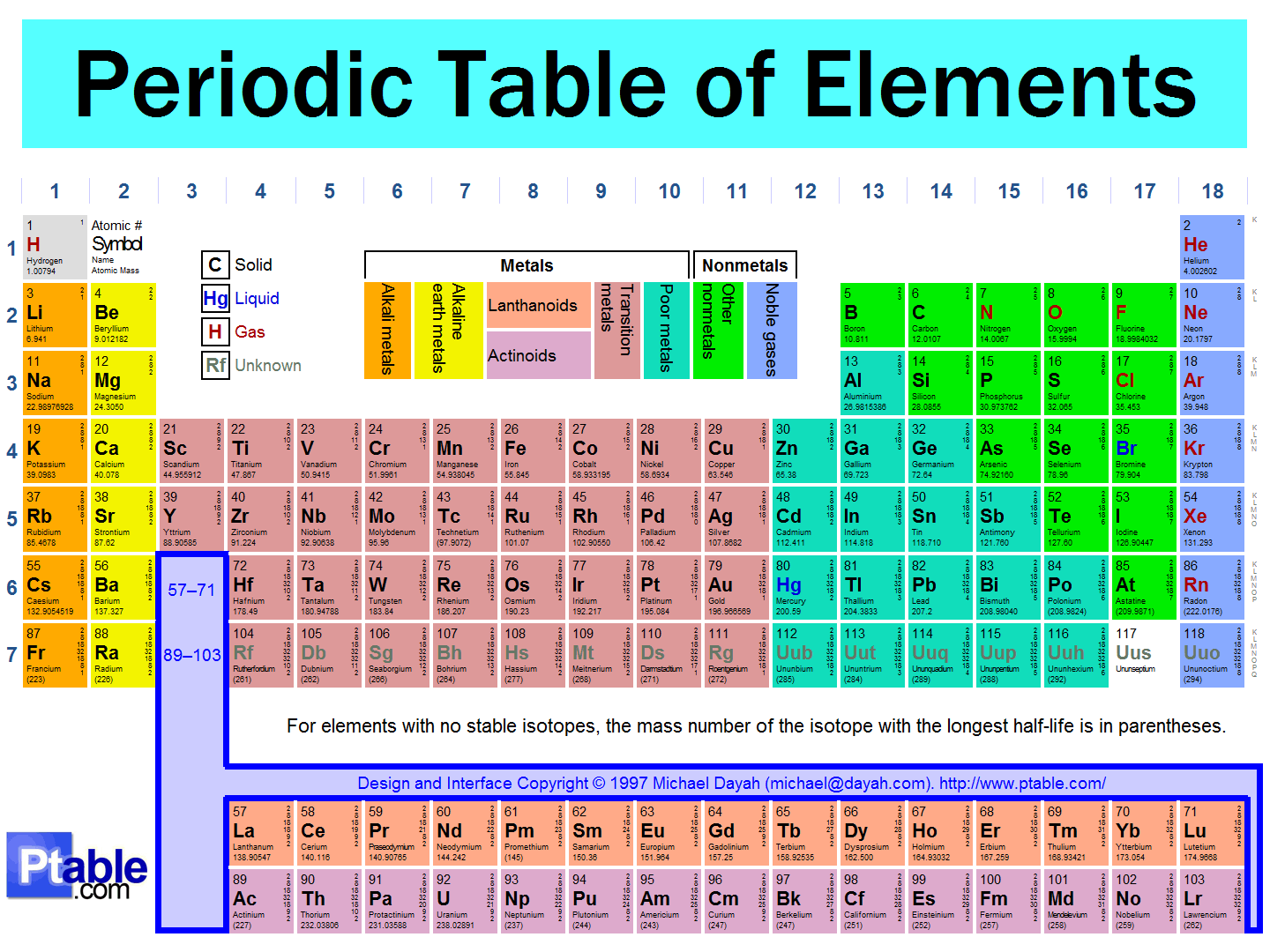
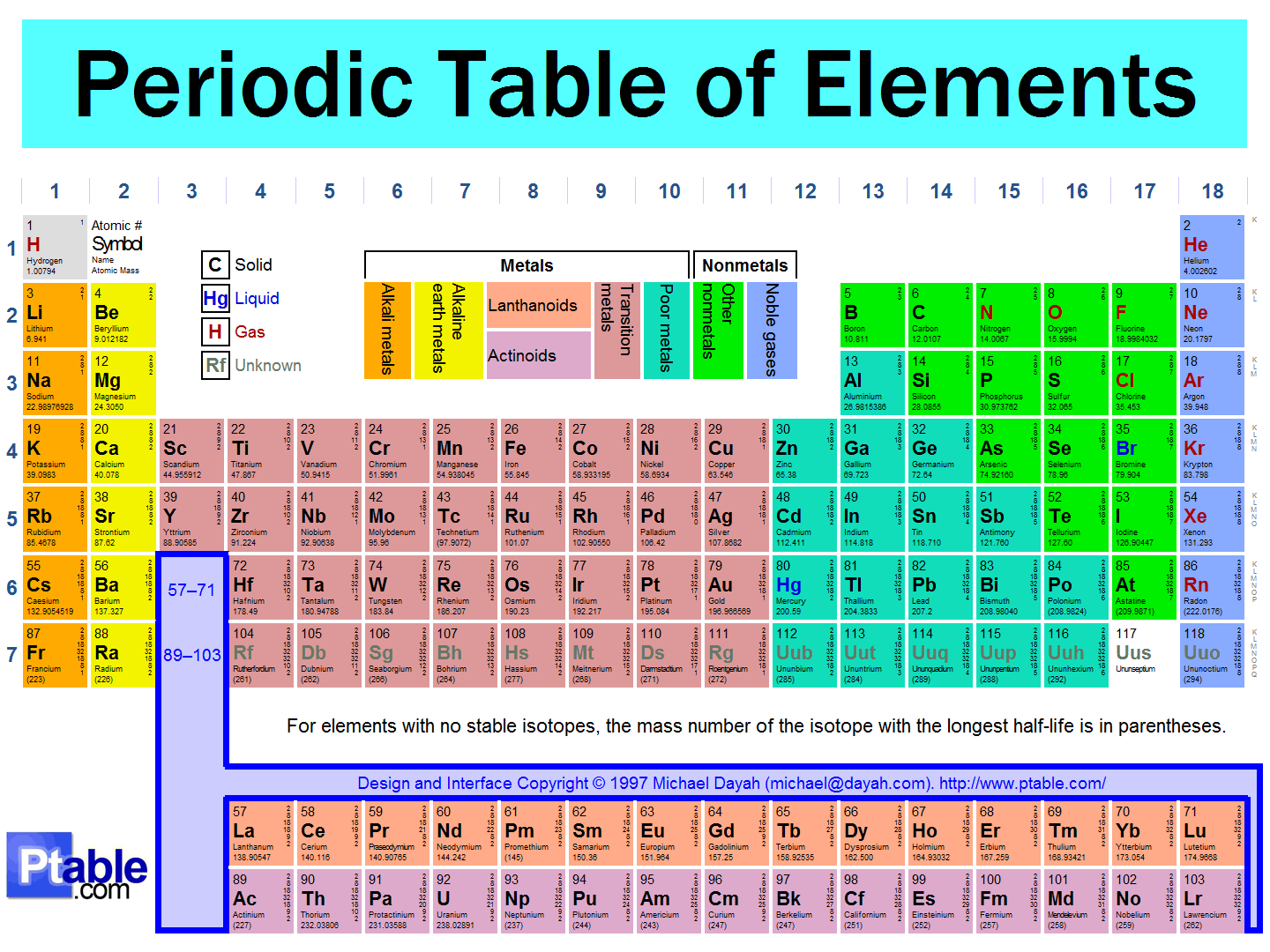
A student is using colored beads to to make a model of aluminum sulfate, Al2 (SO4)3. Aluminum atoms are represented by blue beads, and oxygen atoms by green beads.
What combination of beads should the student use for the model?
6 blue, 3 yellow, and 7 green
2 blue, 1 yellow, and 4 green
2 blue 3 yellow, and 12 green
6 blue, 12 yellow, and 12 green
Which of the following is the symbols for chlorine?
Ch
Cl
Ci

Students were asked to identify the location of elements in the periodic table based on clues printed on game cards.
Based on the data, which periodic table shows the correct location of the four elements?


A balance and a graduated cylinder are used to determine the density of a mineral sample. The sample has a mass of 14.7g and a volume of 2.2cm3 .What is the density of the
mineral sample?
0.15 g/cm3
32 g/cm3
13 g/cm3
6.7 g/cm3
A balance and a graduated cylinder are used to determine the density of a mineral sample. The sample has amass of 14.7 g and a volume of 2.2 cm3.
What is the density of the mineral sample?
0.15 g/cm3
32 g/cm3
13 g/cm3
6.7 g/cm3
A student is testing several minerals in science class. First, the student scratched the minerals across a tile and then scratched the minerals with a copper penny and a steel tool.
What physical properties is the student testing?
Color and state
Streak and hardness
Luster and conductivity
pH and fracture
Which pair of properties describes the elements in Group 18?
They are chemically stable and liquid at room temperature.
They have eight valence electrons and are flammable.
They are magnetic and boil at low temperatures.
They are gaseous at room temperature and chemically stable.

Element R and Element Q have the same number of valence electrons. These elements both have similar chemical behavior, but Element R has fewer energy levels than Element Q. Which statement best describes the positions of the two elements in the periodic table?
The two elements are in the same period, with Element R the first element in the period and Element Q the last element.
The two elements are side by side in the same period, with Element Q to the left of Element R.
The two elements are in the same group, with Element R just above Element Q.
The two elements are in the same group, with Element Q at the top of the group and Element R at the bottom.

