
 Worksheets
Matter Quiz
Total questions: 60
Worksheet time: 38mins


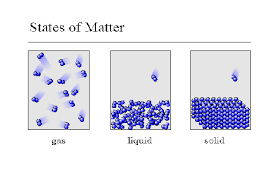
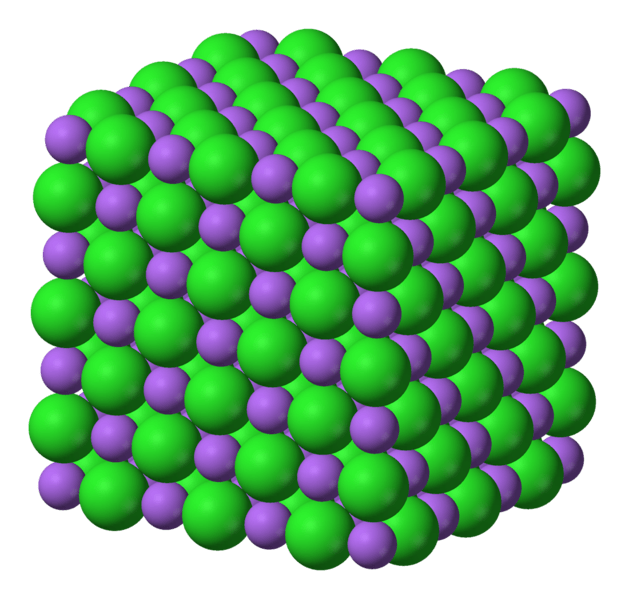
Which state of matter does this picture show?
Solid
Liquid
Gas
As temperature increases, what happens to particles?
They speed up
They slow down

What is happening in this picture of this lake freezing?
Molecules are speeding up
Molecules are slowing down
As a solid melts into a liquid the particles in the solid will
move a bit faster and move closer together
move a bit slower and move farther apart
move a bit faster and spread farther apart
move a bit slower and move closer together
The particles that make up a gas are
tightly packed and vibrating very slowly
tightly packed and whipping all around
super far apart and moving slowly
super far apart and whipping all around
Adding HEAT to matter causes its particles to
move slower and farther apart
move faster and closer together
move slower and closer together
move faster and farther apart
A description of objects that can be measured and observed.
properties
melting point
mustangs
gas
The amount of matter that makes up an object is called its
density
volume
length
mass
A type of matter that can be found on earth as a solid, liquid, and gas
oxygen
gold
water
rock
All atoms have kinetic energy (energy that makes atoms constantly move). What phase of matter has the MOST kinetic energy?
gases
liquids
solids
particles
Sugar is made of carbon, hydrogen, and oxygen atoms. Sugar is
A compound because it is made of two or more elements that cannot be separated
An element
A mixture because it has more than one substance throughout
A solution because it dissolves when it is mixed with water
Which best describes an atom?
Anything that does not take up space
The smallest unit of measurable matter
Something made up of protons, neutrons and stars
All of the above
Which best describes an element?
A substance made of more than one type of atom
A substance that is made of one type of atom
What are elements
None of the above
Which of the following is a mixture?
Copper
Gold
Helium
Ocean Water (H20+NaCl)
An electron
Is apart of the nucleus of an atom
Rapidly travels around the nucleus of an atom
Is on the inside and outside of an atom
Does not relate to the atom
Matter is anything that has ____ and takes up _______.
gas, mass
mass, space
temperature, heat
particles, atoms
Air is an example of the state of matter called _____________.
Solid
Liquid
Gas
Plasma
Cutting paper is an example of which type of change?
Physical
Chemical
Lighting fireworks is an example of which kind of change?
Physical
Chemical
Roasting marshmallows is an example of which kind of change?
Physical
Chemical
Which item has more mass?


Which tool do you use to measure mass?


An apple is an example of...?
a solid
a liquid
a gas
Which is a picture of a molecule?


A compound is made of two elements combined. Which is an example of a compound?
N
O
NaCl
C
When you step on a scale, what are you measuring about your body?
volume
weight
height
shape
Which items flow?
solids
liquids
gases
liquids & gases
A nail rusting is an example of....?
chemical change
physical change
no change
Which subatomic particles are much smaller than the others and have a negative charge?
protons
neutrons
electrons


H₂O is a compound molecule.
TRUE
FALSE

O2 is a compound molecule.
TRUE
FALSE

Are these molecules also compounds?
YES
NO
Which of the following is NOT a compound?
HCl
Cl2
NaCl
CO2
Which of the following represents an element molecule?


This picture represents which of the following?
elemental molecule
compound molecule

Element
compound molecules
elemental molecules
Mixture
Which of the following describes synthetic materials:
Made in a Lab
Found in nature
Shown on the Periodic Table
Not found in Nature


What are some potential advantages of synthetic materials?
(mark all that apply)
They can be developed to meet needs that natural materials can't.
They can be made from natural resources.
Medicines can be created from synthetic materials that otherwise would not exist.
They can be used to produce alternative fuels that are cleaner.
Which of the following are synthetic?
Mark all that apply
Plastic
Wood
Biodiesel
Hay
What is the difference between natural and synthetic materials
natural are more common than synthetic
there is not a difference
natural materials are made from nature, synthetic is man-made
What are some common natural materials?
cotton, wood, plastic
wood, cotton, wool
wood, plastic, polymers
none of the above
Kevlar Vest
synthetic
natural
Leather purse
synthetic
natural
Rayon, nylon, and polyester are examples of...
natural materials
synthetic materials
cotton blanket
synthetic
natural
In the food industry, which word replaces synthetic?
organic
artificial
natural
suficient

A polymer is ____________________.
a useful chemical made of many repeating units.
a chemical excreted by a porygon.
only found in chemistry laboratories, under high protection because they're extremely reactive.
a figure with at least three straight sides and angles.
What is a substance that does not allow the passage of heat or electricity?
Insulator
Conductor
Allow
Polymer

