
Font size
 Worksheets
Types of Energy
Total questions: 15
Worksheet time: 8mins
The capacity to do work is the definition of . . .
Energy
Work
Chemical Reaction
Combustion
Heat
To apply force (F∥) on a body in a direction that is parallel to the direction of the body's displacement (d) is the definition...
Work
Energy
Chemical Reaction
Combustion
Temperature
Energy of motion is known as . . .
Kinetic Energy
Potential Energy
Nuclear Energy
Elastic Energy
Temperature
Energy of position, or configuration, is known as . . .
Kinetic Energy
Potential Energy
Chemical Reaction
Combustion
Temperature
Which forms of energy can be categorized as kinetic energy? Select all that apply.
Electrical Energy due to the movement of electric charges
Thermal Energy due to the movement of particles
Electromagnetic Energy due to the movement of energy through the electromagnetic field
Chemical Energy due to the position/configuration of atoms and their chemical bonds
Gravitational Energy due to the position/height of an object relative to the Earth's surface
Which forms of energy can be categorized as potential energy? Select all that apply.
Chemical Energy
Nuclear Energy
Gravitational Energy
Kinetic Energy
Thermal Energy
The two most basic, or fundamental, forms of energy are . . .
Chemical Energy and Nuclear Energy
Gravitational Energy and Thermal Energy
Kinetic Energy and Elastic Energy
Potential Energy and Electric Potential Energy
Potential Energy and Kinetic Energy

Potential energy contained in the nuclei (aka centers) of atoms is known as . . .
Chemical Energy
Nuclear Energy
Thermal Energy
Elastic Energy
Electromagnetic Energy

Potential energy stored in the interatomic bonds of a substance is known as . . .
Chemical Energy
Kinetic Energy
Elastic Energy
Gravitational Energy
Thermal Energy

Potential energy which results from the force of gravity is known as . . .
Chemical Energy
Nuclear Energy
Gravitational Energy
Kinetic Energy
Electromagnetic Energy

The kinetic energy contained in a system due to the motion of particles at the microscopic level, and which gives rise to the system's temperature, is known as . . .
Thermal Energy
Chemical Energy
Nuclear Energy
Electrical Energy
Electromagnetic Energy

The energy stored in objects when they are under temporary strain, such as being stretched or squashed, is known as . . .
Thermal Energy
Chemical Energy
Elastic Energy
Gravitational Energy
Electromagnetic Energy

Energy that travels in electromagnetic waves (e.g., light waves) through the electromagnetic field is known as . . .
Potential Energy
Chemical Energy
Electromagnetic Energy
Nuclear Energy
Thermal Energy
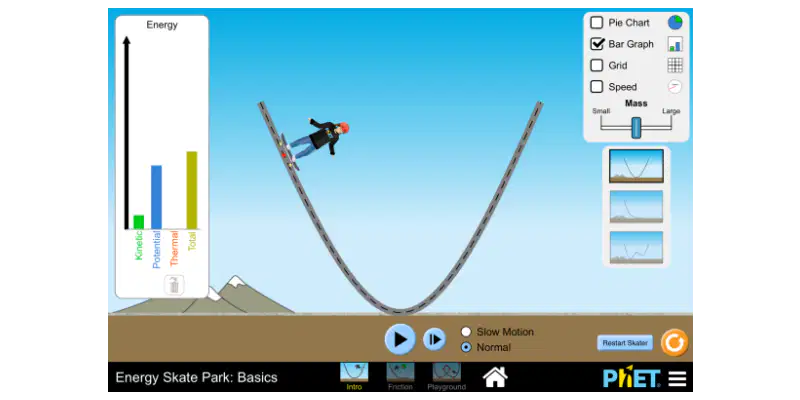
Which scientific law best states the following truth?
When energy is transferred or transformed from one system to another in any physical or chemical process, all the energy can always be accounted for.
The Law of Conservation of Mass
The Work-Energy Principle
The Law of Conservation of Energy
The Law of Conservation of Momentum
The Third Law of Thermodynamics
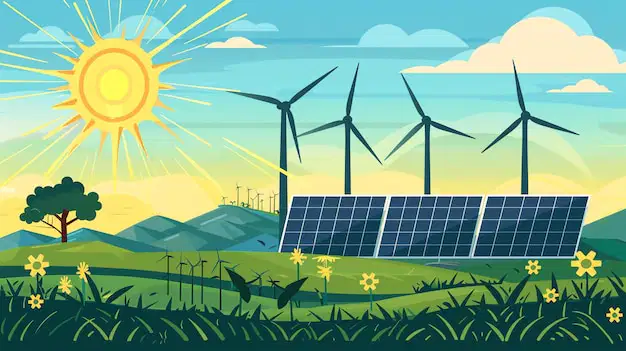
When energy from the sun is absorbed by a solar panel, which forms of energy are being converted between?
Electromagnetic Energy is converted into Electrical Energy
Electromagnetic Energy is converted into Nuclear Energy
Electrical Energy is converted into Thermal Energy
Kinetic Energy is converted into Chemical Energy
Elastic Energy is converted into Gravitational Energy

