Wayground logo

Free Printable Worksheets

Font size

S
M
L
XL
Worksheets

Organic Chemistry

Total questions: 30

Worksheet time: 17mins

Name
Class
Date
1.

Hydrocarbons, the simplest family of carbon compounds, are made from these two elements:

a)

Hydrogen and Copper

b)

Helium and Carbon

c)

Hydrogen and Carbon

2.
What is the general formula for saturated hydrocarbons?
a)
CnH2n
b)
CnHn+1
c)
CnH2n+1
d)
CnH2n+2
3.

Pentane is an alkane with____ carbon atoms

a)

3

b)

5

c)

15

d)

50

4.

Name the compound CH4

(a)  

5.

Name the compound CH2=CH2

(a)  

6.
How many carbon atoms are in methane?
a)
1
b)
2
c)
3
d)
4
7.
How many carbon atoms are in ethane?
a)
1
b)
2
c)
3
d)
4
8.
Which of the following elements must be present in any organic compound?
a)
Carbon
b)
Oxygen
c)
Potassium
d)
Hydrogen
9.
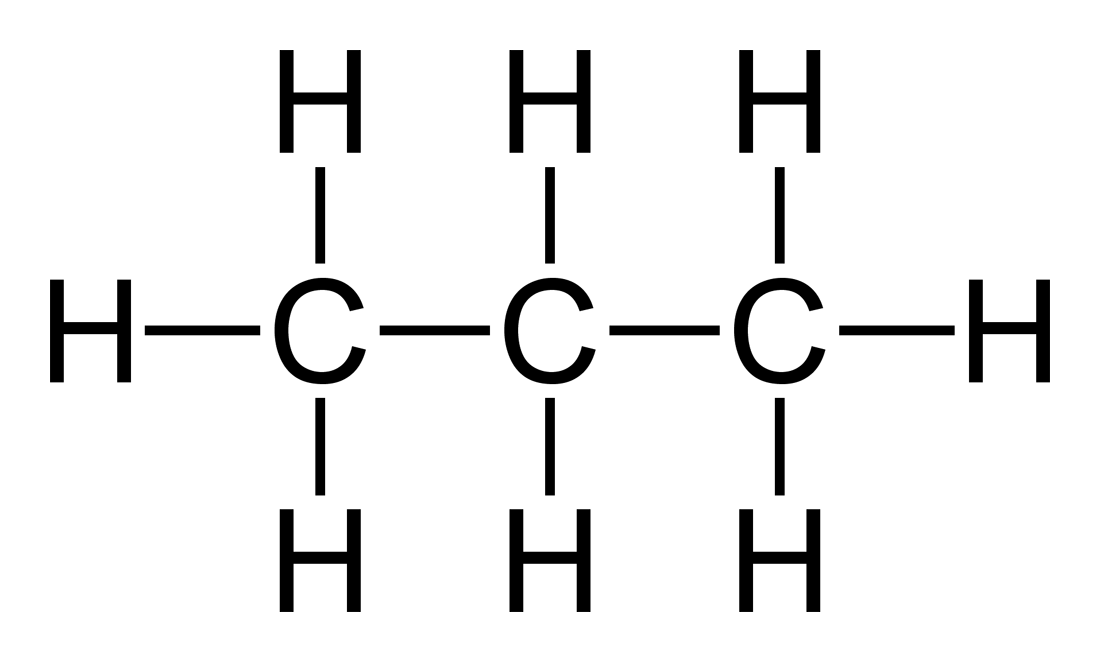
Name this alkane
a)
Methane
b)
Ethane
c)
Propane
d)
Butane
10.
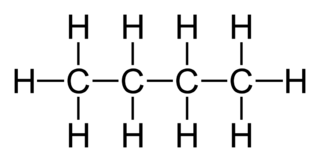
Name this alkane
a)
Methane
b)
Ethane
c)
Propane
d)
Butane
11.
Name this alkane
a)
Methane
b)
Ethane
c)
Propane
d)
Butane
12.

What is the general formula of the alkenes?

a)

CnH2n+1

b)

CnH2n+2

c)

CnH2n

d)

CnH2n+1OH

13.

What is fractional distillation?

a)

a process used to separate crude oil

b)

a process used to burn up fuels

c)

a way to make different products

d)

how oil is extracted from the ground

14.

Fractional distillation separates crude oil based on the different __________ of the molecules in the mixture

a)

melting point

b)

boiling point

c)

freezing point

d)

chemical reactivity

15.

A fraction of crude oil is made up of:

a)

Hydrocarbons of similar chain lengths

b)

Numbers

c)

Large hydrocarbons

d)

Alkenes only

16.

Crude oil is made up of:

a)

Ethane

b)

Butane

c)

A mixture of different hydrocarbons

d)

Extremely large hydrocarbons which are broken up once extracted
17.

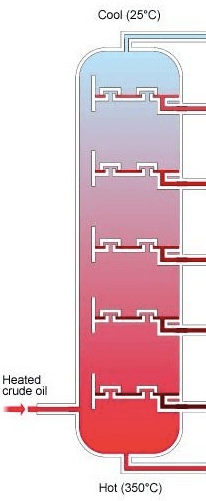
What process happens at each level in the fractionating column?

a)

Evaporation

b)

Condensation

c)

Combustion

18.

What process happens as the crude oil enters the fractionating column?

a)

Evaporation

b)

Condensation

c)

Combustion

19.

Where do short chain hydrocarbons collect?

a)

At the top

b)

In the middle

c)

At the bottom

20.

Where do long chain hydrocarbons collect?

a)

At the top

b)

In the middle

c)

At the bottom

21.

Shorter hydrocarbons have:

a)

Higher boiling points

b)

Lower boiling points

22.

What kind of molecule is this? HINT: Look at the bonds.

a)
alkane
b)
alkene
c)
alkyne
d)
cycloalkane
23.

Is this hydrocarbon saturated or unsaturated?  HINT: Look at the bonds.

a)
saturated
b)
unsaturated
24.
What is the process of breaking down a long hydrocarbon into smaller hydrocarbons
a)
Cracking
b)
Fracking
c)
Combustion
d)
Distillation
25.
What are the products of cracking?
a)
Bromine water
b)
Short alkanes and alkenes
c)
Branched alkenes
d)
Alkanes only
26.
How do you test for an alkene?
a)
React it with oxygen
b)
React it with litmus paper
c)
React it with bromine water
d)
pH test
27.
What is the colour change when an alkene reacts with bromine water?
a)
Turns clear
b)
Turns orange
c)
From colourless to orange
d)
From orange to colourless
28.
What does an alkene have that an alkane does not?
a)
Electrons
b)
Oxygen
c)
Double C=C bond
d)
Single C-C bond
29.
A hydrocarbon that contains a double bonds is also known as…?
a)
Alkane
b)
Wet
c)
Unsaturated
d)
Saturated
30.

Hydrocarbon that contains at least one carbon-carbon double covalent bond.

a)

alkane

b)

alkene

c)

alkyne