
 Worksheets
Magnetism and electromagnetism
Total questions: 50
Worksheet time: 50mins
Which of the following defines magnetism?
Magnetism is a contact force.
Magnetism is a force created by magnets.
Magnetism is an invisible force that attracts electrically charged particles.
Magnetism is energy created by magnets.
Which of the following principles explains how an electric motor works?
Magnetic force
Magnetism
Electrolysis
Electromagnetism
Which two forces are required to operate with generators and electric motors?
Electric and magnetic
Electric and thermal
Magnetic and Radiant
Magnetic and thermal

The strongest parts of the magnet are ...
fronts
backs
poles
middle

The area around a magnet is called the .....
attraction zone
work area
magnetic field
hot zone


These magnetic domains are:
strongly magnetized
slightly magnetized
unmagnetized

To make this electromagnet stronger you could:
use less wire
have fewer wire coils around the nail
have more wire coils around the nail
use a plastic core


When running a current through a wire, what do the blue lines represent?
The wire spinning
A magnetic field that was created
Electrons leaving
Electricity

The diagram shows the application of __________.
Fleming's Left-Hand Rule
Fleming's Right-Hand Rule
Left-Hand Grip Rule
Right-Hand Grip Rule

Using the right hand grip rule, A represents the direction of the
current
magnetic field
Using the right hand rule, B represents the direction of the
current
magnetic field

Using the right hand grip rule, if the current is flowing towards you then the magnetic fields will flow from...
A to D to C to B and around
A to B to C to D and around
A to C to D to B and around
A to C to B to D and around
Using the right hand grip rule, if the current is flowing away from you then the magnetic fields will flow from...
A to D to C to B and around
A to B to C to D and around
A to C to D to B and around
A to C to B to D and around

The production of electric current by a changing magnetic field is called ____________________________________.
induced current
electromotive force
electromagnetic induction
internal resistance

The diagram shows a simple alternating current generator. Which two possible changes would cause a larger e.m.f. to be induced.
stronger magnets, more turns.
weaker magnets, more turns.
increase speed, fewer turns.
more turns, reduce speed.

What happens to the galvanometer if the copper rod is moved upwards?
No change
Deflect to the right
Deflect to the left
Deflect to the right and left

Which activity will produce the highest current?
Move the magnet bar into the coil while the coil remains stationery
Move the coil into the magnet bar while the magnet remains stationery
Move the coil and magnet towards each other
Move the coil and magnet away from each other

Which action will increase the deflection of the galvanometer pointer?
The magnetic pole is reversed
The number of turns of coils is increased
The coil is made from insulated wire
The magnet is slowly pushed into the coil
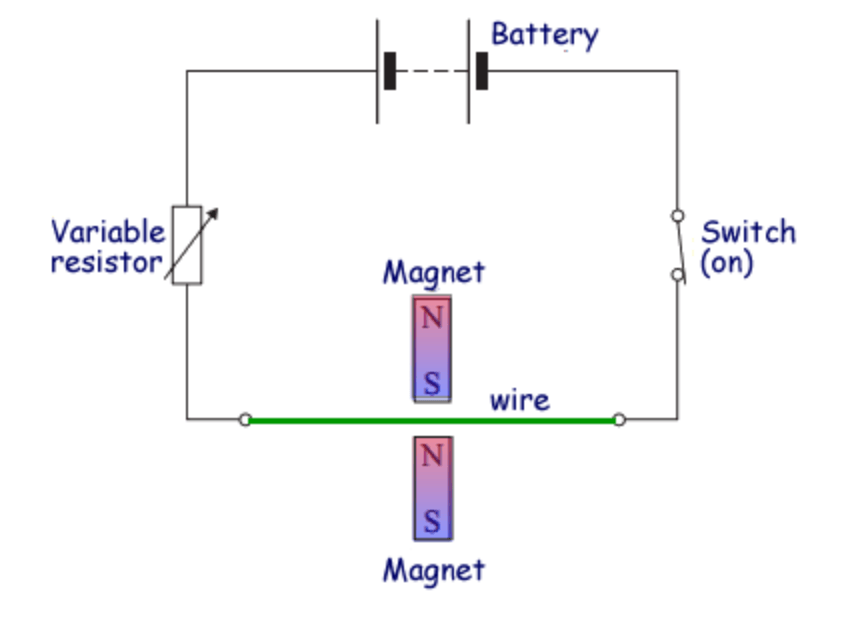
The current in the green wire flows from the left to the right.
What magnetic field flows perpendicular upwards (towards sky)
What direction does the current flow?
Up
Down
Into the page
Out of the page
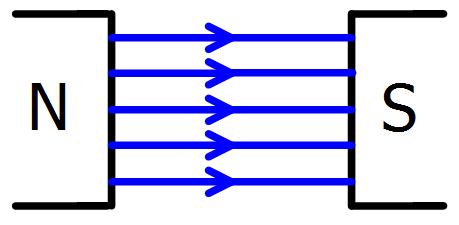
A magnetic field like this is called...
a parallel field
a distorted field
a uniform field
a paramagnetic field

The diagram show the direction of magnetic field,B and current, I.
By using Fleming left hand rules, determine the direction of Magnetic force, F.
no force produced
downward
into the page
out from the page
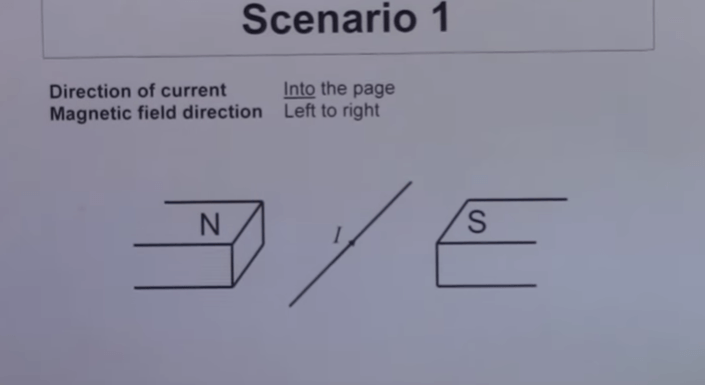
What direction does the wire move?
Up
Down
Left
Right
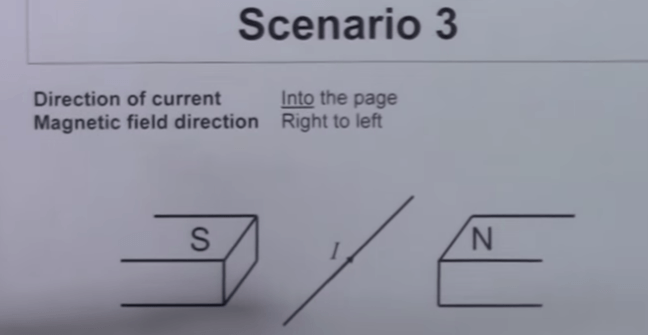
What direction would the wire move?
Up
Down
Left
Right

A proton is moving down through a magnetic field that is pointed to the right. What is the direction of the force?
Into the Board
Out of the Board
Left
Up

An positive charge moves to the right through a magnetic field pointed up as shown. What is the direction of the force?
Into Board
Out of the Board
Left
Down

What direction is the force on the current carrying wire?
No Force
Right
Left
Up
Down

What direction is the force on the current carrying wire?
No Force
Right
Left
Up
Down
According to right hand thumb rule the direction of magnetic field in a current carrying straight conductor is denoted by:
Thumb
Curl fingers
Middle finger
First finger

The figure shows the structure of a motor. Which of the following will not affect the speed of rotation of the motor?
The current in the coil
Strength of the magnetic field
The number of turns of wire in the coil
The direction of the current in the coil
Magnetic field produced around a straight conductor due to current in it is given by
Fleming's right hand rule
Right hand grip rule
Clock rule
Fleming's left hand rule

c represented by
direction of magnetic field
direction of rotation
direction of force
direction of magnitude current

Diagram shows a current–carrying conductor placed between the poles of two magnet bars. Which diagram shows the resulting magnetic field ?


Diagram shows a current – carrying conductor in magnetic field. What is the direction of the force that acts on the conductor ?
A
B
C
D
Which is the correct rule to determine the direction of the force or motion of the conductor carrying current in a magnetic field?


Which diagram shows the correct magnetic field pattern of the current-carrying coil?


In demagnetised steel, the domains:
are aligned in the same direction
are in different directions
are not present
To demagnetise a magnet, one can:
drop or hit it for a period of time
heat it for some time
both of the above
If a person winds a coil of wire around a steel rod, and then passes an electric current through the wire, then:
the steel rod becomes electrified and should not be touched
the steel rod becomes magnetised
the wire becomes magnetised

Which end of the solenoid will be a N pole?
A
B
Two magnets were made to collide against each other. After collision both the magnets broke into three pieces each. What will be the total number of poles?
7
12
6
14

