
 Worksheets
Robotics Quiz
Total questions: 79
Worksheet time: 42mins
What is a Algorithm ?
a list of steps to complete a task
Commands
actions performed by a robot
What is a robot
A machine that can complete any task
A machine that is programmed to complete certain task automatically
A machine that is manmade and look just like a man
A machine that can do just about everything
Where was the term “robotics” first used?
On the set of Star Trek
In a GM industrial plant
The Massachusetts Institute of Technology
In science Fiction stories
Which of the following statements is true
All robots are intelligent
All robots act like humans
All robots are controlled remotely
All robots are electromechanical machines using electronics programming
Which of the follow is not a characteristic of a robot
They all manmade
They are programmable
They all respond to their environment
The can perform action
They all move from place to place
Which type of robot acts like a human and/or mimics human behavior?
autonomous
Teleoperated
industrial
humanoid
Which is of Robot complete monotonous/ repetitive task?
autonomous
Preprogrammed
Teleoperated
augmented
Which type of robot enhances or replace human capabilities?
humanoid
autonomous
augmented
industrial
Which type of robot is used at the international space station?
Military Robot
Medical Robot
Space Robot
Competition Robots
Which component of the robot provide structure for the robot
control system
drivetrain
body/frame
manipulator
Which component of the robot allow the robot to interact with the environment without human direct contact by human operators
control system
manipulators
drivetrain
body/frame
Which component of the robot allows robots to perform their tasks from one location to another ?
control system
manipulators
drivetrain
body/frame
Based on our conversation in class, a washing machine ...
is always a robot
is never a robot
Is sometimes a robot
1. Robot is derived from Czech word, Robota which means
Mechanical man
Assistant
Forced labourer
Machine
Drives are also known as
Sensors
Controller
Actuators
Manipulator
Which part of the Robot provides motion to the manipulator and end-effectors?
Controller
Sensor
Actuator
None of the above
Which of the following is not an Actuator?
Digital Actuator
Pneumatic Actuator
Hydraulic Actuator
Electrical Actuator
What is the most important law in Asimov’s Laws of Robotics?
A robot must obey the orders given by human being.
A robot must protect its own existence.
A robot must know it is a robot.
A robot may not harm humanity, or by inaction, allow humanity to come to harm.

The 1st law of robotics is?
A Robot must protect its own existence as long as such protection does not conflict with the First or Second Law.
A Robot must obey orders given it by human beings except where such orders would conflict with the First law.
A Robot must always performs to the best of their abilities and never allow humans to perform repetitive tasks.
A Robot may not injure a human being or, through inaction, allow a human being to come to harm.

What Robot would help the Space Industry?
Ozobot
Vex IX
Mars Rover
AIBO ERS-200

What best describes a Robot?
System that contains sensors, control systems, manipulators, power supplies and software all working together to perform a task on it's own.
The study of mathematics, calculations, science and technology that applies laws created by Asimov.
The branch of technology that deals with the design, construction, operation, and application of robots.
A Science Fiction character that appears in movies such as Star Wars, I Robot and the Terminator.
Who created the Laws of Robotics?
Mr. Roboto
Albert Einstein
Isaac Newton
Isaac Asimov

What is the greatest advantage of using robots in agriculture?
They can accurately identify which plants to harvest and which not to harvest.
They produce less carbon footprint than a normal agriculture practice.
They can harvest faster than humans.
They help reduce pests and chemicals in the soil.
The 1st generation of Robots performed simple tasks or factory work that were _____________________ for people.
Dangerous or unpleasant
Cumbersome
Unfit
Inconvenient

Robots can be used for...
Precision work
Exploration
Repetitive or dangerous work
All of the above

Medical Robots perform which of the following tasks?
Assembly line construction
Competitive robotics
Assistive surgery
Exploration

Which of the following is not one of the 3 Laws of Robotics?
A robot must obey orders given to it by human beings.
A robot may not injure a human being.
A robot must follow the laws of motion and nature.
A robot must protect its own existence as long as it does not conflict with the other two laws.
A robot can be programmed to perform tasks normally carried out by humans, that are often;
Repetitive
Dangerous
Very precise
Impossible
All of the above

Modern robots have these to accept data from the environment.
Actuators
Sensors
Microprocessor
Hands
Intelligent robots are designed to imitate human behaviour and though processes.
(True/False)
True
False

A mechanical device attached at the end of the robot arm that performs a particular task?
Microprocessor
End effector
Controller
Actuator
How many laws of robotics do we have
1
3
4
5
__________ elements can detect something happening in the world.
Sensor
Output
Microcontroller
Input
How is a computer like a robot's "brain?" Choose the best answer.
It is able to think independently
It contains a robot's language center
It gives instructions that tell the robot's "body" what to do
It is located in a robot's head
Operating without pre-programmed behaviors and without supervision from humans.
Artificial Intelligence
Robot
Operator
Autonomous
A device that responds to physical stimuli (such as heat, light, sound, pressure, magnetism, motion, etc.) and transmits the resulting signal or data for providing a measurement, operating a control, or both.
Robot
Sensor
Chassis
Autonomous
This person begins and ends processes the robot performs while observing to ensure proper procedures are occurring.
Sensor
Artificial Intelligence
Operator
Robot
A sequence of instructions that is continually repeated until a certain condition is reached.
Troubleshooting
Input
Loops
Output
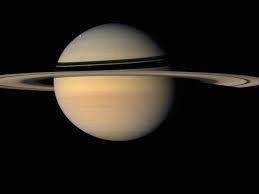
TRUE OR FLASE
THERE IS A ROBOT ON MARS
TRUE
FALSE

WHAT IS THE MAIN POWER SOURCE FOR A ROBTOT
COAL
GAS
ELECTRICIITY
solar energy
WHICH IS NOT A COMPONENT OF A BASIC ROBOT
POWER SUPPLY
INPUT
OUTPUT
MECHANICAL STRUCTURE
TRANSMISSION SYSTEM
Whch of the following is an output device in robotics/automated systems.
Sensors
Signal Conditioners
Actuators
Controller
A computer or machine can think and learn like humans. What is this called?
Artificial intelligence
Information
Data
Prediction
Python is an example of a High Level programming language
True
False
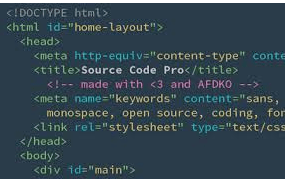
The art of creating a program.
Artistic
Programming
Looping
what can you do with programming
creating prints in d3
None of the above
desktop computer repair and cleaning
game development or projector machinery etc
What is the action of doing something over and over again?
Loop (for example a repeat block)
Algorithm
Typing
Event
What is a coding bug?
a cockroach
a butterfly
a really good thing in computers
a problem or mistake in your program
__________ is the process of finding errors and fixing them within a program.
Coding
Debugging
Compiling
Uploading
How many programming languages are there?
3
5
10
More than 10
What is a programming language?
A computer language used to communicate with computers
A language used to write instructions to a computer
A language in which programmers talk to each other
None of these
Rockets are programmed using a computer.
True
False
Which of the following is not a programming language?
Scratch
Python
Java
Windows
What is a variable?
A place in memory to store values
The length of a computer program
A value that stays the same throughout the program
A value which may vary within the program
Which symbol is used in Python to assign values to a variable?
!=
#
=
==
What is the only language that a CPU can actually understand?
Machine Code
JavaScript
C++
HTML
What is necessary for a computer to understand low-level programming languages?
A transistor
An automator
An assembler
A compiler
What is necessary for a computer to understand high-level programming languages?
A transistor
An automator
An assembler
A compiler
Select all of the high-level programming languages.
Binary Code
Python
Java
Machine Code
What level of programming is closer to binary than English
High Level
Medium Level
Low Level
What is Arduino?
Programming language
Image editing software
Open-source electronics platform
Text editor
What language is the Arduino IDE built on?
Java
HTML
C/C++
Python
How many analog pins are used in Arduino UNO?
6
14
20
24

THESE PINS ARE?
Digital pins
Pines PWM
Analog Pins
Microcontroller

These Pins are ?
Digital Pins
Pines PWM
Analog pins
Microcontroller

What is the highlighted part
Power Regular
Drums
Voltage Regulator
Microcontroller

What is the highlighted part
Connector for external power supply
Power Button
Connector USB
How many digital input/output pins does the Arduino Uno have?
10
19
14
21
choose the right order
output - process - input
process - output - input
input - process - output
input - output - process
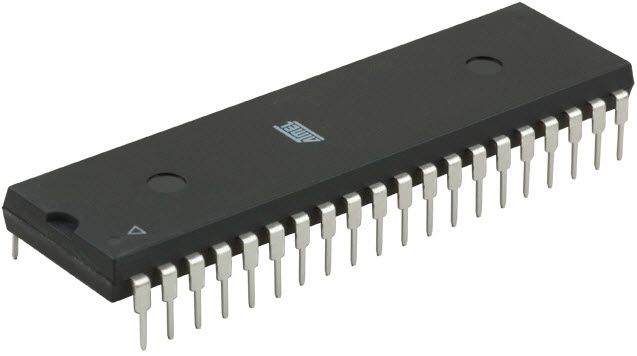
what is the main role of this chip
to heat the board
save the programmed input only
being the brain of the Arduino
there is no role at all
What does IDE stand for?
In Deep Environment
Integrated Development Environment
Internal Deep Escape
IDE
A function is a series of programming statements that can be called by name. Which command is called once when the program starts:
loop()
setup()
(output)
(input)
Arduino IDE consists of 2 functions. What are they?
Build() and loop()
Setup() and build()
Setup() and loop()
Loop() and build() and setup()


Upload
Verify
Coding
Which command is called repetitively over and over again as long as the Arduino has power.
loop ( )
(output)
setup ( )
(input)

What does GPIO stand for?
General Purpose Inner Outer Propeller
General Purpose Input Output Pins
General Purpose Interested Old People
General Purpose Input Output Processor

