
 Worksheets
Unit 1 Test - US Government Foundations 2022
Total questions: 131
Worksheet time: 2hrs 36mins
Time period when leading thinkers began to write about the limiting the power of the government and protecting peoples individual liberty and rights
Enlightenment
Renaissance
New Age
Feudal
Book that claims that humans live in a state of nature. Government is needed to protect people from utter misery and despair.
Leviathan
Social Contract
Keys to a Civil Society
Second Treaty of Civil Government
Philosopher and writer of "The Leviathan" . He believed that life without government is “solitary, poor,
nasty, brutish, and short.”
Thomas Hobbes
John Locke
Benjamin Franklin
AlexanderHamilton
Philosopher who wrote that people are born free and equal and must give consent to be governed.
John Locke
Thomas Hobbes
Jean-Jacques Rousseau
John Adams
Philosopher who stated, “Man was born free, and he is everywhere in chains.” He envisioned citizens voting and participating in government.
Jean Jacques Rousseau
John Locke
Thomas Hobbes
Benjamin Franklin
Philosopher who believed in limited government, a republic and separation of powers
Rousseau
Locke
Hobbes
Montesquieu
Citizens elect leaders who act on their behest. The leaders act to benefit the citizens, otherwise they will be removed from office.
Republicanism
Democracy
Theocracy
Autocracy
Government kept under control by checks and balances and separation of powers
limited government
Autocracy
Democracy
Presidency
The document that laid moral and legal justification for rebellion
Declaration of Independence
The U.S. Constitution
Magna Carta
Federalist Papers
The framer whose nickname became "Father of the Constitution" because of his influence in creating the new plan for the government.
James Madison
George Washington
Alexander Hamilton
George Washington
Elected president of the Constitutional Convention
James Madison
George Washington
Alexander Hamilton
Benjamin Franklin
He emphasized the elevation of the United States to world power.
James Madison
Alexander Hamilton
George Washington
Benjamin Franklin
Built on the ideas of Hobbes, Locke, Rousseau, and Montesquieu
The US Constitution
The legislative branch
The compromise document
The Articles of Confederation
In a state of nature, people are born free and equal
natural law
limited government
social contract
freedom
An agreement between the government and the governed
social contract
natural law
political gospel
independence
Government is created by and subject to the will of the people
popular sovereignty
limited government
independence
republicanism
Provide services, protect people, protect property, welfare of people, natural disasters, education, maintain structure and order, regulate trade
why we have government
What citizens give the government
consent of the governed
divine right theory
Occurs when a person or group of people take control of an area and make everyone follow their rules
force theory of government
divine right theory
social contract theory
rule of law
The belief that people are free and equal by natual right, and that this in turn requires that all peole giver their consent to be governed.
Social Contract Theory
Diving Right Theory
Force Theory
Rule of Law
Belief that God chose the ruler and that the ruler must only answer to God
Social Contract Theory
Divine Right Theory
Force Theory
Consent of the Governed
Taxes, following laws, participation in the common good, voting
Why we have government
What citizens give the government
Social Contract Theory
Oligarchy
A document that spells out the principles by which a government runs and the fundamental laws that govern a society
constitution
rule of law
Declaration of Independence
The United States Constitution
No one is above the law, no matter how rich, powerful or famous
rule of law
separation of powers
rights of the minority
autocrat
Constitutional division of powers among the legislative, executive and judicial branches of government
rule of law
separation of powers
checks and balances
oligarchy
Protecting the rights of small or unpopular groups regardless of what the majority believes.
rights of the minority
freedom of religion
separation of powers
rule of law
A ruler with unlimited power
autocrat
oligarch
democrat
state
A government ruled by a few people
autocracy
oligarchy
dictatorship
republic
A political system signifed by popular sovreignty
democracy
oligarchy
dictatorship
autocracy
Making laws
legislative
executive
judicial
Carry out laws
legislative
executive
judicial
interprets laws
executive
legislative
judicial
Which one is not required to meet the definition of state
permanent population
ultimate sovereignty
independent territory
be part of a country
have an established government
Executive (carries out the laws) President
Judicial (interprets the laws) Supreme Court and lower courts
Popular Sovereignty
Each branch of government has power over the other branches.
Judicial Review
Government officials are limited to only certain powers as stated in the Constitution.
Our government gains its power from consent of the people.
Popular Sovereignty
Limited Government
Checks and Balances
rule of law

The power of a court to determine the constitutionality government actions is an example of:
Judicial Review
Federalism
Implied Powers
The first three words of the constitution are "we the people." Which constitutional principle does this reflect?
Popular Sovereignty
Judicial Review
Separation of Powers
Checks and Balances
government is not ALL powerful to what it wants
limited government
separation of powres
checks and balances
federalism
national and state government share power
separation of power
checks and balances
federalism
limited government
Which of the following is the best definition of Popular Sovereignty
The people hold the power in the government
Powers are divided and shared between the national government and the states
Powers are divided between 3 branches of government
The people must approve of the governments actions
Which government makes treaties and deals with foreign countries
Federal
State
Shared
Who establishes public schools?
Federal
State
Shared
1. Federalism is the idea that power is...
Held only by the Federal Government
Held only by the State Governments
Shared between Three Branches of Government
Shared between Federal and State Governments
What level of Government has the power to collect taxes?
Federal
State
Concurrent (Shared by Both)
"Government of the people, by the people, for the people" demonstrates what principle?
consent of the governed
federalism
rule of law
judicial review
“The powers delegated by the proposed Constitution to the federal government are few and defined. Those which are to
remain in the State governments are numerous and indefinite.”
limited government
popular sovereignty
consent of the governed
checks and balances
“The President, Vice President and all civil Officers of
the United States, shall be removed from Office on
Impeachment for, and Conviction of, Treason, Bribery, or
other high Crimes and Misdemeanors.”
separation of powers
rule of law
consent of the governed
federalism
“Unless [the three branches] be so far connected and blended as to give to each a constitutional control over the others, the
degree of separation ... essential to a free government, can never in practice be duly maintained.”
separation of power
checks and balances
federalism
consent of the governed
“That unnecessary officer the Vice-President, who for want of other employment is made president of the Senate, thereby
dangerously blending the executive and legislative powers...”
separation of powers
federalism
checks and balances
consent of the governed
The Constitution can be interpreted as granting unlimited
government power.
Federalist
Anti-Federalist
Both
A government “of the people” poses little danger to citizens’
rights.
Federalist
Anti-Federalist
Both
Individual rights are a basic part of liberty.
Federalist
Anti-Federalist
Both
Government power must be limited.
Federalist
Anti-Federalist
Both
The system of nobility is a threat to liberty.
Federalist
Anti-federalist
Both
The Constitution makes it possible for government to take power
away from the people.
Federalist
Anti-federalist
Both
The Constitution protects individual rights by not giving the
government any power over those rights.
Federalist
Anti-federalist
Both
It doesn’t make sense to list protections for rights the
government has no power to violate.
Federalist
Anti-Federalist
Both
The Constitution’s limits on power can’t be trusted.
Federalist
Anti-Federalist
Both
Past abuses of power prove the need for limiting government.
Federalist
Anti-Federalist
Both
Listing individual rights is a necessary safeguard against the
possibility of government abuse.
Federalist
Anti-Federalist
Both
The government cannot abuse powers the Constitution hasn’t
given it.
Federalist
Anti-Federalist
Both
In the American colonies, government officials got court orders
authorizing them to enter any location to search for and take goods that
had been smuggled into the country. These court orders were valid for
the lifetime of the current king, plus six months.
Amendment 3
Amendment 4
Amendment 5
Amendment 6
During the 16th and 17th centuries in England, the Star Chamber was
a royal court that heard cases that couldn’t be heard in regular courts.
Before it was finally abolished, the court met in secret, tortured people
to gain information, and sentenced people to huge fines, life in prison,
and even mutilation.
6th Amendment
7th Amendment
8th Amendment
9th Amendment
John Wilkes was both a journalist and a member of the British
Parliament. In 1762, he published a severe criticism of a speech the king
had given. Wilkes was arrested for publishing a “treasonous” newspaper
intended to cause rebellion against the king.
1st Amendment
2nd Amendment
3rd Amendment
4th Amendment
What security is there, that a man [accused of a crime]
shall be furnished with a full and plain description of
the charges against him? That he shall be allowed to
produce all proof he can in his favor? That he shall see the
witnesses against him face to face, or that he shall be fully
heard in his own defense by himself or counsel?.
4th Amendment
5th Amendment
6th Amendment
7 Amendment
Congress may, if they shall think it for the “general
welfare,” establish an uniformity in religion throughout
the United States. Such establishments have been thought
necessary, and have accordingly taken place in almost
all the other countries in the world, and will no doubt be
thought equally necessary in this.
1st Amendment
2nd Amendment
3rd Amendment
4th Amendment
In the bills of rights of the States it is declared, that a well
regulated militia is the proper and natural defense of a
free government...
1st Amendment
2nd Amendment
3rd Amendment
4th Amendment
The powers not delegated to the United States by
the Constitution, nor prohibited by it to the
States, are reserved to the States respectively, or
to the people.
7th Amendment
8th Amendment
9th Amendment
10th Amendment
The enumeration in the Constitution, of certain
rights, shall not be construed to deny or
disparage others retained by the people.
6th Amendment
7th Amendment
8th Amendment
9th Amendment
The founding fathers combined the ideas of the Virginia Plan and the New Jersey Plan to come up with -
Compromise of 1820
Three-fifths compromise
Great Compromise
Constitutional Convention
One of the major issues debated at the Constitutional Convention in Philadelphia was -
proposing a new strategy to proceed with the abolition of slavery
creating a plan for representation of both large and small states
whether or not to remain neutral in the French Revolution
if Missouri should be allowed to join the country as a free state
Northern and Southern delegates vehemently argued on how slaves should be counted as population for representation purposes, the result of this debate was the -
Three-fifths compromise
Great Compromise
Virginia and Kentucky Resolutions
Missouri Compromise
During the Constitutional Convention, James Wilson and Roger Sherman proposed the Three-Fifths Compromise which dealt with how
the government would pass protective tariffs in order to help northern businesses prosper
Maine and Missouri would be crated as slave and free states to keep the balance of power
slaves would be counted as population for representation and taxation purposes
women would be represented in the newly created legislative branch
Which of the following arguments best explains why the Federalists wanted to ratify the US Constitution?
the federal government wouldn't become too powerful because it would share power with the state governments
They believed that a Bill of Rights was the only way to protect the people from the abuses of the government
the executive branch would be able to make and enforce all the laws for the new country
by outlawing slavery the new government would enforce the claims of the Declaration that all men are created equal.
Which of the following quotes would have been said by an "Anti-Federalist"?
the system safeguards such as federalism and separation of powers protect the citizens
no Bill of Rights is needed under the new government because the people will be protected by the states
the economy of our country should be focused on industry, manufacturing, and trade
the rights of the people and the states will be trampled upon by another tyrannical government
Which of the following best explains why the Anti-Federalists were opposed to ratification of the US Constitution?
the federal government wouldn't become too powerful because it would share power with the states and individuals
the system of checks and balances would keep one branch of government from becoming too strong
the new central government would take too much power away from the states and people
under the new government slaves would only count at three-fifths of a person for representation
Anti-Federalist, such as George Mason, refused to ratify the new Constitution, but after much debate they agreed to approve it with the addition of the -
Declaration of Independence
Bill of Rights
Emancipation Proclamation
Declaration of Sentiments


Which of these statements is TRUE about the Great Compromise?
Large states had more power in the Senate and House of Representatives.
Small states had more power in the Senate and House of Representatives.
States had equal power in the Senate, but larger states had more power in the House of Representatives.
Large states had more power in the Senate, but small states had more power in the House of Representatives.
When people give up some of what they want so that they can all agree, this is called ____________.
a convention
a promise
a compromise
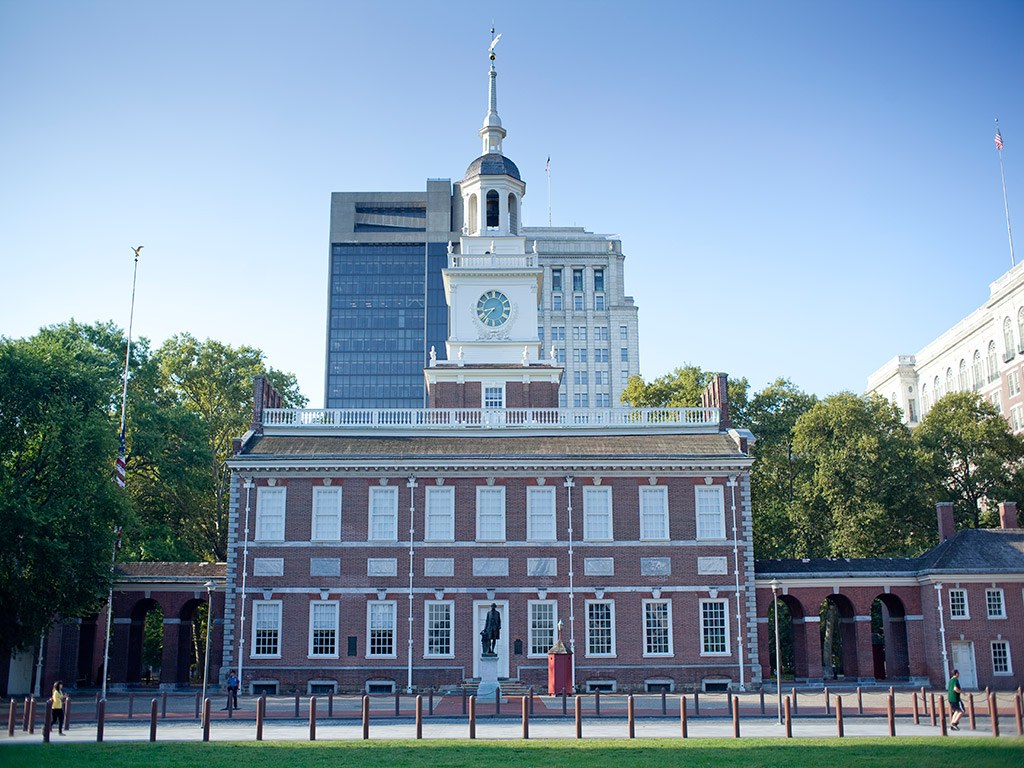
What type of people were at the Constitutional Convention ?
Wealthy, white and educated men
Women
Poor, white and educated men
Native Americans
How did the delegates stop the public from opposing any topics being discussed?
Rule of Secrecy
They allowed debate
Madison published his notes
Washington threatened them
State that refused to attend the Constitutional Convention
Rhode Island
Virginia
Connecticut
New York

Which of these states would benefit most from basing state representation on total population?
Pennsylvania
Rhode Island
Delaware
Georgia
Which state would benefit most from having equal state representation?
Maryland
Rhode Island
North Carolina
New York
Which state would benefit least from counting enslaved people toward state representation?
Maryland
South Carolina
Massachusetts
Virginia
Which state would benefit most from counting enslaved people toward state representation?
New Hampshire
Rhode Island
Massachusetts
Virginia
"I am for leaving the clause as it stands. Let every state import what it pleases. The morality or wisdom of slavery are considerations belonging to the States themselves." Oliver Ellsworth 1787
3/5ths compromise
commerce compromise
great compromise
Presidential election compromise
No power to tax citizens was another weakness of the Articles of Confederation, Why do you think it was like that?
Citizens wanted to protect individual states taxing power
Fear of being over taxed
The Fear of one person having to much "Power" was what weakness of the "Articles of Confederation"?
No power to request money
No Chief Executive
No power to tax
all of the above
The desire to protect individual states from the national government
Laws needed approval by 9 out of 13 States
no chief executive
no power to tax citizens
What event "showed congress how weak the Articles of Confederation was?
Bacon Rebellion
American Revolution
Shay's Rebellion
Constitution
Fear of a Strong Central government, no way to protect the Country, What weakness was this ?
No power to draft an army
no national court system
Who was the president under the articles?
George Washington
Each governor voted on a president
The most senior Senator
There wasn't one

Which of the following was an example of a strength in the Articles of Confederation?
Congress couldn't collect taxes
Provided no common currency amongst the 13th states
Weak national government
Provided a sense of unity and nationhood

What was the main weakness of the Articles of Confederation?
the federal government was too weak
It had no legislative branch
The judicial was too powerful
The executive was too powerful
What was banned in the Northwest Territory?
slavery
public education
religious freedom
What were the two Accomplishments of the Articles of Confederation?
Northeast Ordinace & Ranch Ordinance of 1785
Land Ordinance of 1785 & Northwest ordinance
Land ordinance
none of the above
How did the provisions of the Northwest Ordiance affect U.S. expansion?
By funding a transportation network in uninhabited regions
By establishing a process for territories to govern themselves
By promoting the growth of southern plantation economies
By creating a national bank to loan money to land investors

Under the Articles of Confederation, congress would become the first _______________________.
American newspaper.
magazine articles written by George Washington
uniform made for the army
national government

this law set up a system for mapping and dividing western lands.
Land Ordinance of 1785
Northwest Ordinance of 1787
The Articles of Confederation
The Declaration of Independence
The 14th amendment grants ___________ to anyone who is born in the U.S. including former slaves.
Citizenship
Equal Rights
Due Process Rights
Voting Rights
A State law that does not allow Black citizens to be out past 9:00pm.
- Why is this law a Violation of the Equal Protection Clause?
This law is unfair and treats citizens differently based on their skin color.
It is not right to keep people from being outside after dark
There is no good reason for the law.
Equal Protections means...
All people must be allowed to vote
Slavery must be abolished
everyone must be treated equally under the law.

