
 Worksheets
Grade 6 revision
Total questions: 43
Worksheet time: 22mins
1- ....................................is a single kind of matter that always has a specific makeup, or composition.
Substance
Compound
mixture
mass
The substances that are so evenly mixed that you can't see the different parts are called...........................................
heterogenous
homogenous
Students observed a piece of iron change from shiny to rusty. What caused this change?
a chemical reaction
a heat reaction
a cold reaction
a physical reaction
Which is an example of a different substance being formed?
glass breaking
metal melting
water freezing
wood burning
Identify the change:
Glass breaking
Physical
Chemical
Identify the change:
Wood burning
Physical
Chemical
Bending metal
Physical Change
Chemical Change
Boiling Water
Physical Change
Chemical Change
Dissolving Sugar
Physical Change
Chemical Change
Nail Rusting
Physical Change
Chemical Change
A Candle Burning
Physical Change
Chemical Change
What is matter?
Anything that has mass and takes up space.
The amount of space that an object occupies or takes up
a physical combination of 2 or more substances
a change of matter in size, shape or state of matter without any change in identity.
What are the three states of matter?
solid, liquid and gas
physical change, chemical change, solution
solution, mixture, volume
qualitative data, quantitative data, beaker

Is this an example of a physical or chemical change?
physical
chemical
A change in which NEW substances are formed.
Chemical change
Physical change
Which of the following is NOT an example of chemical change?
sour milk
burning wood
breaking a pencil
rust
In an endothermic reaction, heat is ...
taken in
given out
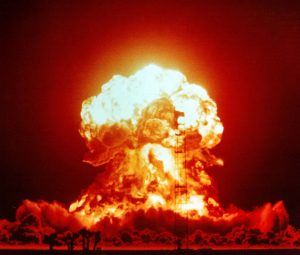
This is when heat is absorbed, it is an
Exothermic reaction
endothermic reaction
both
none
When heat is released it is an
exothermic reaction
endothermic reaction
both
none

A melting ice cube is an example of
exothermic
endothermic
none
both

Fire is an example of
exothermic reaction
endothermic reaction
none
both
Mass, Volume and density are all properties of what?
Gravity
Formulas
Matter
Weight
What does Matter make up?
solids
gases
liquids
all of the above
To calculate the density of an object, its mass is ________its volume?
added to
divided by
multiplied by
subtracted from
If the volume of an object is 5 cm3 and its mass is 55g, what is its density?
11g/ cm3
50cm 3/g
15 g/cm
275 g/ cm3
The unit for volume is
grams
milliliters (mL)
Newton
Centimeters Cubed
1- ...................................... is a characteristic of substance that can be observed without changing it into another substance.
Chemical property
Physical property
As temperature increases, density decreases
True
False
Energy can created or destroyed
True
False
When particles in matter move, they create __________.
a thermometer
frozen energy
thermal energy
water
What does a thermometer measure?
Check all that are true.
the average motion or energy of particles
the total motion or energy of particles in matter
the speed at which an object is moving
how hot or cold something is
1- The total energy of all the particles in an object.
Thermal energy
Temperature
Matter cannot be created nor destroyed.
Law of Conservation of Energy
Law of Conservation of Matter
Law of Conservation of Environment
Law of Conservation of Volume
A mixture in which its composition is the same throughout the mixture and it cannot easily be identified nor separated
Homogenous Mixture
Heterogenous Mixture
Water and Sugar Mixture are what kind of mixture
Homogenous Mixture
Heterogenous Mixture
A mixture in which its composition is not the same throughout the mixture and particles or substances in the mixture can still be identified and separated
Homogenous Mixture
Heterogenous Mixture

Refer to the picture shown. What kind of mixture is it?
Homogenous Mixture
Heterogenous Mixture

Refer to the picture shown. What kind of mixture is it?
Homogenous Mixture
Heterogenous Mixture

Refer to the picture shown. What kind of mixture is it?
Homogenous Mixture
Heterogenous Mixture

