

wayground logo

Free Printable Worksheets

NEW

Font size

S
M
L
XL
Worksheets

Cell Transport

Total questions: 28

Worksheet time: 28mins
Name
Class
Date
1.
Bacteria is what kind of cell?
a)
Eukaryotic
b)
Prokaryotic
2.
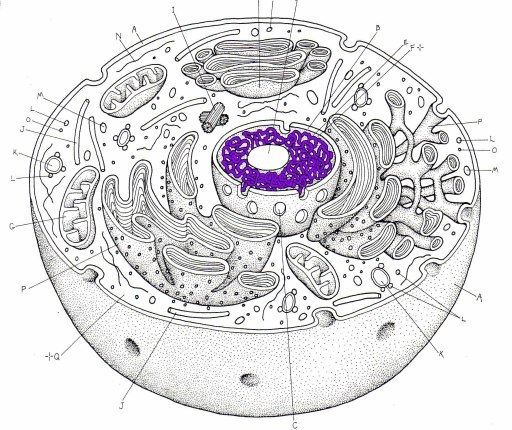
What kind of cell is this?
a)
Eukaryotic
b)
Prokaryotic
3.
Plants and animal cells are examples of ___ cells 
a)
prokaryotic cells 
b)
eukaryotic cells 
4.
What type of cell does not have a nucleus?
a)
eukaryotic 
b)
prokaryotic 
5.

This is the correct order of structural organization in an organism

a)

Tissues->Cells -> Organ system-> Organs-> Organisms

b)

Cell -> Organisms -> Tissues -> Organs -> Organ systems

c)

Cells -> Tissues -> Organs -> Organ Systems -> Organisms

d)

Organs -> Tissues -> Cells -> Organ systems -> organisms

6.
What is the diffusion of water only across a cell or semi-permeable membrane?
a)
Osmosis
b)
Diffusion
c)
Active Transport
d)
Passive Transport
7.

Osmosis is specifically.....

a)

diffusion of water molecules through a semi-permeable mebrane from an area of low water concentration to an area of high water concentration

b)

the diffusion of particles from an area of high water concentration to an area of low water concentration

c)

diffusion of water molecules through a semi-permeable membrane from an area of high water concentration to an area of low water concentration

d)

the diffusion of particles from an area of low water concentration to an area of high water concentration

8.
In which case would a cell most likely shrink?
a)
when placed in a solution containing a high salt concentration
b)
when placed in a isotonic solution
c)
when placed in a solution containing a low pH
d)
when placed in a solution containing distilled water
9.
Active transport requires energy because...
a)
The cell is moving something against a concentration gradient
b)
The cell is moving something with a concentration gradient
10.
A student noticed that placing wilted lettuce in a bowl of cool water caused the lettuce to become more crisp and firm. What is the best explanation for his observation?
a)
Water moved into the lettuce cells by active transport.
b)
Water moved into the lettuce cells by osmosis.
c)
Salt moved into the lettuce cells by diffusion.
d)
Water moved out of the lettuce cells by osmosis.
11.
_______ regulates what enters and leaves a cell.  
a)
Cell Membrane
b)
Nucleus
c)
Mitochondria
d)
Cytoplasm
12.
The picture below is an example of _________________.
a)
osmosis
b)
isotonic
c)
diffusion
d)
active transport
13.

Nemo and other ocean dwelling fish cannot survive in freshwater because......

a)

freshwater is hypertonic to Nemo's cells and will result in water leaving them causing the cells to shrink

b)

freshwater is hypotonic to Nemo's cells and will result in water leaving them causing the cells to shrink

c)

freshwater is hypertonic to Nemo's cells and will result in water entering them causing the cells to swell and burst

d)

freshwater is hypotonic to Nemo's cells and will result in water enter them causing the cells to swell and burst

14.

In the cell pictured, which way would water move?

a)

Into the cell, causing the cell to swell

b)

Out of the cell, causing the cell to shrink

c)

In and out of the cell equally, keeping the shape the same

15.

In the cell pictured, where would water move? 

a)

Into the cell, causing it to swell

b)

Out of the cell, causing it to shrink

c)

In and out of the cell equally, causing the shape to stay the same

16.

In the cell pictured, which way would water move?

a)

Into the cell, causing the cell to swell

b)

Out of the cell, causing the cell to shrink

c)

In and out of the cell equally, keeping the shape the same

17.

In the cell pictured, which way would water move?

a)

Into the cell, causing the cell to swell

b)

Out of the cell, causing the cell to shrink

c)

In and out of the cell equally, keeping the shape the same

18.
What is diffusion?
a)
when molecules move 
b)
when molecules move from a high concentration to a low.
c)
no movement 
d)
molecules move everywhere
19.
Ideally, your cells should be in a(n) _______ solution
a)
Hypertonic
b)
Hypotonic
c)
Isotonic
d)
Cola
20.
The cell below is in a _________ solution.
a)
Hypotonic
b)
Hypertonic
c)
Isotonic
21.
Which cell is placed into a hypotonic environment? 
a)
A
b)
B
c)
C
d)
D
22.
Which way will the water molecules move during osmosis?
a)
Out of the cell, so the cell shrinks.
b)
Out of the cell, so the cell swells.
c)
Into the cell, so the cell shrinks.
d)
Into the cell, so the cell swells.
23.
 An animal cell placed in a hypertonic (salty) solution will
a)
Stay the same
b)
Shrink- get smaller
c)
Swell- get bigger
24.
What is the definition of  Selective Permeability?
a)
The movement of materials across the cell membrane that requires NO ENERGY from the cell.
b)
The movement of materials through (or across) the cell membrane
c)
The ability of the cell membrane to allow some things to pass through while preventing other things from passing through.
d)
The movement of molecules from an area of high concentration to a area of low concentration 
25.
What type of cellular transport uses energy?
a)
Passive Transport
b)
Active Transport
26.
In which case would a cell most likely shrink?
a)
when placed in a solution containing a high salt concentration
b)
when placed in a isotonic solution
c)
when placed in a solution containing a low pH
d)
when placed in a solution containing distilled water
27.
Diffusion and Osmosis are examples of...
a)
Active Transport
b)
Passive Transport
28.
What type of cellular transport uses energy?
a)
Passive Transport
b)
Active Transport
