
NEW
Font size
 Worksheets
Unit 1 Test: Intro to Biology
Total questions: 50
Worksheet time: 39mins
A testable explanation of a situation is called a(n) _____________.
Experiment
Data
Hypothesis
Conclusion
_____________ is an explanation of WHY natural phenomena occur and is supported by many observations and experiments over time.
Experiment
Data
Theory
Law
In an experiment, the group exposed to the factor being tested is the ___________.
Experimental group
Control group
Which of the following is a variable that stays the SAME during an experiment?
Constant
Independent variable
Dependent variable
Control Group
Scientific Question: Does playing video games improve reaction time? What is the independent variable?
playing video games
reaction time
type of video game
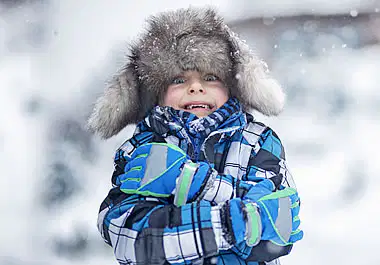
When you step out into the cold, your body shivers in order to maintain its temperature at 98.6F.
All living things metabolize
All living things have cell structure
All living things maintain homeostasis
All living things grow & develop

The roots of a plant grow towards a source of ground water.
All living things metabolize
All living things reproduce
All living things respond to stimuli
All living things grow & develop
The smallest unit of life that makes up ALL living things is called a (an)_________.
DNA
Cell
Atom
Macromolecule
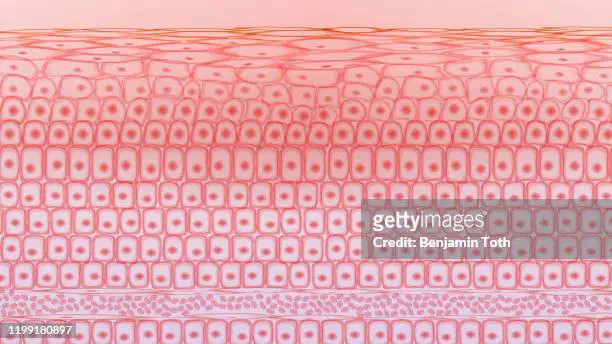
A group of similar cells that come together to perform a specific function is a/an:
organ
organism
organ system
tissue

A collection of living organisms that belong to different populations, but all live in the same area and interact with one another, is a...
Population
Ecosystem
Community
Ecosphere
Which of the following is NOT a characteristic of all living things?
Homeostasis
Reproduction
Breathing
Growth and development
Type of reproduction that produces two genetically identical offspring from one parent is _________________.
Sexual
Asexual
Reproduction
Homeostasis
All living things evolve

Which type of cell has a nucleus & membrane-bound organelles?
Eukaryotic
Prokaryotic
Which characteristic of life pertains to natural selection (the process by which organisms either adapt to their environment to survive or risk extinction)?
Evolution
Heredity
Reproduction
Metabolism

To which kingdom does this organism belong?
Protist
Plant
Animal
Fungi

All living things or organisms in an ecosystem are:
Biotic factors
Abiotic factors
a BIOTIC factor.
an ABIOTIC factor.
Which of the following correctly lists the levels of biological organization from LEAST complex to MOST complex?
cell, tissue, organ, organ system, organism
cell organism organ system organ tissue
organ system organism organ tissue cell
organism organ system organ tissue cell
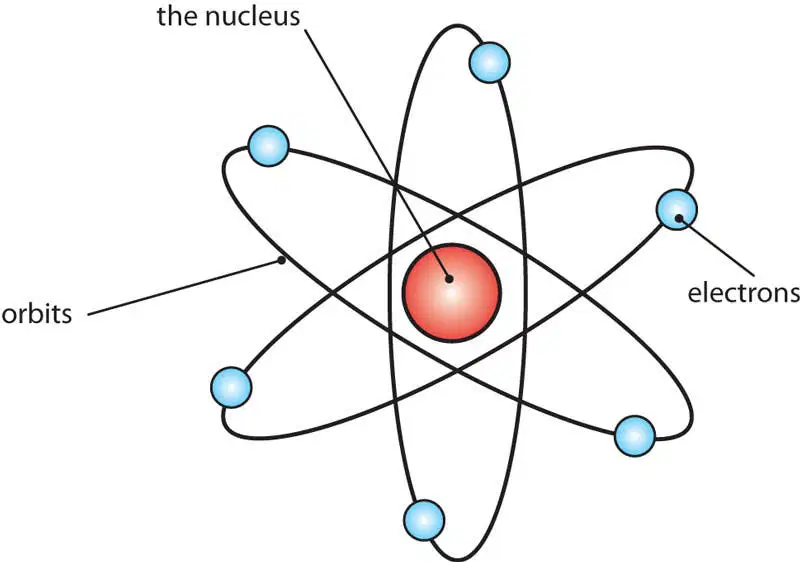
What does the nucleus of an atom contain?

How many VALENCE electrons does this carbon atom have?
2
4
8
Why do chemical bonds form between atoms?
so the number of protons equals the number of electrons
to stabilize atoms and fill the outermost electron level
so an atom can become unstable
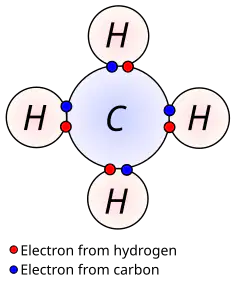
Which of the following describes Covalent Bonds?
Bonds form because of opposite charges
Electrons are shared to fill outer electron shells
Electrons are transferred between atoms

Hydrogen Bond
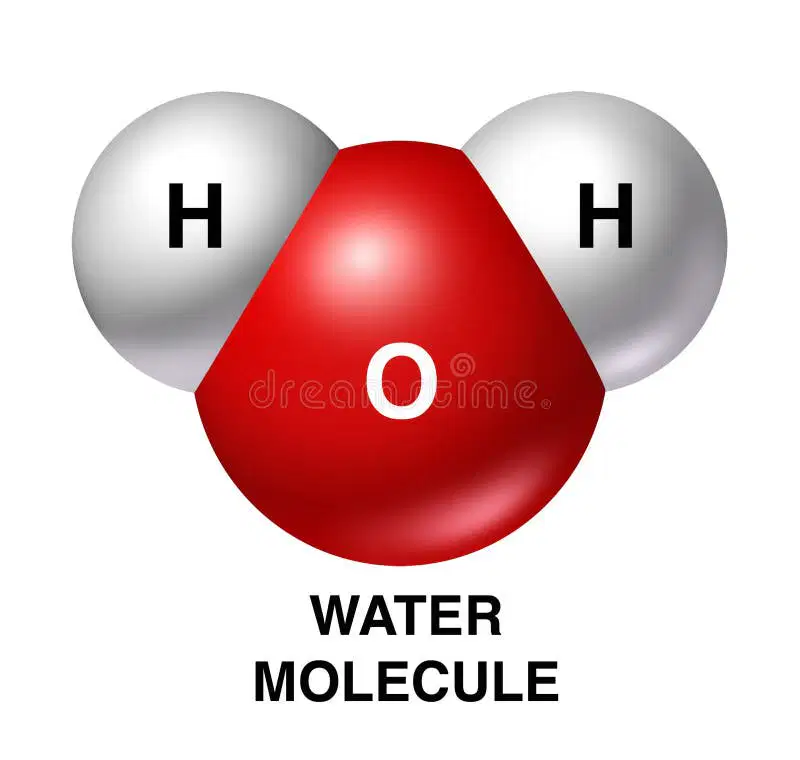
Which end of the water molecule has a partially positive charge?


The unequal sharing of electrons gives the water molecule a partial negative charge near its oxygen atom and a partial positive charge near its hydrogen atoms.
The equal sharing of electrons causes oxygen and hydrogen to have neutral charges.
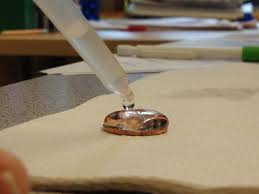
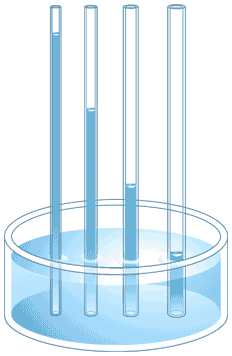
What is the term for water's ability to defy gravity and climb up a tube?
Capillary Action
Specific Heat
Universal Solvent
Magic
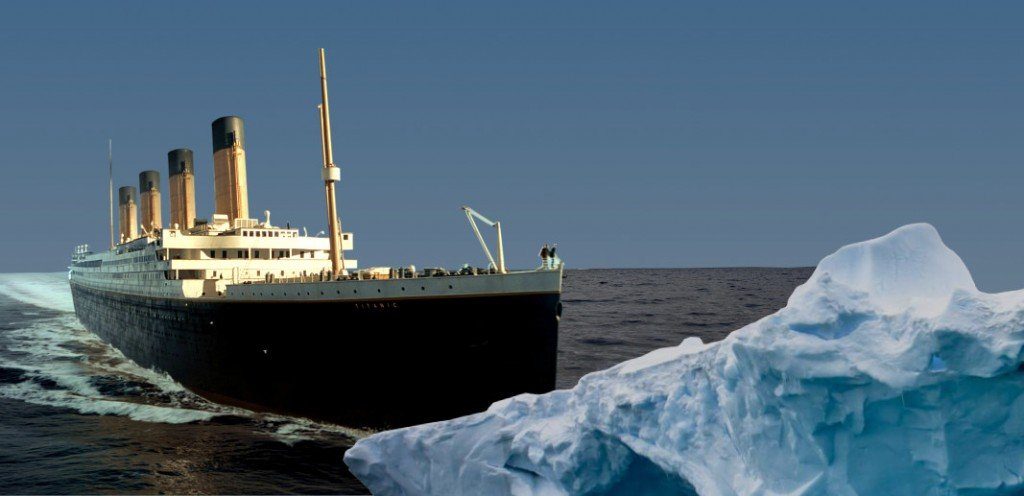
Why does ice float?
water expands when it freezes, making ice less dense than water
water compacts when it freezes, making ice more dense than water
hydrogen bonds in water push the ice to the surface
ice is afraid of water, and avoids it

How many bonds will a C atom form?
1
2
3
4

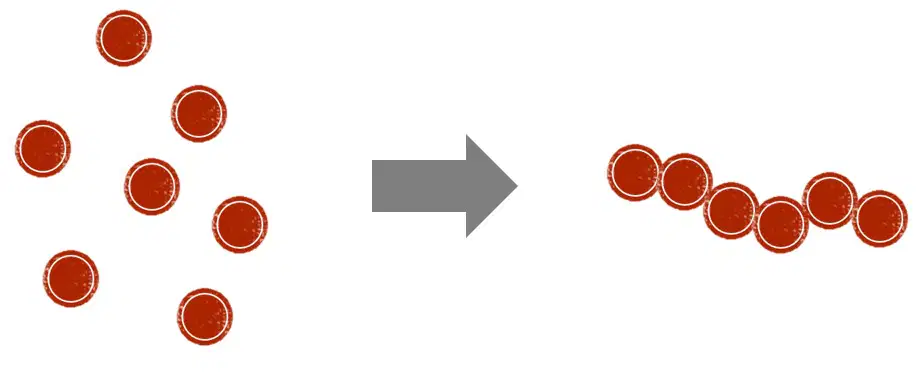
Many monomers bond together to form _____________ through the process of ________________________.
dimers, dehydration synthesis
polymers, dehydration synthesis
polymers, hydrolysis
dimers, hydrolysis

Which of the following is the monomer of a lipid?
Polysaccharide
Monosaccharide
Fatty acid
Triglyceride


The "R" group stands for a different molecule that can be placed to change the amino acid. How many "R" groups are there?
5
10
20
26
Match the disaccharide (carbohydrate) with the appropriate picture.


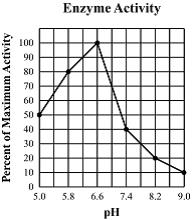

Identify Letter C
enzyme
active site
substrate
products
What does an enzyme do to a chemical reaction?
Speeds it up (catalyzes)
Slows it down
Which of the following best defines denature?
An enzyme's shape changes causing it to no longer catalyze reactions.
A substrate's shape changes to match the enzyme
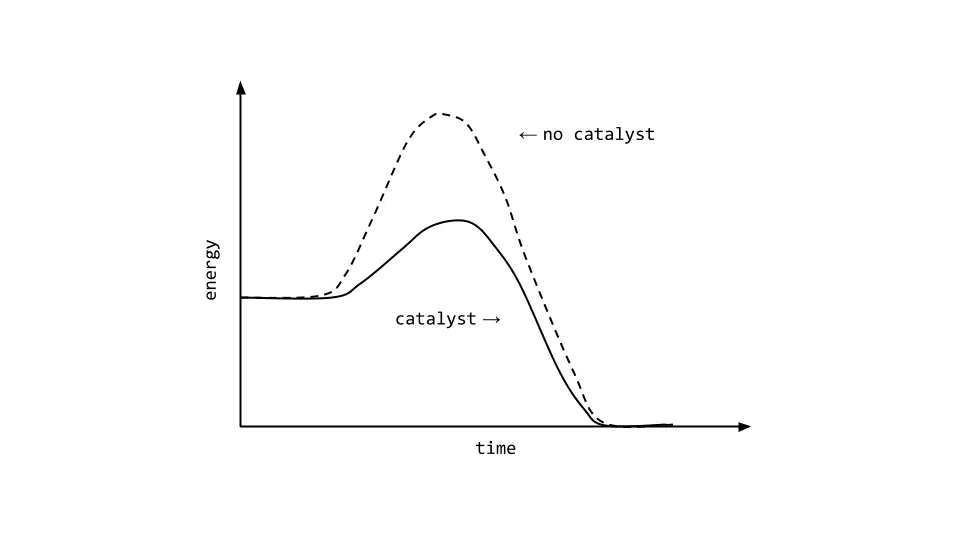
What does an enzyme do to the activation energy needed for a chemical reaction?
Raises Activation Energy
Lowers Activation Energy

Which of the following would NOT denature an enzyme?
Heat
Water
pH
Salt

