wayground logo

Free Printable Worksheets

Font size

S
M
L
XL
Worksheets

Bath Bomb Unit Test

Total questions: 53

Worksheet time: 35mins

Name
Class
Date
1.

What is at the center of every atom?

a)

nuclear

b)

nucleus

c)

electron

d)

molecule

2.

_ and _ make up the nucleus of an atom.

(a)  

3.

The number of protons in an atom is equal to the number of _ .

(a)  

4.

The number of _ determines the type of element an atom makes.

(a)  

5.

When two or more atoms combine, a _ forms.

(a)  

6.

What is a compound?

a)

A molecule that is formed from two different elements/atoms.

b)

A molecule that is formed from two or more of the same element/atom.

c)

A tiny atom that makes up an atom.

d)

The center of an atom that is formed by neutrons. protons, and electrons.

7.

Which of the following cannot be broken down into something simpler?

a)

a compound

b)

an element

c)

a chemical formula

d)

a mixture

8.

A subscript...

a)

the number of protons in an atom.

b)

the number of molecules present.

c)

shows the number of atoms of a specific element in a compound.

d)

the number an element is on the periodic table.

9.

A coefficient...

a)

the number of protons in an atom.

b)

the number of molecules present.

c)

shows the number of atoms of a specific element in a compound.

d)

the number an element is on the periodic table.

10.

In order for a compound to form, a _ reaction must occur.

(a)  

11.

The atomic number of an element represents the number of _ in an atom.

(a)  

12.

How is the Periodic Table arranged?

a)

alphabetical order

b)

atomic number

c)

the year the element was discovered

d)

Albert Einstein decided how to arrange it.

13.

What is located on the horizontal rows on the Periodic Table?

a)

families

b)

groups

c)

periods

14.

In which direction would you find groups/families?

a)

horizontal

b)

vertical

15.
These contain only one kind of atom. 
a)
element 
b)
compound 
c)
mixture 
d)
water 
16.
This picture represents which of the following?
a)
element
b)
compound
c)
mixture of elements
d)
mixture of compounds
17.
Contains two or more atoms combined
a)
Elements
b)
Compounds
c)
Mixtures
18.
The air is a _________. 
a)
element 
b)
mixture 
c)
compound 
d)
energy 
19.

The diagram shows

a)

element

b)

mixture

c)

compound

20.
An element is made up of only one kind of _____.
a)
isotope
b)
plastic
c)
atom
d)
metal
21.
What is salad?
a)
element
b)
compound
c)
mixture
22.
Classify the picture with the correct label.
a)
Element
b)
Compound
c)
Mixture of Elements
d)
Mixture of Compounds
23.
Which of the following is an element?
a)
Sugar
b)
Salt
c)
Water
d)
Oxygen
24.
A substance combined physically, but never chemically is a(an)...
a)
element
b)
molecule
c)
compound 
d)
mixture
25.

Describe this sample

a)

Pure element

b)

Pure compound

c)

Mixture of elements

d)

Mixture of compounds

26.
Describe this sample
a)
Pure compound
b)
Mixture of elements
c)
Mixture of compounds
d)
Mixture of elements and compounds
27.

Pure substances are formed and separated by...

a)

Chemical changes only

b)

Physical changes only

c)

Physical and Chemical changes

28.

Which term below best matches the picture?

a)

atom

b)

molecule

c)

compound

29.

What term below matches this definition: group of two or more of the same atoms held together by chemical bonds?

a)

Atom

b)

isotope

c)

molecule

d)

compound

30.

What makes MOLECULES and COMPOUNDS the same?

4 lines
31.

What makes MOLECULES and COMPOUNDS different?

4 lines
32.

Blue color: Chemical or Physical Property

a)
Chemical Property
b)
Physical Property
33.
Density: Chemical or Physical Property
a)
Chemical Property
b)
Physical Property
34.
Flammability (burns): Chemical or Physical Property
a)
Chemical Property
b)
Physical Property
35.

Reacts with acid: Chemical or Physical Property

a)
Chemical Property
b)
Physical Property
36.

Melting point: Chemical or Physical Property

a)
Chemical Property
b)
Physical Property
37.

Which one of these is a chemical property?

a)

Melting point

b)

Boiling point

c)

Color

d)

Toxicity

38.

is the ability of a substance to dissolve in a liquid

a)

malleability

b)

luster

c)

oxidation

d)

solubility

39.
Which two groups on the Periodic Table are the MOST reactive?
a)
Group 1 and Group 17
b)
Group 2 and Group 16
c)
Group 13 and Group 15
d)
Group 17 and Group 18
40.
How many valence electrons are elements trying to reach in their outer shells?
a)
1
b)
2
c)
5
d)
8
41.
What determines the reactivity of an element?
a)
Size of its nucleus
b)
Number of total electrons
c)
Number of valence electrons
d)
Number of shells
42.
How do you determine the number of valence electrons an element has?
a)
Look at its period
b)
Look at its group
c)
Look at its atomic number
d)
Look at its atomic mass
43.
Substances that form as the result of a chemical reaction
a)
products
b)
reactants
c)
coefficients
d)
subscripts
44.
Substances present at the start of a chemical reaction
a)
subscripts
b)
coefficients
c)
reactants
d)
products
45.

How many oxygen atoms are in the products for the chemical reaction below?
4Fe + 3O2  2Fe2O34Fe\ +\ 3O_{2\ }\rightarrow\ 2Fe_2O_3  

a)

2

b)

3

c)

5

d)

6

46.

The Law of Conservation of Mass says that matter can neither be __________ or __________.

a)

created; destroyed

b)

recycled; renewed

c)

subtracted; added

d)

joined; separated

47.

How many atoms are in the products below?
4Fe +3O2  2Fe2O34Fe\ +3O_{2\ }\rightarrow\ 2Fe_2O_3  

a)

7

b)

10

c)

17

d)

20

48.
A 55-gram egg is placed in a pot. After the egg is boiled, which is most likely the mass of the egg?
a)
50 
b)
55 
49.
In a reaction A + B ----> C,  reactant A has 5g and product  C has 9g. How many grams does reactant B should have? 
a)
4g
b)
5g
c)
9g
d)
14g
50.
Is this equation balanced or unbalanced? 
H2 + O2 --> H2O
a)
balanced
b)
unbalanced
51.

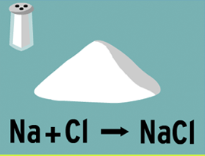
When sodium and chlorine combine to form sodium chloride, sodium chloride is the:

a)

Originator

b)

Reactant

c)

Product

d)

Produce

52.
Jason poured 500 grams of water into a container and tightly sealed it. The water was allowed to freeze. Which is most likely true about the ice that formed?
a)
The mass of the ice is the same as the mass of the water.
b)
The mass of the ice is greater than the mass of the water.
c)
The ice formed is a different substance than the water.
d)
The ice formed is the same temperature as the water.
53.
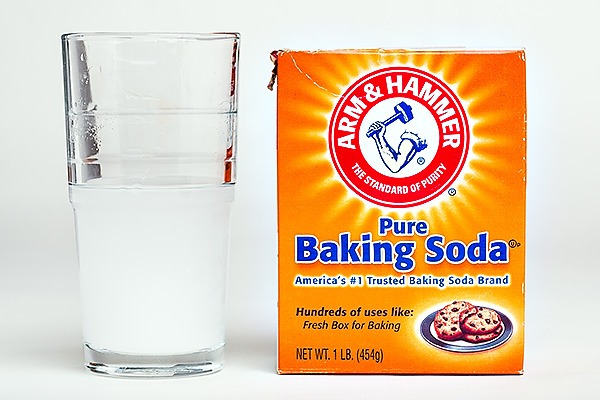
Anthony is performing an experiment. He adds 0.25 grams of baking soda to 5 grams of water and stirs. Anthony watches as the baking soda dissolves in the water. If Anthony weighs the water and baking soda solution, what will its mass be?
a)
4.75 grams
b)
5.0 grams
c)
5.25 grams
d)
7.5 grams