
 Worksheets
Chemical Formulas
Total questions: 48
Worksheet time: 32mins
The _____ describes the atoms in a compound.
Chemical Equation
Chemical Formula
Chemical Symbol
Coefficient
How many elements are in C6H12O6?
1
2
3
4
How many atoms of carbon (C) are in C6H12O6?
3
6
12
24
Element or Compound?
H2O
Element
Compound
Which of the following is a compound?
Co
O2
C
CO2
Which is the correct formula for:
3 Hydrogen (H)
1 Sulfur (S)
4 Oxygen (O)
H3SO4
HSO4
H4S3O
H2O
How many TOTAL atoms are in:
H2SO4
6
5
7
3
How many atoms of Sodium (Na) are in 6NaCl?
1
12
3
6
The substances at the beginning of a chemical equation are called the ______
product
yield
chemical symbol
reactants
How many different elements are present in H2COCH2
5
4
3
2
The ______ are numbers found on the lower right-hand side of an element symbol.
Coefficient
Exponent
Multiplier
Subscript
4CF2Cl2
C = 4, F = 4, Cl = 2
C = 1, F = 8, Cl = 8
C = 4, F = 8, Cl = 8
C = 1, F = 4, Cl = 8
H2SO4
H = 2, S = 4, O = 4
H = 2, S = 1, O = 4
H = 8, S = 4, O = 4
H = 2, SO = 4
A ______ is a number written in front of a chemical formula.
Coefficient
Subscript
Exponent
Coordinator
A subscript is the small number below the element symbol that tells the number of _______ of that element.
atoms
valence electrons
protons
elements
How many atoms are present if there is no subscript following the element symbol?
0
2
only 1
1 million
Coefficients tell the number of __________ in a formula.
Molecules
Atoms
Elements
Oxygen
Reactants are
new substances
old substances
likely to disappear
likely to appear
When writing a chemical equation, reactants are on the _____________ while products are on the _________________.
top, bottom
right, left
left, right
bottom, top
The law of conservation of mass states
chemical reactions create new atoms
atoms cannot be created or destroyed
reactants vanish once a reaction takes place
products appear when a reaction takes place
The amount of atoms on each side of a chemical equation are
different
the same
The products of a reaction have the same ________as the reactants.
molecule
atoms
subscripts
coefficients
2H2 + O2 --> 2H2O
How many Magnesium atoms are in 10MgCl2?
10
5
20
How many atoms are there TOTAL in H2SO4 ?
6
5
7
3
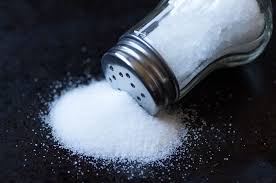
NaCl is the chemical formula for salt. Is NaCl considered a compound or an element?
element
compound
both
neither
The ________________ which are represented by a single uppercase letter, or represented by an uppercase letter followed by a lowercase letter. This tells you the types of elements in the compound.
metals
element symbols
metalloids
nonmetals
The Law of Conservation of Mass States
Energy cannot be created nor destroyed, it can only change form.
Mass cannot be created nor destroyed, it can only change form.
Mass can be created or destroyed, it cannot change form.
All the matter is made up of
Atoms
Mixtures
Compounds
Reactions
An element is formed by
Atoms of the same kind
Atoms of different kind
compounds and atoms
Compounds and mixtures
IS a substance formed by atoms of a different kind
Element
Compound
Mixtures
Atoms
How many oxygen atoms are in the products for the chemical reaction below?
4Fe + 3O2 → 2Fe2O3
2
3
5
6
The Law of Conservation of Mass says that matter can neither be __________ or __________.
created; destroyed
recycled; renewed
subtracted; added
joined; separated
How many atoms are in the products below?
4Fe +3O2 → 2Fe2O3
7
10
17
20
According to the Law of Conservation of Mass, what happens to the wood and oxygen when it is burned?
The wood disappears.
It stays the same chemically.
The atoms in the wood and oxygen rearrange and form smoke and ash.
Nothing.

