
 Worksheets
Chem: Physical Changes
Total questions: 42
Worksheet time: 21mins
Which of the following is a physical change?
Iron is oxidized to iron oxide
Aluminum metal is pounded into thin sheets
Copper reacts with a strong acid
Sodium metal explodes on contact with water
Jolene wants to experiment with sugar cubes. Which of the following causes a sugar cube to only change physically, not chemically?
burning the sugar cube with a match
crushing the sugar cube and dissolving it in water
dehydrating the sugar cube with sulfuric acid
chewing the sugar cube and digesting it
A physical change occurs when…
both the appearance of a substance and its phase change.
the appearance of a substance changes but its phase does not.
the phase of a substance changes but its appearance does not.
neither the appearance of a substance nor its phase changes.


Density (mass per unit volume): Chemical or Physical Property

Solubility (ability to dissolve): Chemical or Physical Property

Brittleness (how easily is breaks): Chemical or Physical Property


Luster (how shiny): Chemical or Physical Property

A physical property can be observed __________ a chemical reaction
during
without
Malleability, the ability to be flattened into thin sheets, is a ---property.
Physical
Chemical


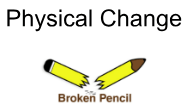
Is this an example of a physical or chemical change?
physical
chemical

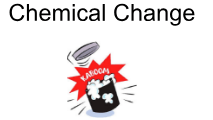
Is this an example of a physical or chemical change?
physical
chemical
How shiny something is is called?
Luster
Malleiablity
Ductility
Conductivity
Jolene wants to experiment with sugar cubes. Which of the following causes a sugar cube to only change physically, not chemically?
burning the sugar cube with a match
crushing the sugar cube and dissolving it in water
dehydrating the sugar cube with sulfuric acid
chewing the sugar cube and digesting it
When you fold a piece of paper, which physical property changes?
The color
The texture
The size
When we cut a piece of paper into triangles, which physical properties change?
The smell and taste
The texture and smell
The size and shape
When we add heat to butter, the butter _________
Changes colors
Melts and turns into a liquid
Freezes and turns into a solid
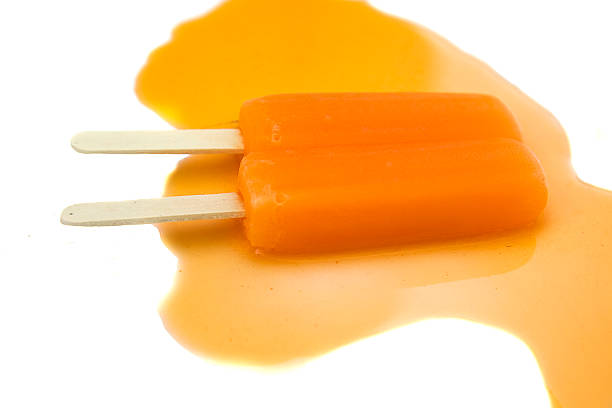
What kind of change is a melting popsicle?

What kind of change is freezing water into ice cubes?

What kind of change is cutting your hair?
It is a process in which a liquid changes into solid. This process involves the release or loss of heat.
Mel
Freezing
Evaporation
Condensation
It is the process in which a liquid changes into a gas.
This process requires the addition or absorption of heat.
Melting
Freezing
Evaporation
Condensation
Which of these are physical changes?
breaking glass
ripping paper
sharpening a pencil
folding a shirt
Which of these are examples of changes in the physical state?
Ice cube melting
Water boiling
Freezing rain
mixing salt and water
______________________ is the change from solid to liquid.
evaporation
condensation
melting
freezing
______________________ is the change from liquid to solid.
evaporation
condensation
melting
freezing
What type of change took place?
steamy bathroom mirror
evaporation
condensation
melting
freezing
A................... is a combination of two or more substances that keep their identities.
mixture
solution

