
 Worksheets
Physical and Chemical Properties
Total questions: 30
Worksheet time: 15mins
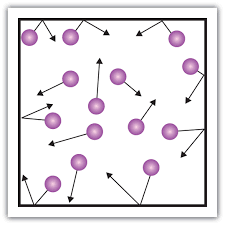
A gas typically consists of:
low energy particles that experience high attractive forces between them.
low energy particles that experience no attractive forces between them.
high energy particles that experience high attractive forces between them.
high energy particles that experience little attractive force between them
Which image shows particles in a solid?


This state of matter has a constant volume, but fits the space of the container holding it.
Solid
Liquid
Gas
Plasma
This state of matter has a firm, unchanging physical structure.
Solid
Liquid
Gas
Plasma
The property of metal by which it can be drawn into wires is
sonority
ductility
malleability
conductivity
Which of the following are properties of a non-metal?
Conducts electricity and heat well
Can be hammered into thin sheets
Is brittle and breaks easily
Has a shinny, metallic luster

Identify the product(s) in this word equation
Sodium
Sodium chloride
Sodium and Chlorine
Sodium and sodium chloride
In a word equation the REACTANTS
Are written on the right hand side of the arrow
Are produced in a chemical reaction
Are always the same
Are the substances that react together

What are the reactants in this word equation?
Carbon dioxide and oxygen
Carbon dioxide and water
Oxygen and glucose
Oxygen and water

Magneisum reacts with oxygen to form magnesium oxide. The correct word equation is...
A
B
C
D
Which of the following is an example that includes evidence of a chemical change?


What is the evidence that a chemical change has taken place?
gas production
change in energy
change in color
production of a precipitate

Identify the change as physical or chemical
physical
chemical

Identify the change as physical or chemical.
physical
chemical
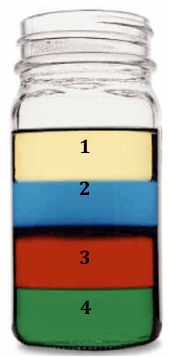
Which if the following is described as being pure substances?
elements
compounds
elements and compounds
mixtures
Which of the following describes a substance that has been physically combined and is NOT uniform throughout (you see the DIFFERENT parts that make it up)?
Homogeneous Mixture
Compound
Heterogeneous mixture
element

atom

What kind of mixture is shown in the picture?
Homogeneous Mixture
Heterogeneous Mixture
When one or more substance is combined CHEMICALLY it is called __________________.
compound
element
mixture
solution

The diagram shows
element
mixture
compound
This method separates dissolved substances based on differences in how well they dissolve in a solvent.
Filtration
Evaporation
Distillation
Chromatography
This method requires the use of a condenser.
Filtration
Evaporation
Distillation
Chromatography
Which method separates substances based on them having different boiling points?
Filtration
Evaporation
Distillation
Chromatography
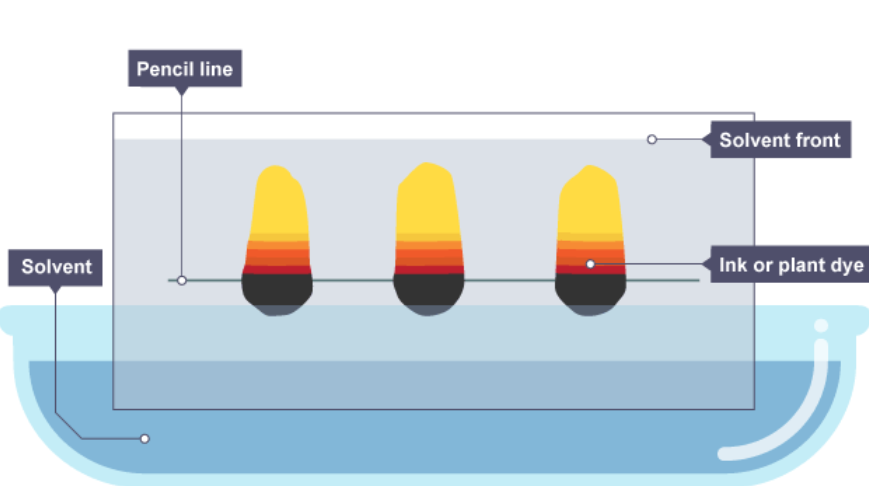
Which method is this a picture of?
Filtration
Evaporation
Distillation
Chromatography

