
 Worksheets
Unit 2 Atomic Structure Test Review
Total questions: 37
Worksheet time: 52mins
This quiz will go through everything we learned this unit, with 1 question per topic.
Assume each concept in this Quizizz will be on your test this week Wednesday/Thursday.
Take note with concepts you struggle with, these are ones you need to practice more and/or seek extra help to understand.
Sounds good!
no.
What did Rutherford discover about atoms?
An atom is always negatively charged.
An atom is mostly empty space, but has a dense positively charged center(nucleus).
An atom is always positively charged.
All particles will pass straight through gold foil with no change in path.
Which part of the atomic theory did Niels Bohr prove?
there are electrons
there is a nucleus
electrons are in energy levels
gold foil experiment
What determines the identity of the atom?
protons
neutrons
electrons
isotopes
Which shows the correct parts of the nucleus?
Neutron and Electron
Neutron and Proton
Proton and Electron
Proton, Neutron and Electron
Which part of an atom has the smallest mass?
Proton
Neutron
Electron
They are all the same
Which part of an atom has a positive charge?
Proton
Neutron
Electron
None of them
Which part of an atom has a negative charge?
Proton
Neutron
Electron
None of them
Which part of an atom has no charge?
Proton
Neutron
Electron
None of them
The questions you've answers thus far were on Atomic Theory and PEN.
Atomic Theory - theories scientists discovered explaining what makes up the atom PEN - properties of protons, electron, neutrons
How comfortable do you feel with these topics?
Great! Ready to test!
Good, this review refreshed my memory. I will need to review again before the test.
More confident about one topic than the other.
I am completely lost and need help.
When two atoms of the same element have different masses, they are called ______, and have a different number of ______.
Neutrons; Isotopes
Atoms; Isotopes
Isotopes; Protons
Isotopes; Neutrons
Calcium has the atomic number 20. If it has a mass number of 46, how many neutrons are present?
46
20
26
We cannot tell
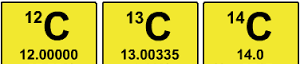
How many neutrons are in the isotope of sulfur,36S?
16
20
24
26
Which of the following does NOT differ in isotopes of the same element?
mass number
number of neutrons
number of protons
chemical properties

How many neutrons are in the following atom?
47
61
108
155

What isotope is shown here? (Red = protons, gray = neutrons, blue = electrons)
Beryllium-5
Beryllium-9
Boron-4
Boron-9
The questions you've answers thus far were on Isotopes.
Isotopes are atoms of the same element with different numbers of neutrons. This causes isotopes of the same atom to have different masses. Isotopes are why atoms have an 'average atomic mass'.
How comfortable do you feel with this topics?
Great! Ready to test!
Good, but I will need to review a little more before the test.
Okay. I need to practice this concept much more before the test.
I am completely lost and need help.

What subatomic particle is responsible for the spectral lines seen in emission spectra diagrams?
electrons
protons
neutrons

In order to go from ground state to an excited state, an electron must
emit energy
absorb energy
wiggle
When an electron returns to ground state from an excited state, the atom will
emit energy
absorb energy
rotate
wiggle
What can a flame test distinguish?
calcium chloride and barium chloride
calcium chloride and calcium nitrate
ethanoic acid and propanoic acid
any two metals
The questions you've answers thus far were on Atomic Emission.
Atomic emission shows us that elements produce different colors of light due to the set quantity electrons moving between specific energy levels.
How comfortable do you feel with this topics?
*note: missing the lab does not excuse you from knowing the material
Great! Ready to test!
Good, but I will need to review a little more before the test.
Okay. I need to practice this concept much more before the test.
I am completely lost and need help.
[Xe] 6s2 4f14 5d9
What atom matches this electron configuration?
1s22s22p63s23p64s23d10
Zinc
Copper
Nickel
Germanium

What is an orbital?
A location where the electrons can be found orbiting the element
The amount of tacos Mr. Freiberg can eat
How many times an electron goes around the element
The path the earth takes to orbit around the sun


*Notes: Since these were the most recent topics gone over, there were the fewest questions.
The questions you've answers thus far were on Electron Configurations, Orbital Diagrams, and Bohr Models.
How comfortable do you feel with this topics?
Great! Ready to test!
Good, but I will need to review a little more before the test.
Okay. I need to practice this concept much more before the test.
I am completely lost and need help.
What do you need to be prepared for the test this week?
TIME to review in class
(Tuesday 10/4)
HELP/reteaching from Mrs. Hilt for a specific topic
Nothing. I felt confident with my answers and got most correct. I'm prepared and ready to test.
I need review time and help/reteaching.

