
 Worksheets
Star Test
Total questions: 25
Worksheet time: 50mins
The lifetime of a star depends on its:
temperature
absolute brightness
apparent brightness
mass

All stars begin as part of a large cloud of gas and dust called a(n):
protostar
nebula
white dwarf
super giant
Define nuclear fusion.
Nuclear fusion – combining lighter atoms to make heavier ones – is what makes it possible.
Nuclear fusion – splitting lighter atoms to make heavier ones – is what makes it possible.
Nuclear fusion – combining heavier atoms to make lighter ones – is what makes it possible.
Nuclear fusion – splitting heavier atoms to make lighter ones – is what makes it possible.
When hydrogen is "fused" together on the Sun, what new element is created?
Helium
Carbon Dioxide
Oxygen
Light

This image shows a
chemical reaction
physical change
musical change
all of these answers are correct

Which part of an atom is apart of nuclear fusion?
(a)
What is the heaviest element that can be created inside a star?
Silver
Iron
Carbon
Gold
Which atom is the lightest?

Heaviest

Lighter

Lightest
What is the source of fuel of our Star?
(a)

Energy from the Sun reaches Earth as?
(a)

What happens to the frequency of light waves emitted from a star as the star moves toward us?
¿Qué sucede con la frecuencia de las ondas de luz emitidas por una estrella cuando la estrella se mueve hacia nosotros?
frequency increases
frequency decreases

What is the name of our Star?
(a)

Each element on the periodic table can be identified by its
classification as a solid, liquid or gas.
location on the table.
ability to react to form compounds.
unique spectral "fingerprint."

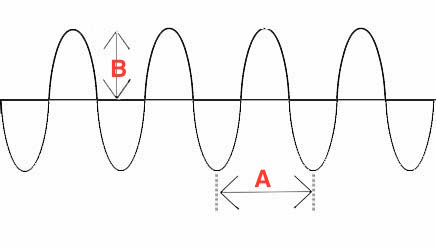
What does the arrow in the picture represent?
wavelength
echolocation
amplitude
peak
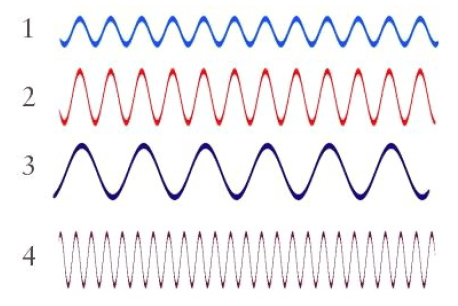
Which wave in the diagram has the greatest frequency?
1
2
3
4
If a wave has a greater frequency, what happens to the wavelength?
increases
decreases
stays the same


Which color waves have the shortest wavelength?
red
yellow
green
violet
Which color waves have the lowest frequency?
red
yellow
green
violet

Gas A
Gas B
Gas C
Gas D

The absorption lines in the spectrum for Galaxy B are _____ when compared to the lines for the Milky Way.
Las líneas de absorción en el espectro de la Galaxia B son _____ en comparación con las líneas de la Vía Láctea.
red-shifted
blue-shifted


