wayground logo

Free Printable Worksheets

Font size

S
M
L
XL
Worksheets

Neolithic

Total questions: 55

Worksheet time: 3hrs 45mins

Name
Class
Date
1.
1.  What were the primary occupations of people during the Paleolithic Era?
a)
a.  Hunters & Gathers
b)
a.  Toolmakers
c)
a.  Farmers
2.
1.  What did the Neolithic Revolution bring about?
a)
a.  Storms
b)
a.  Drought
c)
a.  Agriculture
3.
One Way that farming changed the way people lived was____________________.
a)
They no longer were nomads
b)
Life expectancy was shorter
c)
They had to move around to new farms
4.
During the Neolithic Revolution
a)
People learned to grow food
b)
People migrated to find food
c)
People were nomadic
5.
Nomadic means to
a)
Sleep in tents
b)
Move around frequently
c)
Stay in one place
6.

What does prehistory mean?

a)

The time before time.

b)

The time period before writing/recording of events.

c)

Previous history.

7.

The Paleolithic began with...

a)

The appearance of the first human beings.

b)

Dinosaurs.

c)

Lucy.

d)

The discovering of America.

8.

During the Paleolithic Age, people were...

a)

Scientifics.

b)

Nomads.

c)

Hunters.

d)

Gatherers

9.

Which of these animals is not a domesticated animal?

a)

sheep

b)

goat

c)

lion

d)

cattle

10.

When there is a surplus of food, there is

a)

not enough food for everyone

b)

more food than is needed

c)

a group of people waiting in line for food

11.

Skilled craftspeople, who made pottery, finely carved statues, or woven goods.

a)

artisan

b)

zookeeper

c)

hunter-gather

d)

nomad

12.

What was the greatest benefit to people when early farmers began to raise plants and animals?

a)

easy travel

b)

people shared all work

c)

they kept pets

d)

there was a stable food supply

13.

Specialization occurs when

a)

people work at a single job

b)

everyone farms together

c)

people hunt in groups

14.

What made the first villages possible?

a)

warm clothing

b)

government

c)

armies

d)

farming

15.

domestication

a)

ordering/ranking of individuals in a society based on power and wealth

b)

process of adapting/changing/modifying wild plants & animals for human use

c)

production process /workers are given specialized tasks

d)

staying in one place- opposite of nomadic

16.
1.  What were the primary occupations of people during the Paleolithic Era?
a)
a.  Hunters & Gathers
b)
a.  Toolmakers
c)
a.  Farmers
17.

Which among the following was the peculiarity of Neolithic age?

a)

Early Humans started doing agriculture

b)

Early humans started settled life

c)

Early humans started domesticating animals

d)

All of the above

18.

Which among the following was the reason for Early Humans to start a settled life?

a)

Because they have started agriculture

b)

Because they want to control food supply

c)

Because they have started domesticating animals

d)

None of the above

19.
What is another name for the Neolithic Age?
a)
New Stone Age
b)
Old Stone Age
c)
Prehistoric Period
d)
The Ice Age
20.
What change marked the beginning of the Neolithic Revolution? 
a)
beginning of hunting and gathering
b)
man learned to write
c)
man began farming
d)
man built towns and cities
21.
How did man get his food during the Paleolithic Age?
a)
Growing crops
b)
Hunting and Gathering
c)
Stealing from others
d)
Scavenging
22.
Which of the following happened when man began to farm?
a)
There were communities where people could do jobs other than farming jobs 
b)
They had more meat in their diet
c)
They were constantly attacked by wild animals
d)
They had to move from place to place following crops
23.
What is another word for farming?
a)
industry
b)
Paleolithic
c)
agriculture
d)
migration
24.
How did the "Stone Age"get its name?
a)
Man made his homes out of stone.
b)
Man made tools and weapons out of stone.
c)
Man carved sculptures out of stone.
d)
Man worshiped statues made of stone.
25.
What is another name for the Old Stone Age?
a)
Paleolithic Age
b)
Neolithic Age
c)
Archeology Age
d)
Prehistory
26.
Which development was a direct result of the Neolithic Revolution?
a)
Machines were used to mass- produce goods for markets
b)
a surplus of food led to more complex societies
A surplus of food led to more complex societies 
c)
Feudal manors provided the necessities of life.
d)
the centers of trade moved from the Mediterranean Sea to the Atlantic Ocean
27.
The best way to describe the Paleolithic people and their way of life is by calling them 
a)
artifacts
b)
hominids
c)
nomads
d)
prehistoric
28.
What was a major effect of the neolithic revolution?
a)
People began hunting and gathering
b)
The first permanent settlements
c)
A terrible war
d)
Human rights
29.
Before the _______________________ Revolution, people were  _______________________.
a)
Paleolithic, monsters
b)
Neolithic, nomads
c)

innovations, cultivation
d)
Neolithic, hunter-gatherers
30.
They lived the life of a  _______________________, constantly on the move in search of food, water, and  _______________________.
a)
hunter-gatherer, wigwam
b)
nomad, shelter
c)
nomad, settlement
d)
hunter-gather, shelter
31.
People at this time did not live in permanent  _______________________ because of their constant  _______________________, or movement.
a)
shelters, cultivation
b)
shelters, domestication
c)
settlements, migration
d)
innovations, cultivations
32.
During Neolithic times, people engaged in  _______________________ of the land and  _______________________ of animals and plants. Because people could now grown their own food, known as farming or  _______________________, they were able to establish permanent settles, develop many  _______________________, or improvements, to make their lives easier.
a)
innovations, shelters, cultivation, migration
b)
settlements, cultivation, innovations, shelter
c)
cultivation, migration, shelters, domestication
d)
cultivation, demestication, agriculture, innovations
33.
Which is NOT a Stone Age innovation?
a)
Needle
b)
Wheel 
c)
Chisel
d)
Tractor
34.
Which of the following is NOT TRUE about Neanderthals?
a)
They walked on their hands and feet
b)
They used fire & simple tools
c)
They were nomads
d)
They existed during the last ice age.
35.
Early human settlements settled along major rivers.
a)
True
b)
False
36.
An abundance is when there is not enough resources to go around.
a)
True
b)
False
37.
_______________ is the New Stone Age from about 8000 BC to about 4000 BC
a)
Neolithic Age
b)
Paleolithic Age
c)
Current Modern Age
d)
DMS Age
38.
__________________ -farming and growing food
a)
aquaculture
b)
agriculture
c)
honuculture
d)
happyculture
39.
__________-greatly change the way something works
a)
revolution
b)
revenue
c)
reincarnation
d)
restitution
40.

___________- tame wild animals and plants for human use

a)

dome

b)

domination

c)

domesticate

d)

DMS

41.
_______________- supply water to land
a)
acceleration
b)
humiliation
c)
irrigation
d)
irritation
42.
_______________- things handed down from the past
a)
lucky
b)
lovely
c)
lively
d)
legacy
43.
________________ - farming tool to loosen the soil
a)
power
b)
plover
c)
plow
d)
plop
44.
_____________ - farming tool to cut grain
a)
sickle
b)
sick
c)
sycamore
d)
sorry
45.
_______________- place where people build a permanent community
a)
settle
b)
settlement
c)
settler
d)
sorry
46.

The Neolithic Age starts after the ____________ Age.

a)

Mesolithic

b)

Minor Stone

c)

Middle Stone

d)

Paleolithic

47.

What did the Neolithic people discover?

a)

agriculture

b)

metal

c)

toys

d)

stone tools

48.

In the Neolithic Age people discovered domestication.

a)

True

b)

False

49.

What change began the Neolithic Age?

a)

hunting

b)

farming

c)

trading

d)

building

50.

What was the greatest benefit to people when early farmers began to raise plants and animals?

a)

easy travel

b)

shared most work

c)

kept pets

d)

stable food supply

51.

What is the term that describes the discovery of farming?

a)

domesticated

b)

Neolithic Age

c)

Paleolithic Age

d)

Agricultural Revolution

52.
Scientists believe that the earliest humans evolved in and migrated from which continent? 
a)
Europe 
b)
North America 
c)
Asia 
d)
Africa 
53.

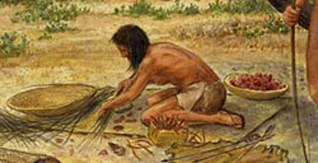
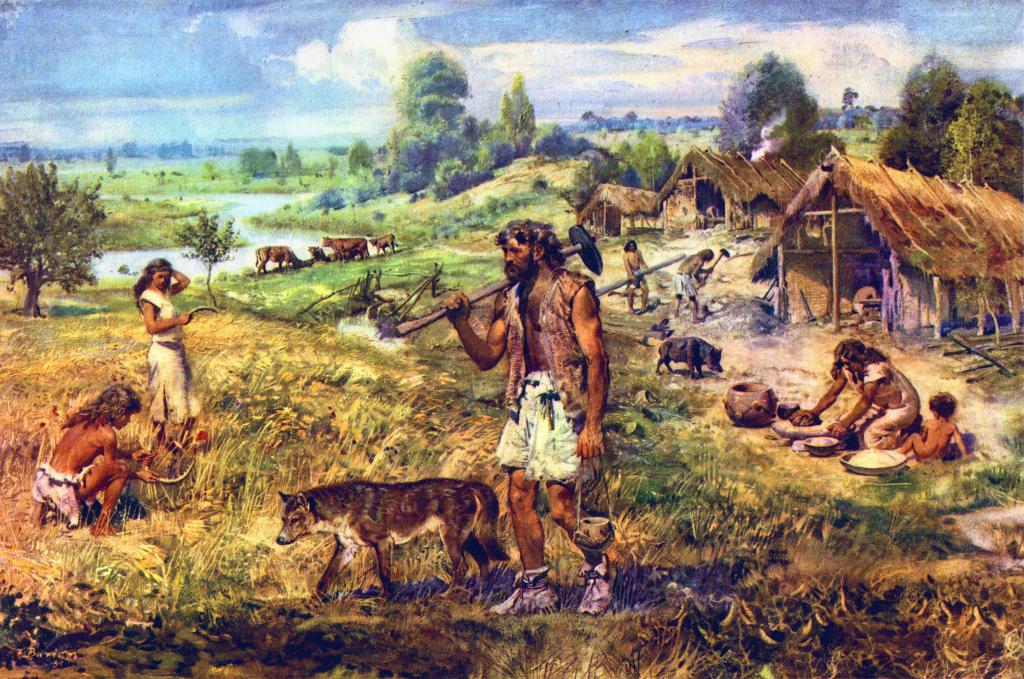
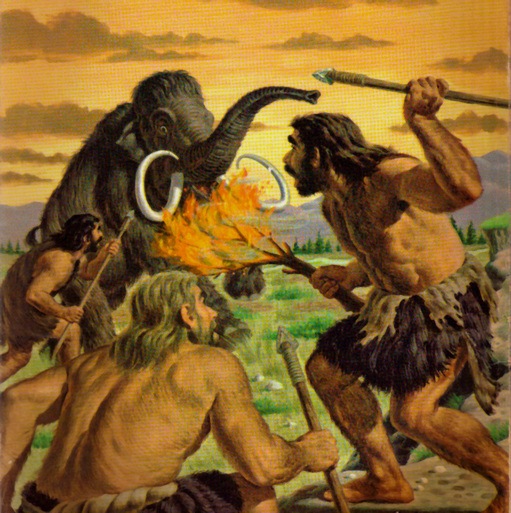
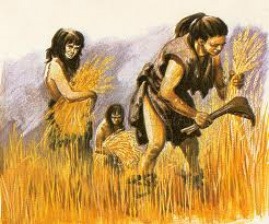
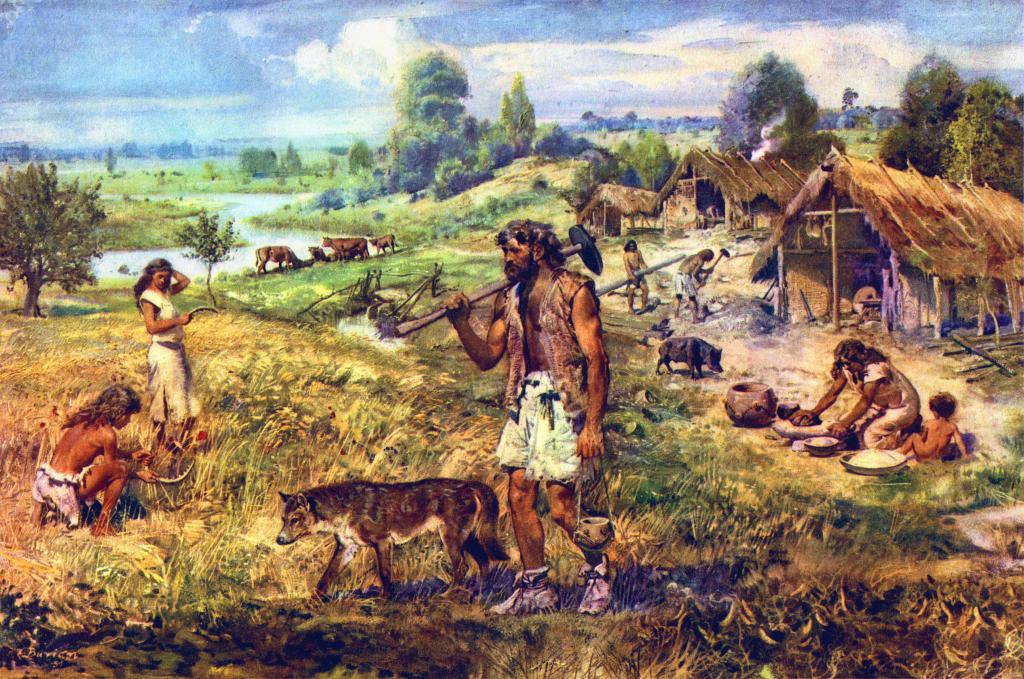
What era does this picture represent?

a)

Neolithic

b)

Paleolithic

c)

Both

d)

Neither

54.

Paleolithic means (a)   .

55.

Foods such as wheat, milk and lamb would have been served in the _______ era.

a)

Neolithic

b)

Paleolithic

c)

Both

d)

Neither