
 Worksheets
Nervous System Part 1 Review
Total questions: 49
Worksheet time: 45mins


What number(s) on the graph represents the THRESHOLD level of stimulus?
1 and 5
2
3
6
What are the Neurons?
Units that constitute the nervous system.
Units that constitute the brain tissue.
Blocks of tissue that constitute the endocrine system.
Blocks or tissues that constitute the organs of the body system.
What is the function of the nerve cells?
They are responsable of your defense mechanism.
They transmit signals or messages to other neurons, organs or glands.
They transmit substances to your endocrine system to produce hormones.

What is the name of the part of the neuron that is pointed out in the image?
Cell Body (Soma)
Axon
Myelin Sheats
Dendrites

What is the name of the part of the neuron that is pointed out in the image?
Myelin sheaths
Cell Body (Soma)
Axon
Dendrites

What is the name of the part of the neuron that is pointed out in the image?
Myelin Sheats
Axon
Dendrites
Cell Body (Soma)

What is the name of the part of the neuron that is pointed out in the image?
Myelin Sheats
Cell Body (Soma)
Dendrites
Axon
The neuron's life support that contains the nucleus is:
Soma
Dendrites
Myelin Sheaths
Axon
The protective fatty tissue that speeds up the transmission of messages is:
Myelin Sheaths
Axon
Dendrites
Soma
The extension that transmit electrical impulses from the som to other parts is:
Myelin Sheaths
Soma
Dendrites
Axon
The extensions that obtain the messages from other cells are:
Myelin Sheats
Axon
Dendrites
Soma
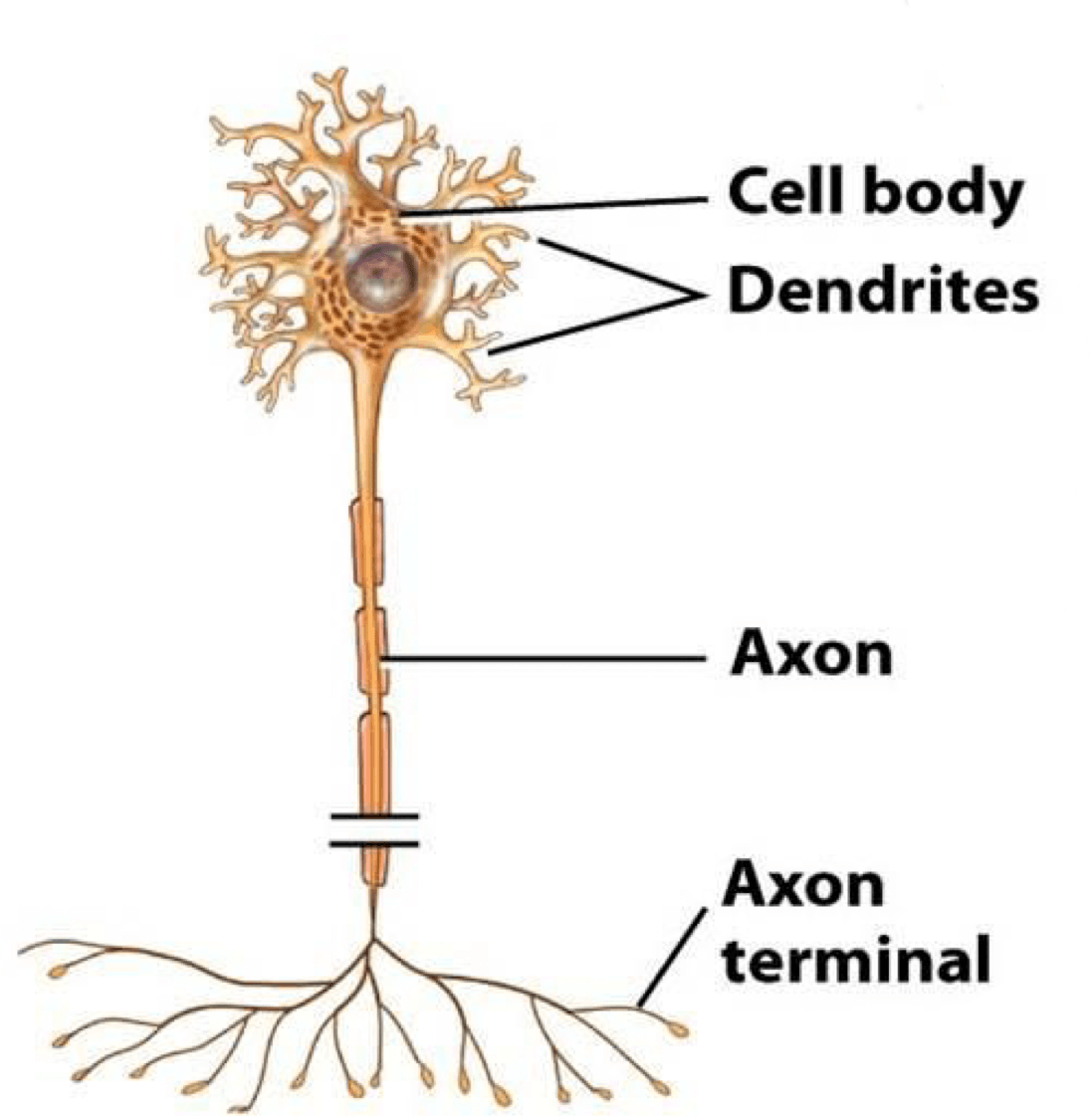
What type of neuron is represented on the image?
Motor Neuron
Interneuron
Sensory Neuron
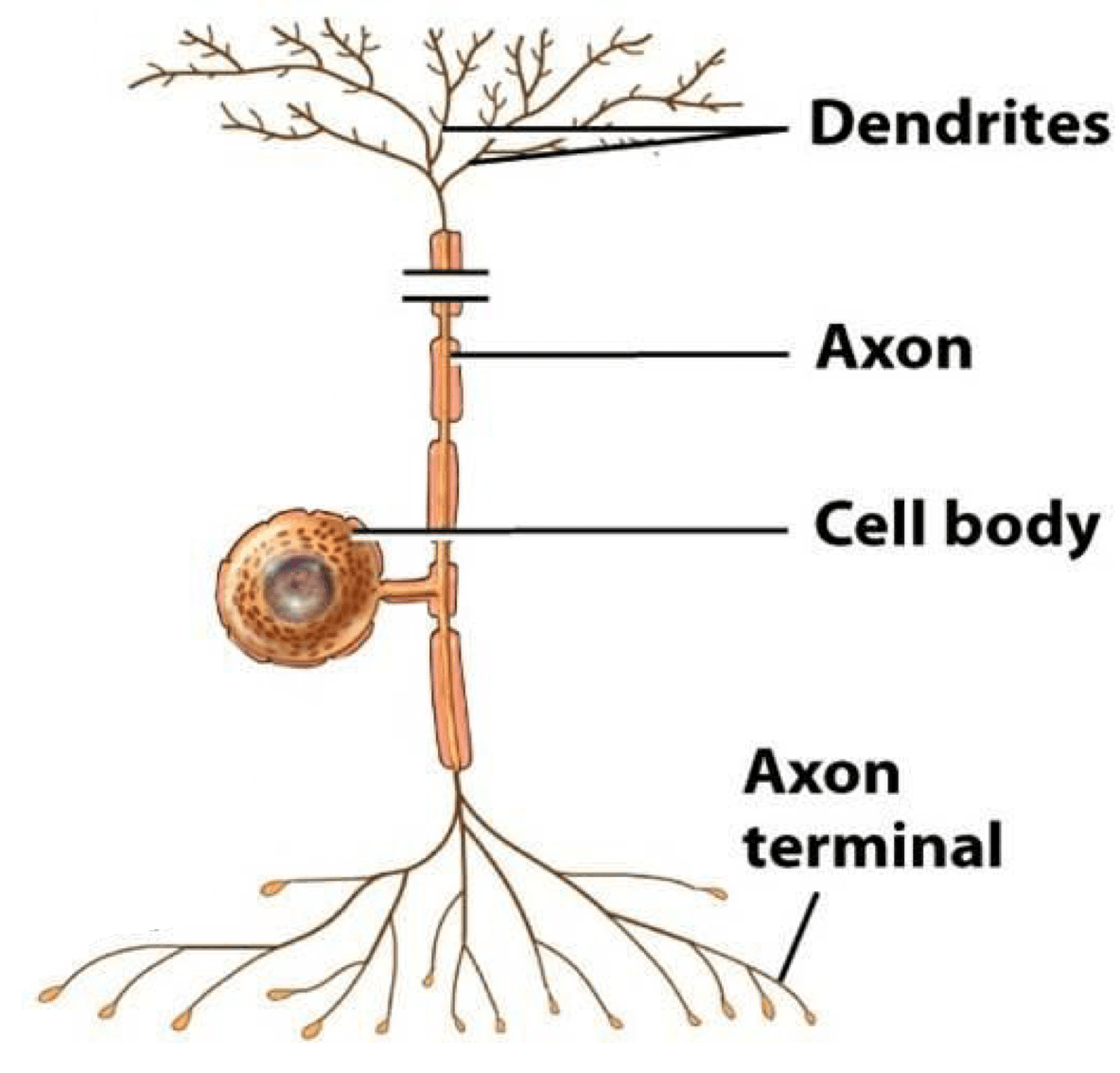
What type of neuron is represented on the image?
Motor Neuron
Interneuron
Sensory Neuron

What type of neuron is represented on the image?
Motor Neuron
Interneuron
Sensory Neuron
Type of neuron that perceive information about your environment.
Motor Neuron
Interneuron
Sensory Neuron
Type of neuron located only in the brain and spinal cord that pass impulses from one neuron to another.
Motor Neuron
Interneuron
Sensory Neuron
Type of neuron that sends nerve impulses to muscles and gland, by the command of other neurons.
Motor Neurons
Interneurons
Sensory Neurons

What type of neuron is A?
Sensory
Inter
Motor
What type of neuron is C?
Sensory
Inter
Motor

Name an effector in this diagram.
A
B
D
E
F

Select two examples of effectors.
Neuron
Gland
Muscle
Receptor
Which statement best describes a reflex?
Slow response that you have to think about
Rapid response to protect body from harm

_____ neurons carry messages away from the central nervous system and out to muscles or glands. The RED neuron in diagram.
sensory
motor
inter
central
Which type of neuron causes a muscle to contract in a reflex arc?
Motor Neuron
Sensory Neuron
Interneuron
Effector

Where would the nerve impulse start in this reflex arc?
A
C
D
E
What type of neuron is A?
Sensory
Inter
Motor
Which is the correct order of neurons in a reflex arc?
Sensory neuron, motor neuron, relay neuron
Relay neuron, sensory neuron, motor neuron
Sensory neuron, relay neuron, motor neuron
What is the final component of a reflex arc?
Effector
Receptor
Afferent Pathway

Which number represents the stimulus?
1
2
3
4
Which number represents the effector?
4
5
6
7
Which number represents the sensory neuron?
3
4
5
7
Which numbers represents the neurons in a reflex arc?
3
4
5
7
In a reflex arc, the sensory neuron leads to the ___________ and the motor neuron leads to the __________
Spinal cord, CNS
CNS, muscle
Spinal cord, muscle
Muscle, CNS
Reflex actions are important because
They provide a quick, involuntary response
They prevent injury
They are essential to the survival of organisms
All of the above

