
 Worksheets
EXAM 1 MEGA REVIEW
Total questions: 75
Worksheet time: 1hrs 4mins

The nucleus of an atom contains which subatomic particles?
protons and electrons
protons and neutrons
electrons and neutrons
protons, electrons, and neutrons

Typically in an atom, which two subatomic particles are equal in number?
protons and neutrons
all subatomic particles are equal in number
neutrons and electrons
protons and electrons

Which subatomic particle is counted to determine the type of element the atom represents?
proton
neutron
electron
boron
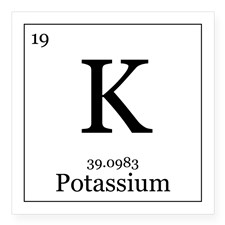
How many neutron are in the atom "K"?
29
19
58
20
The atomic number is equal to _.
the number of protons and electrons
the number of protons only
the total number of protons and neutrons
the number of electrons only

When an atom loses an electron, it becomes a
positive ion
negative ion
neutral ion
neutral atom
What is a subatomic particle with a positive charge that is in the nucleus of an atom?
neutron
proton
electron
valence electron
What is a subatomic particle with a negative charge? It is found in the electron cloud surrounding the nucleus.
neutron
proton
electron
electron cloud
What is the center of an atom containing protons and neutrons?
nucleus
neutron
proton
electron cloud

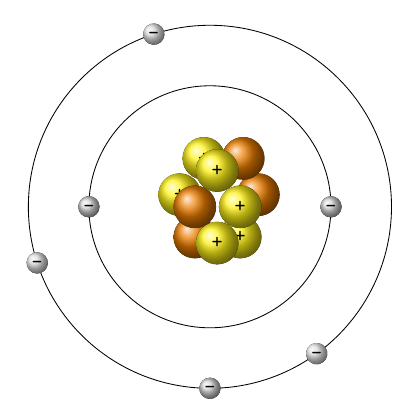
How many electrons does this atom have?
2
4
6
10

The smallest piece of an element:
quark
electron
shell
atom

Which element is found in group 2, period 6?
Oxygen (O)
Barium (Ba)
Selenium (Se)
Carbon (C)
Which element is found in group 2, period 6?
Oxygen (O)
Barium (Ba)
Selenium (Se)
Carbon (C)
Which element has similar chemical properties as sodium but has 7 energy levels?
Francium (Fr)
Cesium (Cs)
Rubidium (Rb)
Potassium (K)

where are the metaloids found
far left, vertical
stair step/diagonal
far right horizontal
at the bottom
Nonmetals (select all that apply)
are found on the right side of the periodic table.
are found on the left side of the periodic table.
are good conductors of heat and electricity.
are brittle.
can be solid, liquids, or gases at room temperature.
Metals (select all that apply)
are found on the right side of the periodic table.
are found on the left side of the periodic table.
are good conductors of heat and electricity.
are brittle.
are malleable and ductile.
Groups run:
up and down
left to right
Periods run:
up and down
left to right
A student is studying a mystery substance. It breaks easily. It has a very dull luster. It doesn't conduct any electricity. What is the most likely substance this is?
Metal
Metalloid
Nonmetal
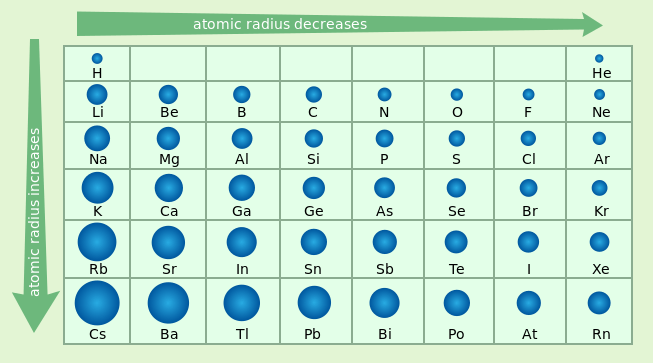
Based on the image on the last slide. As you go across a period, does the atomic radius get smaller or larger?
Smaller
Larger
Stays the same
Put these elements in order of DECREASING atomic radius.
Ca, Be, Ba, Sr
Sr, Ba, Be, Ca
Be, Ca, Sr, Ba
Ba, Sr, Ca, Be
Ca, Be, Ba, Sr
Which elements do you think will have a low ionization energy and lose electrons more readily?
elements that form anions (negative charge)
Elements that form cations (positive charge)
Transition metals



ELECTRONEGATIVITY __________ from left to right across a period and __________ from top to bottom down a group.
decreases, increases
increases, increases
increases, decreases
decreases, decreases
The element with the largest electronegativity is -
At
F
Cl
Br
As you move across a period on the periodic table the atomic radius tend to get smaller because, ______________.
the atoms have more mass making them heavier.
more neutrons, making the nucleus bigger.
the atoms have more protons, pulling the electrons closer.
the atoms have less energy levels for the electrons to occupy.
Why would you do research before doing an experiment? *Choose all that apply*
To find about more information before forming a hypothesis.
To check the data that you learned from an experiment.
To draw a conclusion from the results of your experiment.
To see if you can answer your question without needing to test it.
What should you do if you get inconclusive results from an experiment?
Think about what might have caused the results and quit.
Tell the teacher that it didn't work
Never do the experiment again
Do the experiment again with different variables
Which part of the scientific method is being described:
The scientist puts one plant in sunlight, one under a lamp, and one in a dark closet.
Problem
Research
Hypothesis
Experiment
Analysis
A testable prediction that is testable is known as...
data
theory
hypothesis
fact
The process used to test a hypothesis involves a(n):
answer
experiment
problem
safety check
What is an inference?
an idea using prior experiences that guesses the square root of pi
an idea (or prediction) using evidence and prior knowledge
using your five senses to get information about the world

The cat looks mad. He must be hangry.
Observation
Inference

There are 3 narwhals.
Quantitative Observation
Qualitative Observation

The dog has a black nose.
Qualitative Observation
Quantitative Observation
Inference
None of the above
Which of the following are Quantitative descriptions? (select all that apply)
The dog was soaking wet.
The dog weighed 20lbs.
The dog had a red rash.
The dog was missing 5 teeth.
The dog was seven years old.
Which step would you take before you come up with a hypothesis?
Make observations
Plan an experiment
Do research
Analyze data


Which of the following is NOT an inference about the man in this picture:
The man hates his purple shirt.
The man has a purple shirt.
The man is having a bad day.
This man is upset because he's hungry
Which of the following would you rather have? (not worth points, just for fun)
Feathers, like a bird
Talons like a bird
A beak, like a bird
Nest, like a bird
Bonus Credit (fills in for missed points but is NOT extra credit). Give 3 qualitative and 3 quantitative descriptions of your hand.

