
 Worksheets
Bridge to Chemistry
Total questions: 73
Worksheet time: 4hrs 45mins
Which subatomic part of an atom gives it a positive charge?
Neutron
Proton
Electron
Nucleus
Which region of an atom has a negative charge?
The nucleus
Both nucleus and electron cloud
The neutrons
The electron cloud
What is the smallest 'building block' of the elements that make up the universe?
An atom
An electron
A proton
A cell
An atom of carbon has 6 protons and 7 neutrons in its nucleus. If the atom is neutral, how many electrons does it have?
0
7
6
13
The number of protons in the nucleus of an atom?
Isotope
Atomic mass
Atomic number
Element
A certain atom of oxygen contains 8 protons, 8 neutrons, & 8 electrons. Another atom of unknown identity contains 9 protons. Which of the following MUST be true about this unidentified atom?
It has 9 neutrons in its nucleus.
It is an isotope of oxygen.
Its atomic mass is a decimal number.
It cannot be an atom of oxygen.
Chemical reactions start with _____________ and end with _______________
Reactants, Products
Products, Reactants
Substances, Chemicals
Chemicals, Compounds

The center of the atom is called
Nucleus
Negative
Molecule

"a" on the diagram is the
Electron
Nucleus
Compound

Particle with a positive charge (+)
Proton
Neutron
Mixture

Particle with a negative charge (-)
Electron
Neutral
Proton

How many protons in an atom of sodium (Na)?
11
8
2

Element H is
Hydrogen
Helium
Iron

O is the symbol for
Oxygen
Gold
Carbon

C is element
Carbon
Calcium
Chlorine

2 or more elements bonded together is
Compound
Mixture
Chemical formula

Which is an example of a compound?
CO2
O2
Na

The chemical formula of this compound is
C2H6
Ca2HO4
C6H2

How many Carbon atoms are in this compound
6
7
3

Elements are _________ 1 type of atom.
Made of
Tiny
chemical formula
How many elements are in this chemical formula?
H2SO4
1
2
3
4
How many atoms of Carbon are in this formula? C6 H12O6
6
1
12
What elements are represented in this chemical formula? Fe2O3
Iron, Oxygen
Francium, Europium, Oxygen
Ferrium, Oxygen
Berylium, Oxygen
Which of the following is a molecule of a compound?
H2
Cl2
H2O
F2
Which does not belong in the group?
Sodium
Glucose
carbon
Element
Is this an element or a compound? CaSO4
Element
Compound
How many elements are in this chemical formula? NaHCO3
1
2
3
4
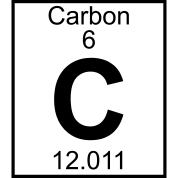
a collection of atoms of one type that cannot be broken down into simpler substances by ordinary chemical or physical means
element
subatomic particle
electron
matter
the basic structural unit of matter
atom
matter
element
nucleus
a unique number for each element that equals the number of protons in an atom of that element
element name
element symbol
atomic number
atomic mass
the mass of an atom, calculated by adding the number of protons and neutrons in the nucleus of the atom
element name
element symbol
atomic number
atomic mass


A chemical reaction ...
forms a new substance
makes a mixture of several substances
always involves flames
all of these choices are true
Electrons are:
Positive
Neutral
Negative

What is the chemical symbol for sodium?
S
So
Na
K

How many protons are in a nitrogen atom?
5
7
14
28

In an atom, which subatomic particles are always equal?
protons and electrons
protons and neutrons
neutrons and electrons
protons, neutrons, and electrons

How many valence electrons do the atoms of elements in group 13 have (the Boron Group)?
3
5
8
13

Which of the following elements have atoms that are more massive than chlorine?
lithium
helium
carbon
argon

Choose ALL of the alkali metals (group 1) from the list below:
lithium
copper
mercury
potassium
sodium

True or false: All elements in a family have the same number of valence electrons (except Helium and the transition metals).
True
False

How many neutrons does the most common isotope of argon have?
18
20
22
8

What is the element that has one more proton than tin (Sn)?
antimony
iodine
lead
indium

How many total electrons to xenon atoms have?
8
54
131
132


The Model of the ATOM has:
Changed many times
Never changed
Changed once
Why do science models change?
Because the scientist was proven wrong and disowned by the science community
There was better evidence to prove the model was wrong
One person's opinion caused the entire model to change
New evidence was tested and supported, which modified the model
What are Subatomic Particles?
The entire atom
the tiny parts inside the atom
The electron cloud and space surrounding the atom

