
 Worksheets
Force Review
Total questions: 56
Worksheet time: 5hrs 40mins
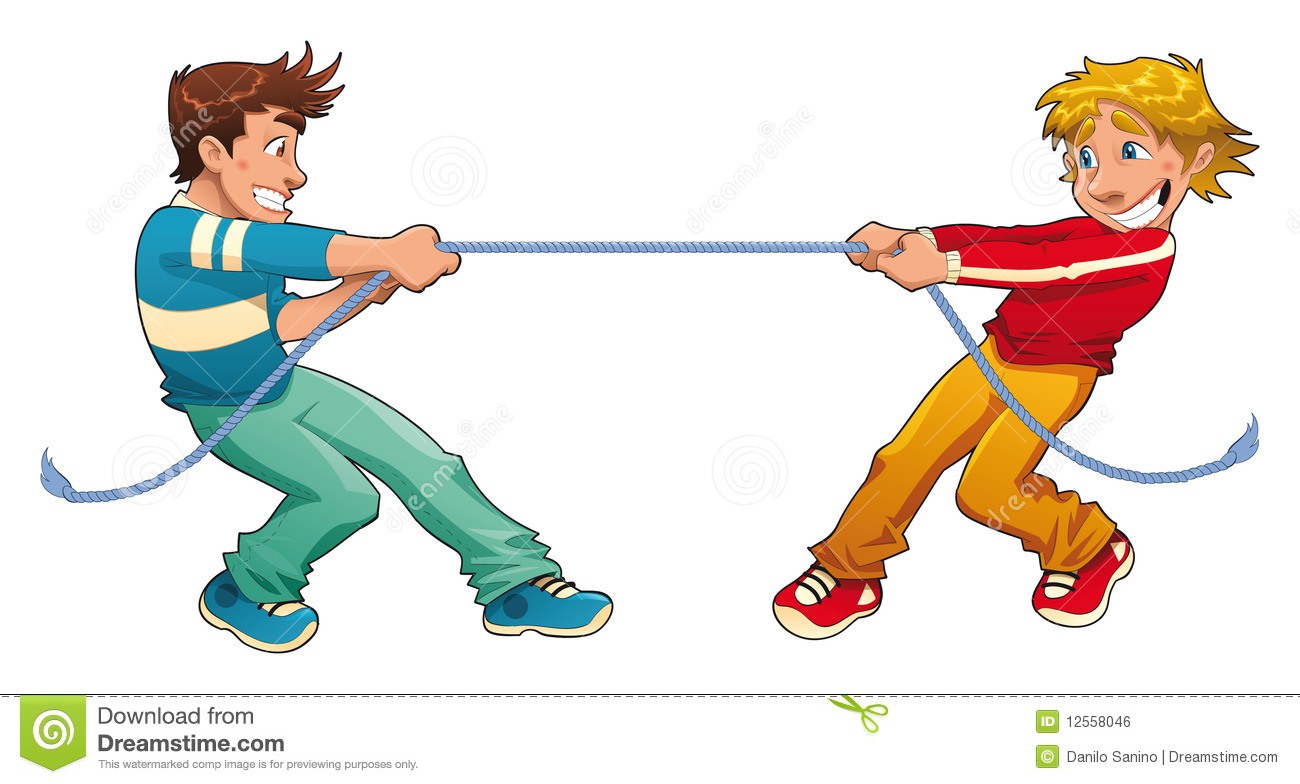
A group of students is playing tug-of-war. The students on both sides of the rope are pulling with equal force so
that the rope is not moving. This is an example of
unbalanced forces
balanced forces
acceleration
displacement
A firefighter feels the hose pushing backwards onto him as he uses it to put out a fire. What is the most likely cause of this?
The hose material is very elastic.
Since the hose is at rest, it tends to stay at rest.
The force exerted on the water equals the mass of the water times its acceleration.
The escaping water exerts an equal and opposite force on the hose.
An object in motion with no unbalanced forces acting on it will
eventually slow down and come to a complete stop.
slow down, but never quite stop.
continue to move in its path at a constant speed.
accelerate.
The upward force on an object falling through the air is ____.
air resistance
momentum
inertia
gravity
The relationship among mass, force, and acceleration is explained by ____.
Law of Conservation of Momentum
Newton's 1st Law of Motion
Newton's 2nd Law of Motion
Newton's 3rd Law of Motion
For any object, the greater the force that's applied to it, the greater its ____ will be.
acceleration
inertia
gravity
size
The size of the gravitational force between two objects depends on their ____.
frictional forces
inertia
masses and the distance between them
speed and direction
An astronaut is planning a trip to a newly-discovered planet. According to the Law of Universal Gravitation, the astronaut's weight on the new planet will be greater than his weight on Earth if:
the new planet has less gravity than Earth.
the new planet has the same gravity as Earth.
the new planet has more gravity than Earth.
the gravity of the planet doesn't matter. Weight is the same everywhere in the universe.
A baseball player swings his bat and misses the ball but hits a fly that was hovering over home plate. The acceleration of the fly compared to what the acceleration of the ball would have been with the same force applied to it would be
smaller
larger
the same
not enough information to determine
A 500 N force is applied to a 25 m/s2 object. The mass of the object is ____.
12,500 m/s
12,500 kg
20 m/s
20 kg
Which statement below is FALSE?
Weight depends on the force of gravity.
Mass is the amount of matter in an object.
Weight is a constant no matter where you are located.
Mass is a constant no matter where you are located.
When two forces on the same object are equal and opposite, these forces are called _____ forces.
net
balanced
unbalanced
frictional
Compared to the inertia of a 2.0 kg ball, the inertia of a 4.0 kg ball is
half as great
twice as great
the same
four times as great
A man weighing 800 N is standing on a chair. In order to support the man, what force is the chair exerting?
less than 800 N
greater than 800 N
800 N up
800 N down
An object that is falling freely has a constant what?
speed
velocity
acceleration
nothing is constant
Newton’s 1st law
An object will move at a constant velocity unless an unbalanced force acts upon it.
Force
Push or pull one body exerts on another
Terminal velocity
The highest velocity a falling object will reach.
Inertia
Tendency of an object to resist changes in motion.
Gravity
The attraction any two objects have on one another.
Newton’s 3rd law
To every action, there is an equal and opposite reaction.
Newton’s 2nd law
A net force acting on an object causes the object to accelerate in the direction of the net force.
Momentum
Related to the amount of force needed to change an object’s motion.
Consider a watermelon that starts from rest and is dropped straight down from a tall building. Air resistance can be ignored. Which statement about the watermelon’s motion is FALSE?
The watermelon falls with a constant velocity
The watermelon has a positive acceleration
After 2 seconds, its velocity is 19.6 m/s
The watermelon’s acceleration due to gravity is 9.8 m/s2
Which of the following best describes how a swimmer moves through the water?
The swimmer pushes backwards on the water and the water pushes with an equal but opposite force back on the swimmer.
The swimmer pushes off the side of the pool and his inertia keeps him moving through the water.
The swimmer uses friction to push himself through the water.
Air resistance limits the swimmer’s speed.
. A student drops a feather and rock at the same time from Mrs. Taylor’s window. If air resistance wasn’t a factor, what should she observe?
The rock falls slower than the feather.
The rock falls faster than the feather.
The rock and feather fall at the same rate.
The rock and feather remain suspended and do not fall.
Which law best describes inertia
1
2
3
All of the above
Which Law Represents this statement: Object at rest stays at rest
1
2
3
All of the above
Which Law Represents this statement: F=MxA
1
2
3
All of the above
Which Law Represents this statement: Acceleration is due to a force put on an object mass
1
2
3
All of the above
Which Law Represents this statement: Action / reaction
1
2
3
All of the above
Which Law Represents this statement: Equal and opposite
1
2
3
All of the above
. Force exerted between the surfaces of two objects.
Friction
Inertia
Forces
Gravity
Object tendency to resist change
Friction
Inertia
Forcé
Gravity
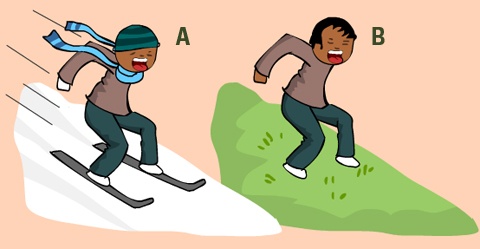

? = mass x acceleration
or
? = m x a
is used to find
1st
Law of Motion
2nd
Law of Motion
3rd
Law of Motion

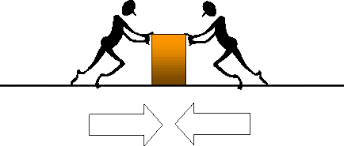
Which Law Represented by this picture:
1st
2nd
3rd

Which Law Represented by this picture:
1st
2nd
3rd
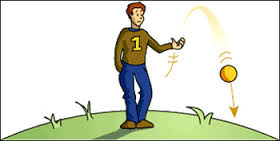

A squirrel sits on the ground and eats a donut. We know the forces on him must be balanced because...
Forces are always balanced
the squirrel is not accelerating
squirrels are projectiles
he's eating a donut


When the force on a car is doubled, the acceleration is doubled.
Newton's 1st Law
Newton's 2nd Law
Newton's 3rd Law

You push against a wall and the wall is pushing back on you.
Newton's 1st Law
Newton's 2nd Law
Newton's 3rd Law
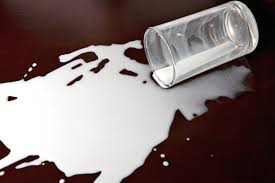
You are carrying a lunch tray when you bump into the edge of a table. Although the tray did not tip, your milk falls off of the front of the tray.
Newton's
1st
Law of Motion
Newton's
2nd
Law of Motion
Newton's
3rd
Law of Motion
What is the unit for FORCE?
N (Newtons)
lbs (pounds)
g (grams)
m/s (meters per second)

What minimal force must be exerted by a mother to lift her 5kg baby?
0 N
5 N
49 N
10 N

In the district finals, Vanessa kicks the 0.600 kg soccer ball with a force of 80 N. How much does she accelerate the ball?
122 m/s/s
50 m/s/s
133 m/s/s
48 m/s/s

A 68 kg runner exerts a force of 59 N. What is the acceleration of the runner?
9.8 m/s/s
5 m/s/s
1.968 m/s/s
0.868 m/s/s

A crate is dragged across an ice covered lake. The box accelerates at 0.08 m/s/s and s pulled by a 47 N force. What is the mass of the crate?
587.5 kg
642.8 kg
58.75 kg
98.81 kg

3 women push a stalled car. Each woman pushes with a force of 425 N. What is the mass of the car if it accelerates at 0.85 m/s/s?
2500 kg
1500 kg
900 kg
425 kg

A tennis ball with a mass of 0.1 kg is accelerated at a rate of 164 m/s when hit by a professional tennis player. What force does the racket exert on the ball?
15.3 N
16.4 N
25 N
13.3 N
A train has a mass of 18181.81 kg... What is the weight?
178,182 N
1855.29 N
163,636.29 N
161,818.109 N
A small car weighs 10168.25 N, what is its mass?
99648.85 kg
1563.48 kg
998 kg
1037.58 kg
The gravity on Mercury is 0.37 that of Earth. what is the acceleration of gravity on Mercury?
5.6 m/s/s
3.63 m/s/s
4.5 m/s/s
2.9 m/s/s

