
 Worksheets
10Chemistry Final Review
Total questions: 233
Worksheet time: 3hrs 53mins
The Law of Conservation of Mass says that matter can neither be __________ or __________.
created; destroyed
recycled; renewed
subtracted; added
joined; separated

A student pours 5.49 g hydrochloric acid (HCl) into an open beaker that contains a piece of magnesium (Mg). The Total mass of the product is 5.73 g. What was the mass of the magnesium?
5.71 g
11.22 g
0.24 g
2H2 + O2 --> 2H2O
How much H2O will be produced if we react 4g of H2 and 32g of O2?
A neutron has what charge?
Positive
Negative
It has no charge (it is neutral)
A proton has what charge?
Positive
Negative
It has no charge (it is neutral)
An electron has what charge?
Positive
Negative
It has no charge (it is neutral)
Which particles are found in the nucleus of an atom?
protons only
neutrons only
protons & electrons
protons & neutrons

What subatomic particles are coloured green in this image?
protons
neutrons
electrons
What two subatomic particles have approximately the same mass?
electrons & neutrons
protons & electrons
neutrons & protons
What is the lightest subatomic particle?
proton
neutron
electron

What is the atomic mass of Neon?
10
20.18
10.18
20


What is the atomic mass of Copper?
63.546
29
29.546
92


What is the atomic mass of Gold?
79
196.97
79.97
275

Bromine has how many Neutrons?
35
80
45
8
What is at the center of every atom?
An electron
A compound
A molecule
A nucleus

How many neutrons are in Tungsten
110
74
183
258


How many neutrons are in Phosphorus?
16
15
31
46

How many protons are in Chlorine?
35
18
17
52
What is a valence shell?
Inner most shell of an atom
Outer most shell of an atom
Middle shell of an atom
None of them
The atomic number is equal to _.
the number of protons and electrons
the number of protons only
the total number of protons and neutrons
the number of electrons only
When an atom loses an electron, it becomes a
positive ion
negative ion
neutral ion
neutral atom
An atom has 10 protons and 12 neutrons. What is the mass number?
(a)
What is the net charge of an atom with 15 protons and 12 electrons?
(a)
What is the net charge of an atom with 7 protons and 8 electrons?
(a)
An atom of oxygen has a - 2 charge, how many electrons does it have?
8
10
6
An atom of fluorine has a -1 charge, how many protons does it have?
10
8
9
What did Rutherford discover in his experiment?
nucleus
electrons
neutrons
protons
In which model are atoms imagined as tiny balls?
Dalton
Thomson
Rutherford
Bohr
Who proposed a model with electrons moving in specific layers?
Dalton
Rutherford
Bohr
Thomson
What did Thomson's atomic theory model look like?
A ring with gold foil in the middle.
Electrons orbiting the nucleus like the planets around the sun.
A cloud of electrons floating around the nucleus.
A scoop of chocolate chip ice cream. It had electrons scattered within a ball of positive charge.
What is the mass of a proton?
1840 amus
1 amu
1/1840 amus
It has no mass.
Who first came up with the idea of an atom and called them "atomos"?
o Democritus
o Thomson
o Rutherford
o Bohr


Copper-92

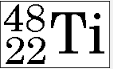
What charge does an atom have when it GAINS electrons?
Positive
Negative
Neutral
What subatomic particle changes in an ion?
The number of electrons
The number of protons
The number of neutrons
If an atom gains electrons, the charge will be positive.
true
false

Cations are...
Positive
Negative
Neutral

Anions are...
Positive
Negative
Neutral
Who discover the electron?
Dalton
Rutherford
Thomson
Bohr
Rutherford's "gold-foil" experiment using alpha particle scattering concluded that
the center of the atom is empty
atomic mass is spread over the whole atom
the center of the atom has a negative charge
most of the atom is empty
What experiment was used to discover the nucleus?
Cathode Ray Tube
Gold Foil
Chromatography
Gel Electrophorese
Dalton had 4 points about an atom, which is NOT one?
Atoms combine in whole ratios
An atom of one element will never turn into an atom of another
Electrons have a set size and path
Atoms are indivisible
Which one of these is Dalton's Model?


Which model was created after the discovery of the nucleus?
Dalton's
Rutherford's
Quantum Mechanical
Plum Pudding
Which model was created after the discovery of the electron cloud?
Dalton's
Rutherford's
Quantum Mechanical
Plum Pudding
Who discovered the nucleus?
Rutherford
Bohr
J.J. Thompson
Democritus
What experiment was used to discover electrons?
Cathode Ray Tube
Gold Foil
Chromatography
Gel Electrophorese
Who discovered electrons?
Rutherford
Bohr
J.J. Thompson
Democritus
Which model was created after the discovery of electrons?
Dalton's
Rutherford's
Quantum Mechanical Model
Plum Pudding
Fe3+
Element
Ion
Mg2+
Element
Ion
Cl-
Element
Ion
Cl
Element
Ion
H+
Element
Ion
C
Element
Ion

How many neutrons does this bromine atom have?
35
45
80

What is the mass number of this Neon atom?
10
11
21
20

What does it happen to this atom?
It LOSES electrons
It GAINS electrons
It GAINS protons
It LOSES protons

What charge will result if Nitrogen gains 3 electrons?
+3
+1
-3
-2
All atoms can become stable by...
losing or gaining electrons to obtain a full valence (outer) shell
losing or gaining protons to obtain a full valence (outer) shell
losing or gaining neutrons to obtain a full valence (outer) shell

What charge will the ion have?
+1
-1
+8
-8

What element has this orbital notation?
lithium
beryllium
boron
carbon

What element has this electron configuration?
helium
lithium
beryllium
boron

What element has this electron configuration?
boron
carbon
nitrogen
oxygen

Which element is represented by this electron configuration?
neon
sodium
magnesium
aluminum

Which element is represented by this orbital notation?
carbon
nitrogen
oxygen
fluorine

Which element is represented by this orbital notation?
neon
sodium
magnesium
aluminum
Which of the following is the electron configuration for Fluorine


Which of the following is the electron configuration for neon?


Which of the following is the electron configuration for silicon?


Which of the following is the orbital notation for oxygen?


What is the element?
Neon
Chlorine
Aluminum
Argon
What is the element?
Neon
Chlorine
Aluminum
Argon

What is the element?
sulfur
chlorine
phosphorus
silicon
Which is the electron configuration for beryllium?


What element has the electron configuration
Nitrogen
Oxygen
Magnessium
Carbon

Which orbital is displayed correctly?
A
B
C
D


Which are the four energy sublevels?
s,p,d,f
a,b,c,d
s,t,e,p
d,r,o,f
What is the noble gas configuration for silicon?
[Ne] 3s2 3p1
[Ar] 4s1
[Kr] 5s1
[Ne] 3s2 3p2
The electron configuration 1s2 2s22p6 3s23p6 represents which noble gas?
neon
argon
helium
krypton
Why do electrons enter the 4s orbital before entering the 3d orbital?
because the 3d orbital is at a lower energy level
because both the 4s and 3d orbitals are at the same energy level
because the 4s orbital is at a lower energy level
because the 4s orbital is at a higher energy level
Why do you think are there different colors emitted?
Because of the absorption of heat from the flame
Because heat is released
Because of the absorption of light
What is the state when electrons move to a higher energy level upon absorption of energy?
active
inactive
excited
ground
Which is the electron configuration of an aluminum atom (13Al) in the excited state?
1s2 2s2 2p6 3s2 3p1
1s2 2s2 2p6 3s2 3p2
1s2 2s2 2p6 3s2 4s1
1s2 2s2 2p6 3s2 3p3
Light of a specific frequency is emitted when...
an electron absorbs energy
an electron moves down an energy level
when an electron gets excited
all of these are true
Atoms only emit light of certain frequencies because...
electrons move continuously
electrons move up energy levels
electrons can only have certain energies
all of these are true


A pure substance that cannot be broken down into any other substance.
Elements
Compounds
Mixtures
Fe is the ___________________ for iron
Letters
Chemical Symbol
Equation
A(n) ______________ is formed when two or more elements chemically combine.
Compound
Element
Mixture
A ___________ is a combination of many different elements not chemically combined.
Element
Compound
Mixture
Brass is a metal that is bright red and gold. It is formed by combining, not chemically, two elements, zinc and copper. Based on the information, how would brass be classified?
an element
compound
mixture
suspension
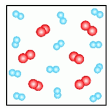
A student placed a small chip of limestone into a hydrochloric acid solution, and carbon dioxide gas was released. The carbon dioxide provided evidence that
only a physical change occurred.
a chemical change occurred.
only a loss of mass occurred.
the formation of an element occurred.
Humans absorb oxygen from the air they breathe in and exhale carbon dioxide gas, CO2. Carbon dioxide gas is
an element made of carbon and oxygen atoms.
a solution made of carbon and oxygen atoms.
a compound of carbon and oxygen atoms.
a mixture of carbon and oxygen atoms.

What type of change is this?
Chemical
Melting
Evaporation
Condensation
Sublimation
What makes elements and compounds different from mixtures? Elements & compounds-
have a constant composition (pure substances)
are made of gases
Will not change when heated
conduct electric current
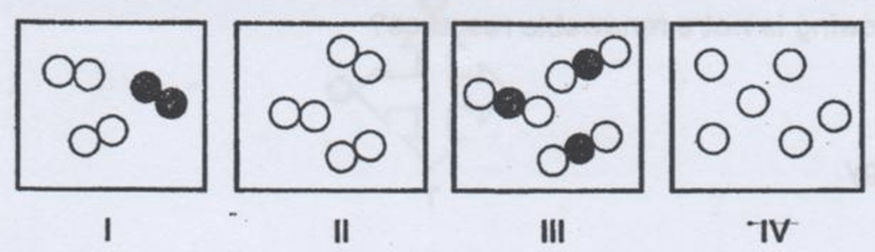
In the diagrams provided, the circles of different colors represent the atoms of different elements. Which diagram represents a mixture?
I
II
III
IV
Mixtures are different than pure substances because mixtures-
have lower boiling points
can be separated physically
are less dense than pure substances
contain only one type of atom
Which of the following is made up of only one type of atom?
Which of the following is made up of two or more types of atoms chemically combined together?
Air is a(n) _________.
Diamonds (C) and uranium (U) are examples of
elements
mixtures
compounds

Diagram A is an example of a(n)
element
compound
mixture
Diagram B is an example of a(n)
element
compound
mixture
Diagram C is an example of a(n)
element
compound
mixture

What does this diagram represent?
Elements
Compounds
Mixture of Elements and Compunds
Mixture of Compounds
A substance that contains only one type of atom is a(n):
Compound
Element
Heterogeneous mixture
Homogeneous mixture
A mixture that appears to be evenly mixed throughout is a(n):
Atom
Compound
Homogeneous mixture
Heterogeneous mixture
A mixture that does NOT appear to be evenly mixed throughout is a(n)______.
Atom
Compound
Homogeneous mixture
Heterogeneous mixture
If an unknown substance CANNOT be broken down into simpler substances, it is:
A compound
An element
A homogeneous mixture
A heterogeneous mixture
Two or more different atoms joined together creates:
An element
A compound
A mixtures
Beatriz wants to make a mixture out of her bowl of blueberries. Which of the following would turn her bowl of blueberries into a mixture?
Adding more blueberries to the bowl
Adding raspberries to the bowl
Cutting up the blueberries
Mashing the blueberries

Classify the following as: element, compound, homogeneous mixture or heterogeneous mixture: Air
Element
Compound
Homogeneous mixture
Heterogeneous mixture

Classify the following as either a physical property or a chemical property: Mass
Physical property
Chemical property

Determine if the following is an intensive or an extensive property: Length
Intensive property
Extensive property

Determine if the following is an intensive or an extensive property: Density
Intensive property
Extensive property

Determine if the following is an intensive or an extensive property: Boiling point
Intensive property
Extensive property

Determine if the following is an intensive or an extensive property: Mass
Intensive property
Extensive property

Tap water is:
Homogeneous mixture
Heterogeneous mixture
Substance
Compound
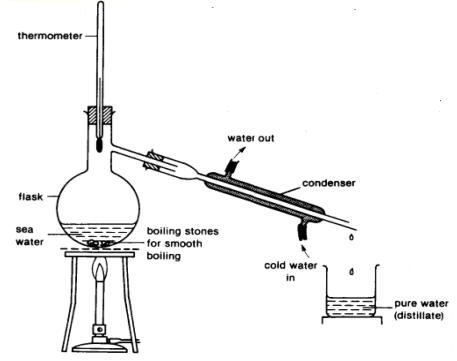
What is the name of this separation technique?
Simple distillation
Fractional distillation
Boiling
Evaporation
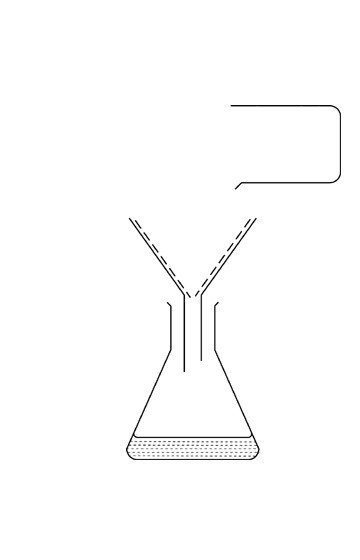
What is the name of this separation technique?
distillation
filtration
evaporation
chromatography
Which separation technique is used to obtain salt from seawater?
Simple distillation
Filtration
Chromatography
Evaporation
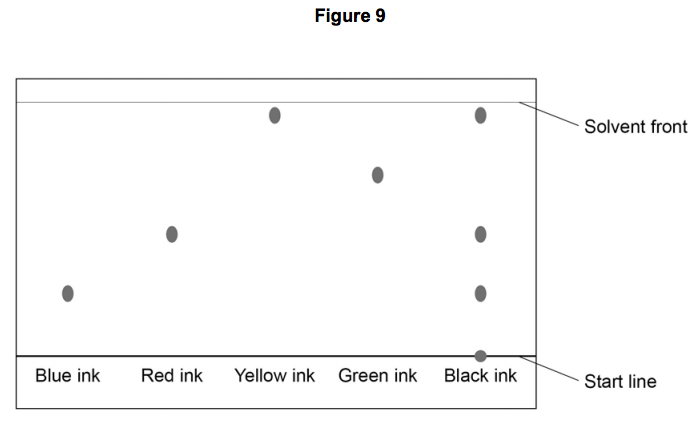
Which ink is a mixture?
Blue
Red
Yellow
Black
Referring to the chromatogram, black ink contains
Blue, red and yellow ink only
Blue, red, yellow and green ink
Blue and yellow ink
Black ink only
What method would you use to separate a mixture of salt and water so that you can get keep the salt AND the water?
sorting by hand
distillation
chromatography

M = D/V
M = V/D
M = D x V

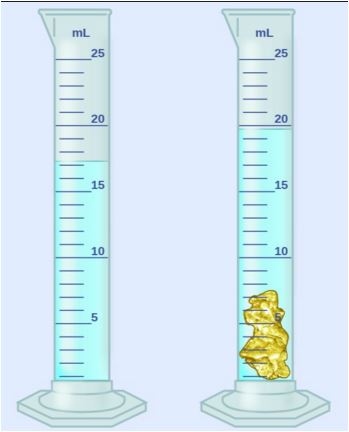
The amount of water displaced is the same as the volume of the object. What is the VOLUME of the object?
Which is the property of matter in which a substance can transfer heat or electricity?
magnetism
conductivity
density
solubility
Serena is mixing a material into a beaker filled with a liquid. She notices that the material seems to disappear into the liquid. What physical property of the material is Serena most likely observing?
solubility
conductivity
magnetism
density
Eugene describes the physical property of a material as “sweet and floral.” What physical property of the material is Eugene most likely observing?
boiling point
shape
hardness
odor
Which statement best compares and contrasts two physical properties of matter?
Density and solubility are similar because they both involve water, but they are different because density involves dissolving a material and solubility involves floating or sinking a material.
Density and solubility are similar because they both involve a material’s mass and volume, but they are different because density involves floating materials and solubility involves sinking materials.
Boiling points and melting points are similar because they both involve changing the heat of a material, but they are different because boiling point involves adding heat to a material and melting point involves removing heat from a material.
Boiling points and melting points are similar because they both involve the change in a state of a material, but they are different because boiling point involves a change from a liquid to a gas and melting point involves a change from a solid to a liquid.
What happens when a substance undergoes a physical change?
Some physical properties change, but the substance keeps its identity.
No physical properties change, and the substance keeps its identity.
Some physical properties change, and the substance changes its identity.
No physical properties change, but the substance changes its identity.
Which can occur in a physical change?
The mass can increase.
The particles can arrange in different ways.
The mass can decrease.
The atoms can bond to different atoms.
When liquid gold becomes a solid, its particles get closer together. Which best describes what happened to the gold?
the conservation of magnetism
the change in solubility in a physical change
the change in melting point in a physical change
the rearrangement of particles in a physical change
What is an example of a physical change?
having less ash than the paper that was burned to form it
ice forming and then melting back into water
rust having a different identity than the iron it forms on
the irreversible reaction of vinegar and baking soda
Which statement about the physical change of liquid water boiling into steam is true?
The heat added represents an energy change.
The action cannot be reversed.
The steam cannot conserve mass.
The weight lost represents a mass change.
The Statue of Liberty is made of copper that has turned green because it has undergone a change. What can be said about this change?
The change is a physical change because the copper in the statue is still there.
The change is a physical change because a new chemical is formed on the outside of the statue.
The change is not a physical change because the color of the statue has changed.
The change is not a physical change because a new chemical is formed on the outside of the statue.
Which scenario is an example of a physical change?
Wood is burned in a campfire and is turned into ash and smoke.
A piece of metal is left in the rain and forms rust.
Lead is melted into a liquid to form pellets.
Yeast turns sugar into energy, water, and carbon dioxide gas.
A scientist is examining an unknown solid. Which procedure would most likely help determine a chemical property of the substance?
heating it to find the temperature at which it melts
exposing it to a flame to see if it catches on fire
hitting it with a hammer to determine if it breaks or bends
placing it in water to find out whether or not it dissolves
Which characteristic of a substance is considered a chemical property?
its boiling point
its reactivity
its density
its conductivity
Which statement best describes chemical properties of matter?
Chemical properties, such as density, must be observed when a substance is in its natural state at room temperature and normal atmospheric pressure.
Chemical properties, such as reactivity, must be observed when a substance is in its natural state at room temperature and normal atmospheric pressure.
Chemical properties, such as combustibility, are generally observed as the identity of a substance changes and one or more new substances form.
Chemical properties, such as boiling point, are generally observed as the identity of a substance changes and one or more new substances form.
Which use of iron is due to its chemical properties?
producing colored sparks in fireworks
changing from liquid to gas at 2,862°C
conducting electricity and heat
changing from solid to liquid if heated to 1,538°C
Which statement best describes what happens during a chemical change?
Some properties of a substance change, but its identity remains the same.
Both the identity and the properties of a substance change.
The chemical properties of a substance change, but its physical properties remain the same.
The physical properties of a substance change, but its chemical properties remain the same.
In a science lab, Cash mixes two clear liquids together in a beaker. Bubbles are produced, and a white solid forms and settles to the bottom. He plans to heat the beaker over low heat and make more observations. In a science lab, Cash mixes two clear liquids together in a beaker. Bubbles are produced, and a white solid forms and settles to the bottom. He plans to heat the beaker over low heat and make more observations.
A physical change occurred, so if Cash heats it, the white solid will dissolve to form the original mixture of clear liquids.
A physical change occurred, so even if Cash heats it, the white solid will remain.
A chemical change occurred, so if Cash heats it, the white solid will dissolve to form the original mixture of clear liquids.
A chemical change occurred, so even if Cash heats it, the white solid will remain.
What is the outcome of all chemical changes when two substances are combined?
A new substance forms with identical properties.
The two substances release an odor.
The two substances change color.
A new substance forms with different properties.
Which laboratory activity involves a chemical change?
boiling saltwater for several minutes until only solid salt remains
extracting iron filings from a sand mixture using a magnet
leaving a copper penny in vinegar until it turns green
crushing a rock with a hammer to extract mineral deposits
Which event always involves a chemical change?
boiling
melting
conducting
burning
Which is NOT a physical property
boiling point
Magnetism
conductivity
burning
Of the halogens, which has the smallest radius?
F
Br
He
At
Which of the following will have a lower ionization energy than Scandium (Sc)?
Helium (He)
Titanium (Ti)
Calcium (Ca)
Magnesium (Mg)
Which of the following will have a higher electronegativity than arsenic (As)?
Carbon (C)
Neon (Ne)
Antimony (Sb)
Germanium (Ge)

What is the amount of energy required to remove an electron from an atom?
atomic energy
ionization energy
ionic energy
electron energy

What is a measure of the tendency of an atom to attract a bonding pair of electrons when the atom is in a compound?
ionization energy
electropositivity
electronegativity
electron energy

What is a vertical (up and down) column in the periodic table?
group or family
period
periodic law
octet rule

Find an element with similar chemical properties to Barium (Ba)
Ca and Ra, because they are in the same group and have similar chemical properties
Ca and Y, because they are at a 90 degree angle and have similar chemical properties
Cs and La, because they are within the same period
Consider the group 1A elements sodium (period 3), potassium (period 4), and rubidium (period 5). What would you predict about the ionization energies of these elements?
Na < K < Rb
Na > K > Rb
Rb < Na < K
Na = K = Rb

Which of these elements in group 1A has the largest atomic radius?
cesium
rubidium
potassium
sodium

Which element in period 4 has the highest electronegativity?
potassium
calcium
copper
bromine

Which group 4A element has the highest ionization energy?
carbon
tin
silicon
lead
Consider the group 1A element sodium (atomic number 11), the group 3A element aluminum (atomic number 13), and the group 7A element chlorine (atomic number 17). These elements are in period 3. How are the first ionization energies of these elements related?
sodium > aluminum > chlorine
sodium < aluminum < chlorine
sodium < chlorine < aluminum
sodium > chlorine > aluminum
The sodium atom loses an electron to form a sodium ion (Na+). Which statement is correct with respect to its atomic radius?
The sodium ion has a larger radius than the atom.
The sodium ion has a smaller radius than the atom.
The sodium ion and the sodium atom radii are the same size.
The sodium ion has twice the radius of the sodium atom.

Which group 2A element has the largest ionic radius?
magnesium
calcium
barium
radium
Which property determines an atom's ability to attract electrons shared in a chemical bond?
ionization energy
atomic radius
electronegativity
ionic radius


Which element has the greater ionization energy?
Magnesium (Mg)
Phosphorus (P)

Which element has the greater ionization energy?
Iodine (I)
Chlorine (Cl)
As you look from left to right across a period, electronegativity
increases
decreases


