
Font size
 Worksheets
Intro to Ecology
Total questions: 20
Worksheet time: 15mins
What is Ecology?
is the scientific study of organisms.
is the scientific study of interactions among organisms with each other and with the environment.
is the scientific study the environment.
is the scientific study of animals.
Abiotic Factor
nonliving factors (soil, pollution, natural disasters, climate)
Biotics Factor
Living factors (plants and animals)
Habitat
is a place where a particular population lives (anthills, squirrel nests, beaver dams, etc)
A group of organisms of the same species in any given area...
population
community
individuals
community

Group of populations in an area.
Organism
Ecosystem
Community
Biosphere

Where life is found on earth.
Community
Habitat
Ecosystem
Biosphere
The maximum number of individual organisms that an ecosystem can comfortably support is
exponential growth
carrying capacity
population
tolerance
A(n) __________________ includes all the living and non-living factors in an area.
ecosystem
population
community
biosphere

Biotic or Abiotic factor that restricts the growth of the population
carrying capacity
limiting factor
abiotic factor
biotic factor
(a) are the plants, animals, and other single celled organisms (like bacteria) that live in an ecosystem.

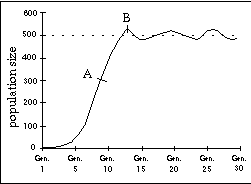
In the graph to the right, what is the population of deer at the carrying capacity of the environment?
3
7
70
40
When resources are not available a population will _____________ in size.
Increase
Decrease
Stay the same
Parasites and diseases will ______________ the size of a population, so the are examples of limiting factors.
Increase
Decrease
Stay the same
Which of the following is a biotic factor in an ocean ecosystem?
the salt content of the water
the temperature of the water
the fish in the water
the oxygen in the water

What happens if a population grows past its carrying capacity?
The population keeps growing
The population starts to die off
The entire species will go extinct
The carrying capacity just increases
This may cause a population to increase
increase of food supply
removal of predators
removal of disease
all of these

