
 Worksheets
Wavelength, Frequency, and Energy
Total questions: 37
Worksheet time: 44mins

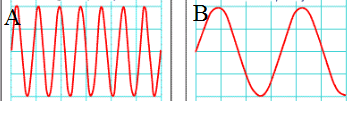
What does #1 represent?
Period
Frequency
Wavelength
Amplitude

What does #2 represent?
Period
Frequency
Wavelength
Amplitude
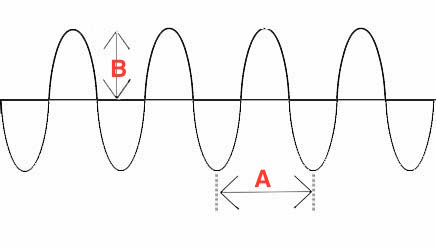
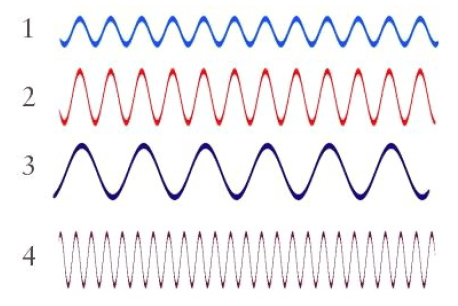
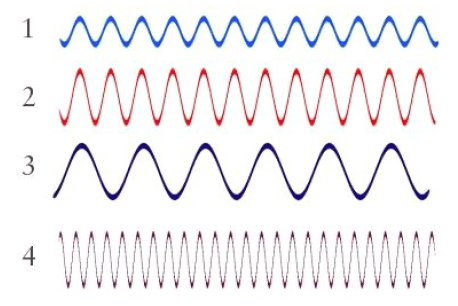
If a wave has a greater frequency, what happens to the wavelength?
increases
decreases
stays the same
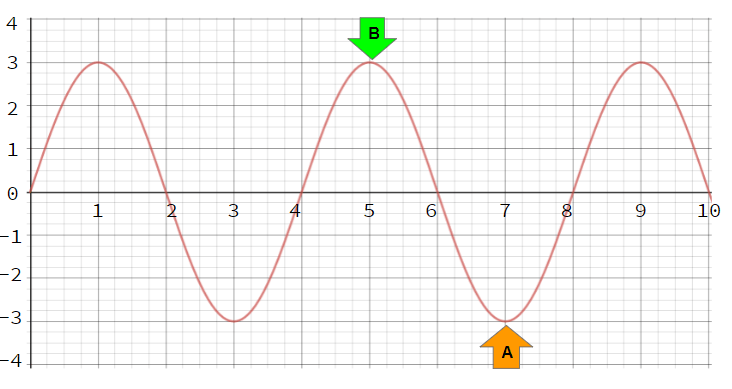
What property does the orange arrow (A) represent?
Crest
Trough
Wavelength
Peak
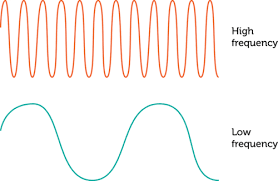
If a wave has a greater frequency, what happens to the wavelength?
increases
decreases
stays the same
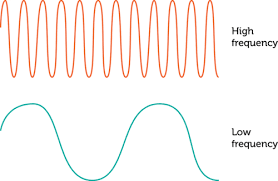
If a wave has a greater frequency, what happens to number of waves per second?
increases
decreases
stays the same

Which EM waves have the longest wavelength?
radio
x-rays
ultraviolet
gamma rays
Which EM waves have the shortest wavelength?
radio
x-rays
ultraviolet
gamma rays
Which EM waves are have a SHORTER wavelength than visible?
radio
none
infrared
x-rays
Which EM waves are have the lowest frequency?
radio
none
infrared
x-rays
Which EM waves are have the highest energy & are the most dangerous?
radio
gamma rays
infrared
x-rays

The lower the frequency the ______ the energy.
higher
lower
neither, stays the same
Which color has the longest wavelength?
Red
Orange
Yellow
Blue
Which color has the shortest wavelength?
Red
Orange
Yellow
Blue

Each element on the periodic table can be identified by its
classification as a solid, liquid or gas.
location on the table.
ability to react to form compounds.
unique spectral "fingerprint."

What subatomic particle is responsible for the spectral lines seen in emission spectra diagrams?
electrons
protons
neutrons

In order to go from ground state to an excited state, an electron must
emit energy
absorb energy
wiggle
When an electron returns to ground state from an excited state, the atom will
emit energy
absorb energy
rotate
wiggle

If an electron moves from n=4 to n=2 it ____
absorbs energy
releases energy

Which element(s) is/are found in the star's spectra below?
Hydrogen only
Hydrogen & Helium
Calcium only
Hydrogen & Calcium


True or False: The ground state is the highest energy state of an atom.
True
False

What is the light that you can see called?
observatory light
ultraviolet light
visible light
infrared light


All stars are composed of a mixture of elements. When these elements are heated they emit specific amounts of electromagnetic radiation, known as an emission spectrum. Each element emits a unique, identifiable, spectrum.
Using the Bright-line emission spectrum chart below, identify the elements present in this modeled star (found in the line labeled “mixture”).
Lithium and cadmium are in the mixture. Strontium is not in the mixture.
Lithium and strontium are in the mixture. Cadmium is not in the mixture
Cadmium and strontium are in the mixture. Lithium is not in the mixture
All of the shown elements are present in the mixture.

The unknown emissions spectra belongs to the element
Hydrogen
Mercury
Neon
Sodium

The unknown emissions spectra belongs to the element
Hydrogen
Mercury
Neon
Sodium


Look carefully at the picture. It shows an electron in the excited state on the left, and the electron returning to its ground state on the right. When the electron return to the ground state it emits a_______________________.
blast of cold air
electrostatic charge
proton
photon (light)

