
 Worksheets
A Tour of the Cell + The Working Cell Review (Ch. 4-5)
Total questions: 30
Worksheet time: 19mins
Responsible for packaging, modifying, and moving substances from the cell.
mitochondria
Golgi apparatus
nucleolus
rough E.R.
The jelly-like fluid inside of the cell. It holds the organelles in place.
cytoplasm
chloroplasts
cell membrane
mitochondria
The control center of the cell. It houses DNA.
nucleus
nucleolus
mitochondria
cell membrane
A structure that makes ribosomes. Found in the nucleus.
smooth E.R.
nucleolus
nucleus
Golgi apparatus
This is an organelle that loops back and forth and detoxifies the cell.
rough E.R.
smooth E.R.
lysosomes
ribosomes
These are round organelles that digest waste, old cell parts and food.
ribosomes
lysosomes
chloroplasts
vacuoles
This is a rigid structure that provides support to plant cells.
cell membrane
cell wall
cytoplasm
central vacuole
These organelles contain green chlorophyll. They make food for plants.
lysosmes
chloroplasts
ribosomes
vacuoles
This stores water in plant cells.
chloroplasts
cell wall
vacuoles
central vacuole
These are protein builders. They are located on the rough E.R.
vacuoles
lysosomes
mitochondria
ribosomes
ability of an optical instrument to magnify an image.

identify the type of solution and the state of the cell in the given diagram
a. hypotonic - plamolyzed
b. isotonic - normal
c. hypertonic - turgid
a. hypertonic - plasmolyzed
b. isotonic - flaccid
c. hypotonic -turgid
a. hypertonic - turgid
b. hypotonic - flaccid
c. isotonic. plasmolyzed
a. isotonic - flaccid
b. hypotonic - plasmolyzed
c. hypertonic - turgid
The plasma membrane is made up of
phospholipids
phospholipids and proteins
proteins
lipids

Please identify the type of solution shown above.
Isotonic Solution
Hypertonic Solution
Hypotonic Solution

Facilitated diffusion...
requires transport proteins.
requires energy.
is required for water molecules.
moves against the concentration gradient.
Which cell type is MOST complex with a nucleus and many membrane-bound organelles?
Prokaryotic
Eukaryotic


This picture represents which type of cellular transport?
exocytosis
endocytosis
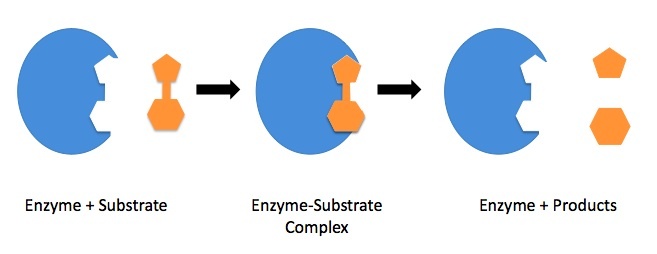
How do enzymes speed up chemical reaction?
Increasing activation energy
Decreasing activation energy
Increasing deactivation energy
Decreasing deactivation energy
Which organelle makes energy for the cell?
ribosome
nucleus
mitochondria
cell wall
Which organelle manufactures ribosomes for the cell?
lysosomes
nucleolus
nucleus
golgi apparatus
How does ATP release energy?
by gaining a phosphate
by cleaving a phosphate
by gaining a phospholipid
by cleaving a phospholipid

