
 Worksheets
Free Fall - Vectors - Projectile Motion
Total questions: 30
Worksheet time: 4hrs 4mins
FREEFALL
What happens to the velocity of an object as it falls?
speeds up
slows down
stays the same
becomes zero

HORIZONTAL PROJECTILE MOTION
If an ball is LAUNCHED horizontally of a cliff, which values is NOT CORRECT?
Δdx = Δdy
ag = -9.81 s2m
v0y = 0 m/s
v0x = vfx

FREEFALL
If a ball is thrown vertically in the air and falls back to the same spot after 2 seconds, which of the following is TRUE?
The initial velocity of the ball is 0 m/s.
The velocity of the ball at its highest point is 0 m/s.
The velocity of the ball when reaches the person's hand again is 0 m/s.
The acceleration of the ball was 0 s2m during the entire motion.

FREEFALL
If an rock is DROPPED of a cliff, which value is constant during the free fall?
displacement
acceleration
velocity
time

VECTORS
If a drone is flying at 15 m/s south and a headwind is blowing 5 m/s north, what is the resultant velocity of the drone?
20 m/s [S]
10 m/s [S]
10 m/s [N]
20 m/s [N]

VECTORS
Which of the following is TRUE about this vector?
The horizontal component is 8 m [right].
The vertical component is 7 m [up]
The resultant vector magnitude is 7.21 m.
The resultant vector direction is 56.31° .

VECTORS
A person is trying to swim across a river that is flowing 9 m/s [E]. If the person is swimming at 1.5 m/s [N], what is the angle he is moving across the river?
80.5°
9.5°
13.5°
99.5°
VECTORS
A person is trying to swim across a river that is flowing 9 m/s [E]. If the person is swimming at 1.5 m/s [N], what is the person's resultant velocity?
(HINT: Find the magnitude of the resultant)
83.25 m/s
9.12 m/s
13.5 m.s
8.87 m/s

VECTORS
A giant slide at a carnival is 42.7 meters long and rises at a 25.4o above the ground. How high do riders have to climb up to reach the top of the slide?
(HINT: Find the vertical component)
18.3 meters
38.6 meters
20.3 meters
17.2 meters
VECTORS
A giant slide at a carnival is 42.7 meters long and rises at a 25.4o above the ground. How far away from the stairs do the riders end up after sliding down?
(HINT: Find the horizontal component)
18.3 meters
38.6 meters
20.3 meters
17.2 meters

HORIZONTAL PROJECTILE MOTION
A shotput is launched horizontally at 3.2 m/s. How far is the shotput thrown if it lands 0.5 seconds later?
1.6 meters
6.4 meters
15.7 meters
5.6 meters
HORIZONTAL PROJECTILE MOTION
A shotput is launched horizontally at 3.2 m/s. What is the vertical velocity of the shotput just as it lands 0.5 seconds later?
-4.905 m/s
1.6 m/s
-31.39 m/s
-1.23 m/s

HORIZONTAL PROJECTILE MOTION
Robin Hood launched an arrow at 30 m/s. If the arrow hits the ground 60 meters away from him, what height was the arrow launched at?
19.62 meters
2 meters
3.1 meters
6.1 meters

HORIZONTAL PROJECTILE MOTION
Robin Hood launched an arrow at 30 m/s. The arrow hits the ground 2 seconds later 60 meters away from him. From what height was the arrow launched?
Match each value or unknown to the correct term.
30 m/s
vx
horizontal velocity
60 m
Δdx
horizontal displacement
(range)
-9.81 m/s2
ag
(vertical acceleration due to gravity)
height
Δdy
vertical displacement
2 seconds
t
time

HORIZONTAL PROJECTILE MOTION
You take a running leap from a diving board at 2.5 m/s and hit the water 1.5 seconds later. How high was the diving board?
30.66 meters
11.03 meters
7.35 meters
12.26 meters

VECTORS
What is TRUE about vectors A and B?
They have the same magnitude and direction.
They have the same magnitude but a different direction.
They have the same direction but a different magnitude.
They have a different magnitude and a different direction.

VECTORS
What function should you use to determine the horizontal component of this vector?
sine
cosine
tangent
Pythagorean Theorem
VECTORS
What function should you use to determine the vertical component of this vector?
sine
cosine
tangent
Pythagorean Theorem

VECTORS
What function should you use to determine the magnitude of the resultant vector?
sine
cosine
tangent
Pythagorean Theorem
VECTORS
Determine the magnitude of the resultant vector.
87.66 m
51.81 m
50.71 m
11.05 m
What function should you use to determine the direction of the resultant vector?
sine
cosine
tangent
Pythagorean Theorem
VECTORS
Determine the direction of the resultant vector.
34.78°
55.22°
46.02°
43.98°

FREEFALL
If a paintbrush is dropped from the top of a building 200 meters tall, how long does it take to hit the ground?
6.39 seconds
40.77 seconds
20.39 seconds
4.52 seconds
FREEFALL
A ball is launched straight up into the air at 25 m/s, how long does it take to reach its max height?
2.55 seconds
15.66 seconds
3.90 seconds
0.39 seconds
FREEFALL
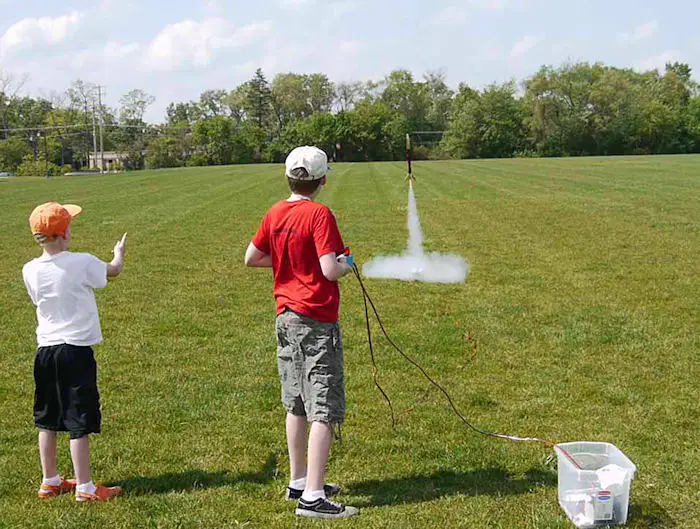
A small rocket is launched straight up into the air at 80 m/s. If it reaches its max height in 8.15 seconds, how far into the air does it go?
652.0 meters
326.20 meters
784.8 meters
96.29 meters

FREEFALL
A ball is dropped from a building. How fast is it traveling after falling for 1.77 s? (Hint: It's a free falling object)
-5.54 m/s
- 17.36 m/s
-11.58 m/s
-8.04 m/s
FREEFALL
A ball is thrown upwards with a velocity of 15 m/s. How long does it take to reach its highest point?
1.52 seconds
5.19 seconds
24.81 seconds
12.13 seconds
FREEFALL
A ball is thrown vertically upwards with an initial velocity of 20 m/s. What is the maximum height it reaches?
0.38 meters
20.38 meters
30.61 m
40.87 m
HORIZONTAL PROJECTILE MOTION
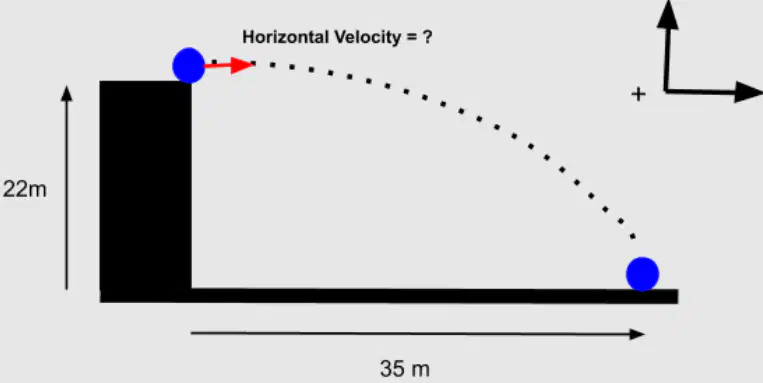
Which student correctly describes horizontal and vertical velocity of an projectile launched horizontally?
Anita: “A projectile’s vx changes because of gravity, and its vy remains constant.”
Barry: “Both vx and vy are constant.”
Chris: “A projectile has no acceleration in the vertical dimension but it does accelerate horizontally.”
Dave: “A projectile has vertical acceleration and a constant horizontal velocity”
FREEFALL
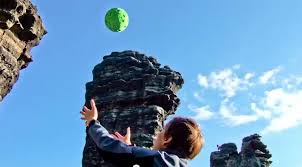
A ball is thrown straight up into the air. What happens to the ball's velocity as it rises in the air?
the velocity increases
the velocity decreases
the velocity remains constant

