
 Worksheets
AP Physics 2 College
Total questions: 25
Worksheet time: 2hrs 1mins

Which 1 g sample will have the highest temperature after the addition of 200 J of energy?
H2O(l)
H2O(g)
Cu
Pb
A system absorbs 100 J of heat and does 200 J of work on a piston. What is the change in internal energy?
-100 J
-300 J
100 J
300 J
Which of these units is the equivalent of a Pascal?
N*m2
N/m2
N+m2
N-m2
A gas at 20Pa expands a container from 10m3 to 20m3. How much work is done by the gas?
-400 J
350 J
600 kJ
-200 J
Which of these variables is NOT in the formula describing the first law of thermodynamics?
Change in Internal Energy
Heat
Efficiency
Work
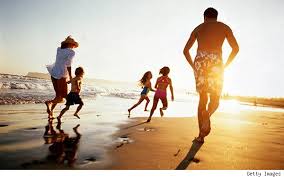
The sun shines down on this family as the play on the beach is which form of thermal transfer?
conduction
convection
radiation
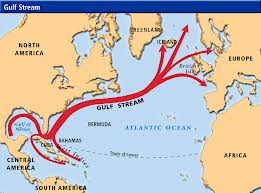
The Gulf Stream is a current that brings warm ocean water from the south to the north is which form of thermal transfer?
conduction
convection
radiation

Walking on the warm sand sand with your bare feet is which form of thermal transfer?
conduction
convection
radiation

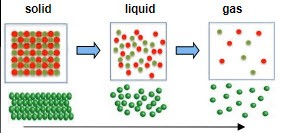
Entropy increases from solid, liquid, to gas. Why?
Molecular disorder increases
Molecular randomness decreases
Molecules are more energetic
Molecules are more reactive


When thermal energy is added to a substance, the substance's particles move:
More rapidly at an increased distance from each other.
More rapidly with less distance between each other.
More slowly with a greater distance between each other.
More slowly with a reduced distance between each other.

One mole of an ideal gas is taken through a closed cycle represented by this PV diagram. If going from point 1 to 2 is isothermal, what is true about the change in internal energy and heat going from point 2 to 3?
ΔU = 0, Q > 0
ΔU > 0, Q > 0
ΔU < 0, Q < 0
ΔU < 0, Q > 0

The change of state of an ideal gas is represented on the PV diagram shown here. What is true about the work done for each section? Choose all that are correct!
The work is equal for all cycles
Work for 1→2 = Work for 2→3
No work is done for 1→2 or 3→4
Work for 2→3 is 3 times larger than 4→1
Find the temperaure of 2 moles of an ideal gas which is at a pressure of 10 kPa and has a volume of 0.5 m3.
300 K
90 K
300 ºC
600 K
What is the internal energy of 3 moles of an ideal gas whose temperature is 30ºC?
1122 J
11,336 J
0 J
303 J
What is the name of the law that explains "When two systems are in thermal equilibrium with a third system, then they are in thermal equilibrium with each other."
Zeroth Law of Thermodynamics
First Law of Thermodynamics
Second Law of Thermodynamics
Newton's 2nd law of motion
A metal ring is heated over an open flame. What happens to the hole in the center?
it gets larger
it gets smaller
it does not change size
it completely disappears

What is the thermodynamic cycle from point 3→1 in the diagram above?
isobaric
isothermal
isochoric
isometric

What is the thermodynamic cycle from point 4→1 in this graph?
isobaric
isochoric
isothermal
adiabatic

The PV graph for one mole of an ideal gas is shown. Find the temperature at point A.
100 K
4000 K
2,500,000 K
481 K

The PV graph for 1 mole of an ideal gas is shown. Find the total work done in a complete cycle (A→B→C→A).
0 J
1500 J
6000 J
3000 J

The PV Graph for 1 mole of an ideal gas is shown. During which cycle must heat be added to the gas (+Q)?
A→B
B→C
C→A
none of the above
What is the change in internal energy of a gas whose temperature has not changed?
0 J
1000 J
depend on the heat added and work done
none of the above

