
 Worksheets
ATP, Leaf Anatomy, Energy Formulas
Total questions: 40
Worksheet time: 1hrs 20mins
Provides energy for cells
Stores genetic information
Provides structure in the nucleus

Tri (3) phosphates
Tri (3) proteins


Where is the energy stored in ATP molecules?
How is ADP converted back to ATP?
Phosphate group is removed.
Phosphate group is added.
The waxy, waterproof layer that covers most leaves is called?
Cuticle
Periderm
Guard cells
Stomata
Which reactant is required for photosynthesis? Water, sunlight, and (a) .
Cuticle
Stomata
Guard cells
Palisade layer
What are the functions of the roots? (Select two answers)
Absorbing Water and Minerals
Attracting Insects
Anchoring the Plant
Performing Photosynthesis
Making Nectar
What does the Xylem transport?
Water and Minerals
Glucose
Blood
Chlorophyll
What does the Phloem transport?
Water and Minerals
Glucose
Blood
Chlorophyll
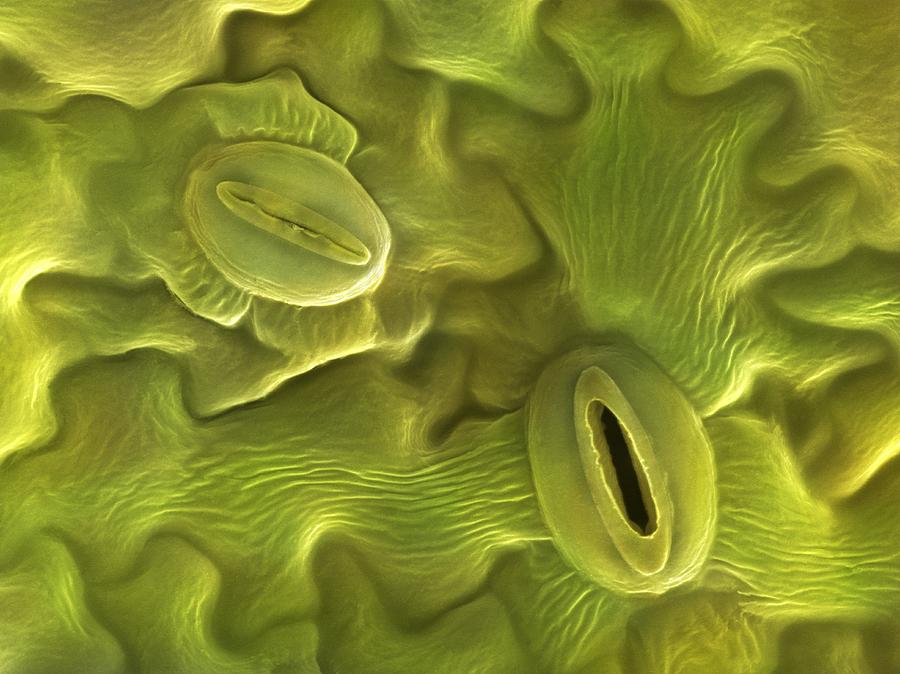
What is the opening that allows gas exchange?
Guard cells
Phloem
Phloem tubes transport substances..
From the roots to the stem and leaves
From the leaves to the rest of the plant
Which of the following are NOT found in animal cells?
Chloroplasts and cytoplasm
Chloroplasts and cell wall
Cell wall and cell membrane
Mitochondria and nucleus
The process of photosynthesis takes place in the:
Leaves of the Plant.
Stem of the plant.
Roots of the plant.
All of the above.
Photosynthesis uses sunlight, water and _______________, to create glucose.
Carbon monoxide
Oxygen
Carbon dioxide
Sodium bicarbonate
What could happen if a plant's phloem does not work properly?
Photosynthesis will not take place
The plant might be short of water
The plant might be short of food
The plant will not be able to dissolve minerals
What are the THREE inputs/reactants needed for photosynthesis?
Oxygen
Carbon Dioxide
Water
Sunlight
Glucose
What is the other reactant, besides oxygen, that is needed to perform cellular respiration?
(a)
What is the other product/output, besides glucose, that is created through photosynthesis?
(a)
What is another product/outcome, besides carbon dioxide and water, are created from cellular respiration?
(a)
What is the function of the phloem in plants?
(a)
What is the function of the xylem in plants?
(a)
What is the waxy outer covering of a leaf that protects it from damage?
(a)
What part of the leaf allows for gas transfer?
(a)
What part of the leaf will open and close to help prevent loss of water?
(a)
Which inner layer of the leaf allows gas exchange to occur?
(a)
Match the following information.
Cuticle
Outer protective layer of the leaf.
Stomata
Allows gas to enter and leave the leaf.
Guard Cells
Opens and closes to prevent water loss.
Xylem
Transports water upward to the leaves.
Phloem
Transport sugars downward and throughout the plant.
What are the PRODUCTS of photosynthesis?
Water and carbon dioxide
Oxygen and glucose
Oxygen and carbon dioxide
Oxygen and water
Water and glucose
Chlorophyll
Pigment
Glucose
Match the following information
Heterotroph
Needs to eat something to gain energy
Autotroph
Can make its own energy
Photosynthesis
Process of making energy through chloroplasts
Cellular Respiration
Process of making energy through mitochondria
ATP
Cellular Energy
Which of the following are the functions of a leaf? Select all that apply.
Photosynthesis
Digestion
Exchange of gases
Transpiration

