
 Worksheets
Unit 2 Cells Test 2 - REVIEW 2022
Total questions: 30
Worksheet time: 16mins
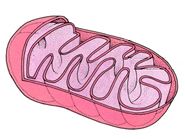
What is the name of the structure shown in the diagram where ENERGY is made?
Chloroplast
Mitochondrion
Nucleus
Vacuole
Which of the following will
happen to a cell If the
concentration of a sugar
solution is lower outside the
cell than inside the cell?
sugar will move into the cell
water will move into the cell
sugar will move out of the cell
water will move out of the cell

What is required to move material across the cell membrane during ACTIVE TRANSPORT?
water
oxygen
energy
cytoplasm
Which process requires cellular energy?
passive transport
mitosis
active transport
cellular respiration
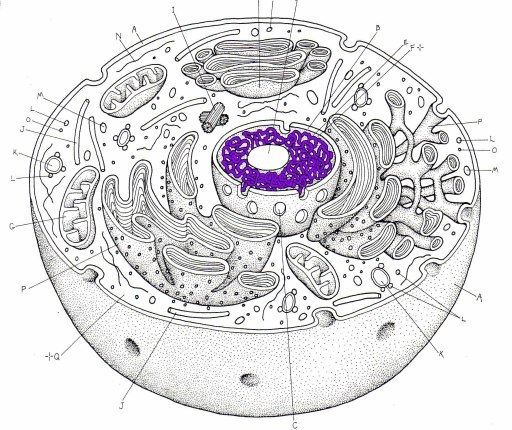
Which of the following is
a function of proteins in the
cell membrane?
to provide a hydrophilic head
so that water can enter the
cell
to allow substances to cross
the plasma membrane via
active transport
to package and sort
molecules to be sent in
vesicles

The cells seems to have DECREASED in size and LOST WATER what type of solution are they most likely in?
Hypertonic
Isotonic
Hypotonic
Body's ability to maintain a stable internal balance?
peristalsis
metabolism
homeostasis
physiology
The post office... processes, packages, and transports materials in and out of the cell/city.
Golgi
ER
chloroplast
ribosome
The outer layer of a plant cell; provides shape, protection, and support to the cell; prevents it from BURSTING with large amounts of water
Chloroplasts
Cell Wall
Cell Membrane
Cytoplasm


Organisms whose cells do not have a nucleus are called . . .
Eukaryotes
Multicellular
Prokaryotes
Unicellular
A folded membrane in which proteins are synthesized and ribosomes are on the outside of the cell is called?
Rough Endoplasmic Reticulum
Smooth Endoplasmic Reticulum
Nucleus
Chloroplasts

When dye is placed in a beaker of water, it eventually spreads throughout the water. What is this called?
diffusion
osmosis
phagocytosis
active transport
A balloon allows water but not
sugar to pass through it. The
balloon contains a 10% sugar
solution. A beaker contains a
5% sugar solution. Which
statement is true?
When placed in the beaker,
the balloon will lose water by
osmosis.
When placed in the beaker,
the balloon will gain water by
active transport.
When placed in the beaker,
the balloon will lose water by
active transport.
When placed in the beaker,
the balloon will gain water by
osmosis.
Which organelles have a transport function?
endoplasmic reticulum + mitochondrion
ribosome + golgi apparatus
ribosome + mitochondrion
endoplasmic reticulum + golgi apparatus
If a cell is unable to make proteins, what mosty likely happened?
ribosomes were destroyed
mitochondria were destroyed
vesicles were destrpyed
ER was destroyed

What kind of cell is this?
Plant
Animal

Which organelle is #1?
Nucleus
Vacuole
Chromosomes
Cell Wall

Name this cell organelle.
Mitochondria
Nucleus
Chloroplast
Cytoplasm

What type of cell is this?
Animal cell because it has chloroplast, a cell wall, and only one large vacuole.
Plant cell because it has mitochondria and a nucleus.
Animal cell because it has chloroplast, and a cell membrane.
Plant cell because it has chloroplast, a cell wall, and only one large vacuole.
Which organelle is made of cellulose and is
responsible for maintaining
cell rigidity?
cell membrane
nucleus
cell wall
mitochondria
Which organelle is made of
lipids and proteins and is
responsible for
communicating with other
cells?
cell membrane
vacuole
chloroplast
cell wall

Identify letter "e".
chloroplasts
cell wall
mitochondria
cell membrane
lysosome
Identify letter "f".
chloroplasts
cell wall
mitochondria
cell membrane
lysosome
Identify letter "d".
chloroplasts
cell wall
mitochondria
cytoplasm
lysosome

What type of cell is this?
plant cell
animal cell

Which part of the endoplasmic reticulum is covered in ribosomes?
convoluted endoplasmic reticulum
porous endoplasmic reticulum

What cell organelle is represented in the diagram?
plasma membrane
nucleus
mitochondrion
endoplasmic reticulum

