
 Worksheets
EPF M7L5 CC
Total questions: 42
Worksheet time: 30mins
Match the following:
Embargo
A ban on imports to or exports from a country, typically for political reasons
Tariff
Taxes charged on imports
Non-tariff barrier
An obstacle to trade, such as licensing requirements for importers.
Quota
A set limit on the quantity of a specified good that can be imported in a given
year.
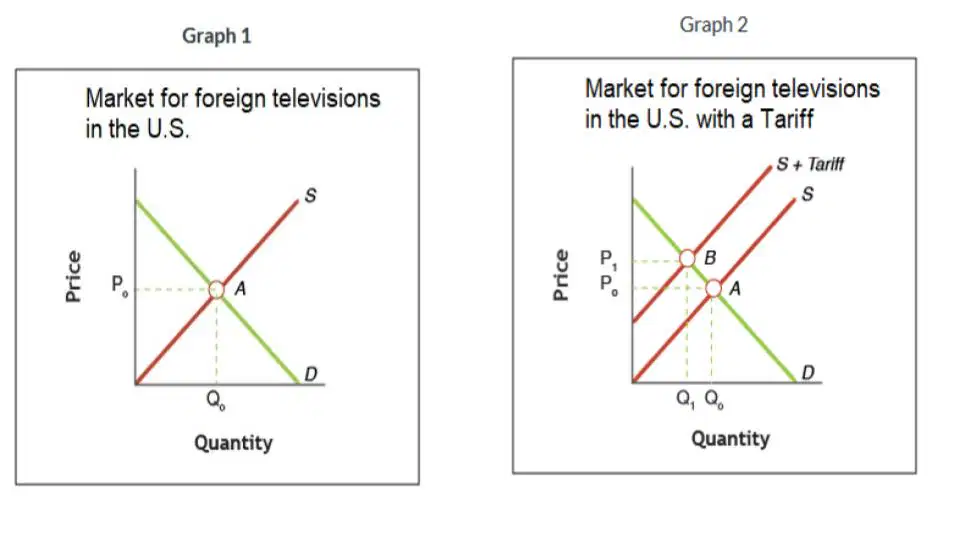
The tariff resulted in _____ in the supply of imported products.
an increase
a decrease
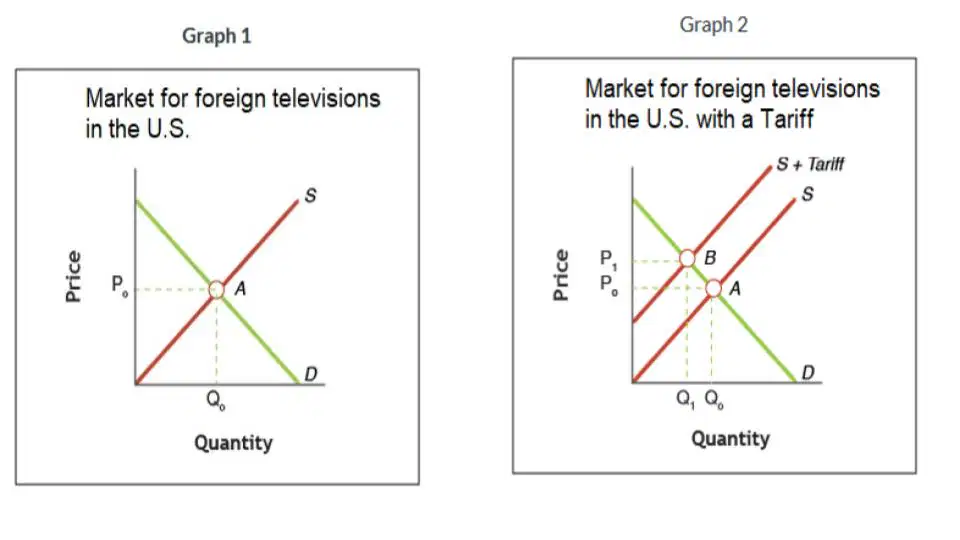
The price that consumers paid for imports was _____ after the tariff was implemented.
lower
higher
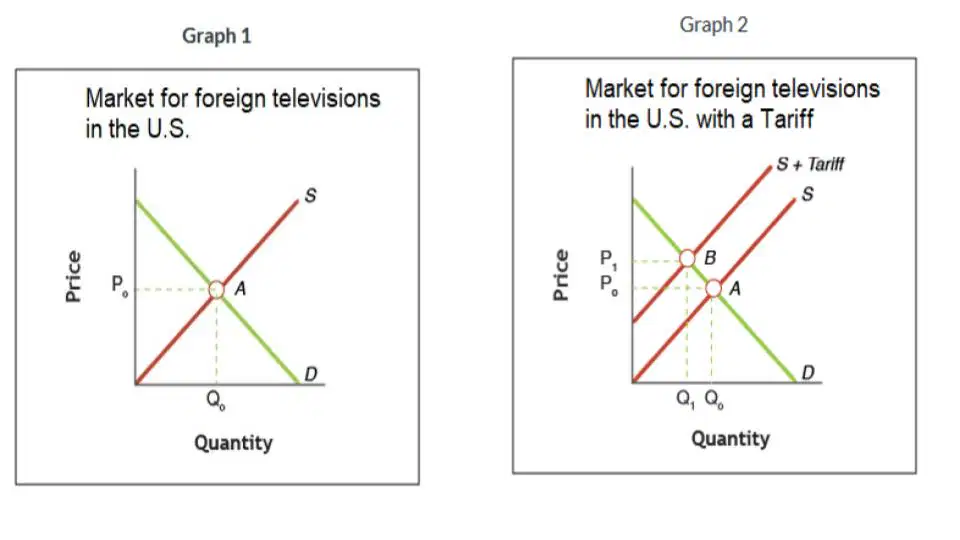
The total quantity demanded of foreign televisions _____ after the tariff was imposed.
increased
decreased
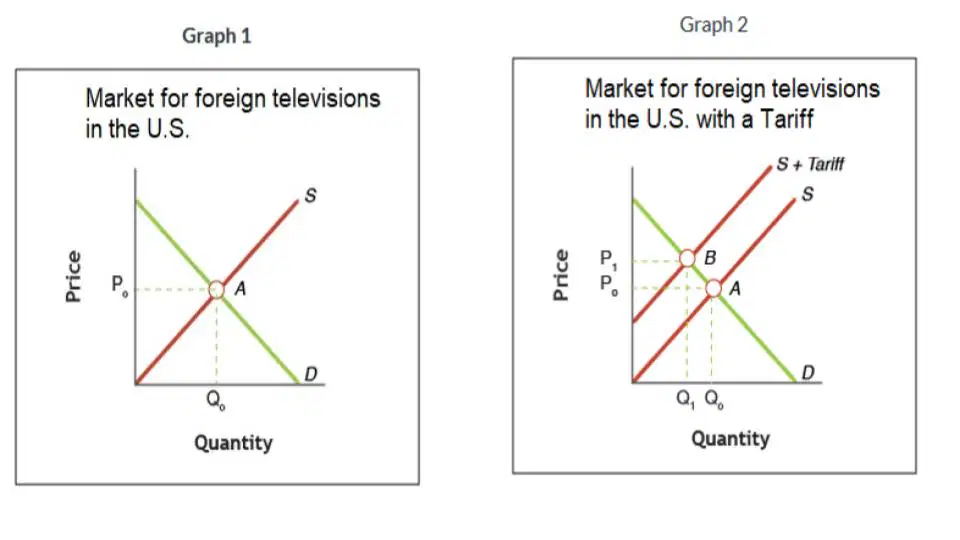
U.S. producers would have had _____ competition from foreign producers after the tariff was imposed.
less
more
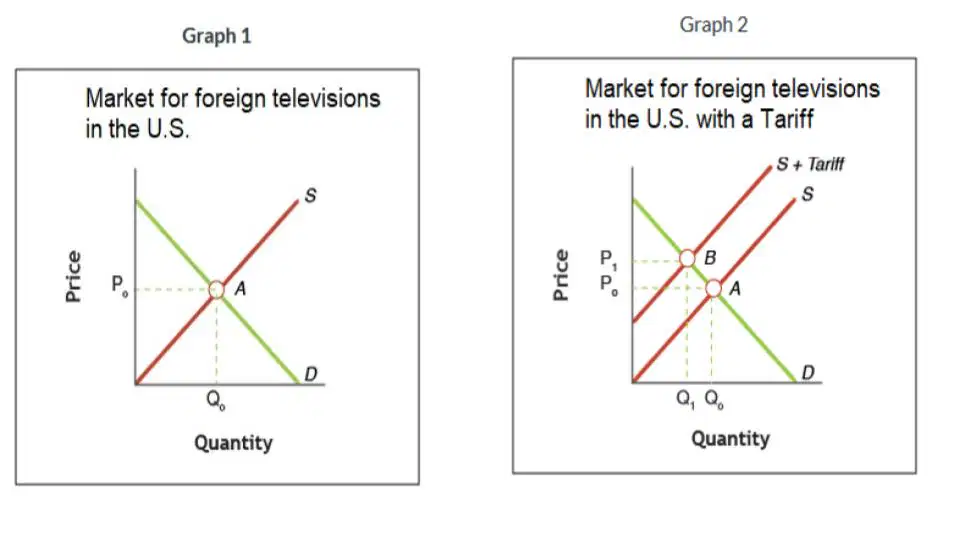
U.S. producers of televisions would have seen a _____ demand for their products after the tariff was imposed.
higher
lower
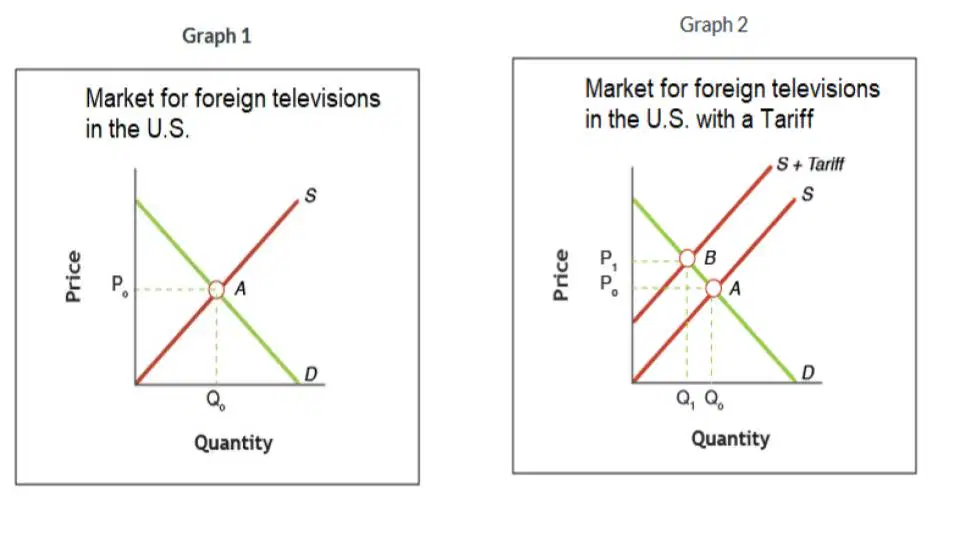
Who pays the tariff on imported televisions?
U.S. consumers who buy foreign-made televisions
Foreign producers of televisions

Quotas and tariffs (a) the prices of domestic products.
(a) provide revenue to the domestic government.
True (T) or False (F):
Quotas lead to a reduction in imports.
(a)
True (T) or False (F):
Quotas are harmful to foreign businesses because they reduce export opportunities.
(a)
True (T) or False (F):
Both tariffs and quotas reduce competition in the marketplace.
(a)
True (T) or False (F):
Industries supplying national defense products are special cases and may justify trade barriers.
(a)
True (T) or False (F):
In a new start-up industry, there may be some justification for trade protection.
(a)
True (T) or False (F):
Infant industries need barriers because they are older companies that are already very competitive in the marketplace.
(a)
Which of the following trade barriers is a special tax on imports?
import license
export subsidies
quota
tariff
Although the U.S. has so many resources, why do we still trade with other countries?
too many products
to create goodwill
comparative advantage
lack of workers
Why do governments impose trade barriers?
because they can 🤷🏽♀️
to protect domestic industries and to combat job losses
Which of the following is NOT a consequence of tariffs?
domestic products are less expensive
transfer of income from consumers to government and domestic companies
consumers have less money to spend on other goods
How do trade barriers negatively impact an economy?
They encourage consumers to buy American-made goods.
They hurt efficient and competitive industries
They do not impact the economy negatively
They promote efficient domestic industries
(a) provide a government with revenue while protecting domestic industries. (b) only limit the quantity of imported goods to protect domestic industries and don't provide a government with revenue.
If a quota of 40 towels is placed on imported towels that sell for $5 each, what is the total revenue to the government?
$0
$5
$40
$200
After a tariff is imposed, the price the consumer pays will (a) , and the price the foreign producer receives will (b) .
In most cases, trade barriers are harmful to an economy.
True
False
Non-tariff barriers include licensing requirements for importers.
True
False
When an embargo is placed on a country, no imports from or exports to that country are allowed.
True
False
Governments sometimes put pressure on other countries by limiting exports to those countries for political reasons, like human rights violations.
True
False
After a trade barrier is put in place, the market price will be ______________________ and the quantity of the product available will be _____________________.
higher, lower
lower, higher
NAFTA
Trade agreement between the US, Mexico, and Canada created in 1990s
EU
Trade agreement between European nations that allows free movement of resources across borders
World Trade Organization
Administer of trade agreements and overseer of negotiations when trade disagreements arise
Dumping
Selling something in a foreign market below the cost of producing that item
The countries currently in NAFTA are the United States, China, and Mexico.
True
False
The World Trade Organization (WHO) has more than 200 member nations.
True
False
Dumping refers to selling a product below the cost of production, generally to run
competition out of business.
True
False
A Free Trade Area (FTA) is an agreement between nations to reduce trade barriers.
True
False
Countries trading in a Free Trade Area (FTA) often experience lower prices on imported goods from other countries in the same FTA.
True
False
Some groups dislike Free Trade Areas (FTAs), as they may lead to domestic job loss
True
False
FTAs promote which of the following?
higher levels of trade
increased output
lower prices on imports
ALL OF THESE
The European Union is different from a Free Trade Area because the EU also allows
a common currency if members choose to adopt it
resources to move freely across borders
existence of its own flag
The WTO may support trade barriers when it discovers that--
expanding firms are highly competitive
one country is wealthier than another
firms in one country are dumping products.
The WTO consists of members of developed and developing nations.
True
False
By encouraging companies to produce goods and services for which they have comparative advantages, free trade--
helps increase economic efficiency
helps reduce economic efficiency
How many members are there in the European Union?
(Hint: 9 x 3)
27
38
18
22
Some business leaders did not like the NAFTA agreement because they believed...
it displaced American workers
it raised taxes
it made it difficult to travel to Mexico
it led to higher interest rates

