wayground logo

Free Printable Worksheets

NEW

Font size

S
M
L
XL
Worksheets

APSP Unit 1 Test Review

Total questions: 48

Worksheet time: 1hrs 22mins

Name
Class
Date
1.
0.57 mL = ___________ L
a)
5.7
b)
0.057
c)
0.0057
d)
0.00057
2.
Is 55,000 mg greater than, less than, or equal to 5 kg?
a)
greater than
b)
equal to
c)
less than
3.
120 mm = ______ cm 
a)
1,200
b)
20
c)
12
d)
120,000
4.
1,000 cm = _____ m 
a)
100
b)
10
c)
1
d)
10,000
5.
28.5 kg = ____ mg
a)
28,500
b)
28,500,000
c)
0.0285
d)
0.0000285
6.
How many seconds are in 1 day?
a)
43,200 sec
b)
1440 sec
c)
86,400 sec
d)
3,600 sec
7.

What is Mr. O'Neill's two word definition for hypothesis?

a)

Suggested Explanation

b)
Educated Guess
c)
Lab Question
d)
Step One
8.
How many variables can you change in an experiment?
a)
1
b)
2
c)
3
d)
depends on the experiment
9.
What type of variable is purposefully changed in an experiment?
a)
dependent
b)
independent
c)

constant

d)

command

10.
What type of variable is measured in an experiment?
a)
dependent
b)
independent
c)

constant

d)

command

11.
What type of variable is held constant throughout an experiment?
a)
dependent
b)
independent
c)

constant

d)
command
12.
What is the volume of Object X?
a)
10.0 cm3
b)
15.0 cm3
c)
20.0 cm3
d)
25.0 cm3
13.
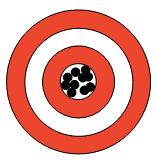
This bullseye demonstrates...
a)
High Accuracy & High Precision
b)
High Accuracy & Low Precision
c)
Low Accuracy & High Precision
d)
Low Accuracy & Low Precision
14.
?
a)
High Accuracy & High Precision
b)
High Accuracy & Low Precision
c)
Low Accuracy & High Precision
d)
Low Accuracy & Low Precision
15.

Remy's measurements: 6.02 m, 6.04 m, 6.03 m Actual Value: 6.02 m How would you define her measurements?

a)
accurate and precise
b)
accurate 
c)
precise
d)
neither
16.

How close a measurement is to the true value is called..

a)

Accuracy

b)

Precision

c)

Significant

d)

Estimate

17.
When a measurement is repeatable and consistent it is said to have...
a)
High precision
b)
Low precision
c)
High accuracy
d)
Low accuracy
18.

A graduated cylinder has markings for every whole number (ex: 1,2,3,4,5) A measurement using this tool should be reported to the

a)

10

b)

1

c)

0.1

d)

0.01

19.

A graduated cylinder has markings for every tenth (ex: 1.1, 1.2, 1.3, 1.4, 1.5) A measurement using this tool should be reported to the

a)

10

b)

1

c)

0.1

d)

0.01

20.

A car starts at a velocity of 20 m/s and accelerates at 5 m/s2 for 10 seconds. What is the velocity of the car after the 10 seconds?

a)

25 m/s

b)

70 m/s

c)

110 m/s

d)

35 m/s

21.

How far will a person go if they jog for 2 hours at a velocity of 12 km/hr?

a)

6 km

b)

0.5 km

c)

10 km

d)

24 km

22.
What is happening at D?
a)
Stationary
b)
Accelerating
c)
Fast steady speed; moving away from the starting position
d)
Slower steady speed; moving away from the starting position
23.
What is happening at E?
a)
Stationary
b)
Accelerating
c)
Fast steady speed; moving away from the starting position
d)
Steady speed; returning to start position
24.
What is happening at A?
a)
Stationary
b)
Accelerating
c)
Slower steady speed; moving away from the starting position
d)
Steady speed; returning to start position
25.

Which runner ran the furthest in the 5 seconds?

a)

A

b)

B

c)

C

d)

It was a tie

26.
Which runner had a head start?
a)
A
b)
B
c)
C
d)
None of them
27.

Which runner accelerated?

a)

A

b)

B

c)

C

d)

All of them

28.

John took 90 minutes to bicycle to his grandmother's house, a total of 6 kilometers. What was his average velocity? (pay attention to units)

a)

540 km/hr

b)

.066 km/hr

c)

4 km/hr

d)

9 km/hr

29.
Which of the following is a unit for acceleration?
a)
km/s
b)
m/s2
c)
mi/hr
d)
ft
30.

Acceleration of an object happens when things ________

a)

slow down

b)

speed up

c)

change direction (turn)

d)

All of the above

31.

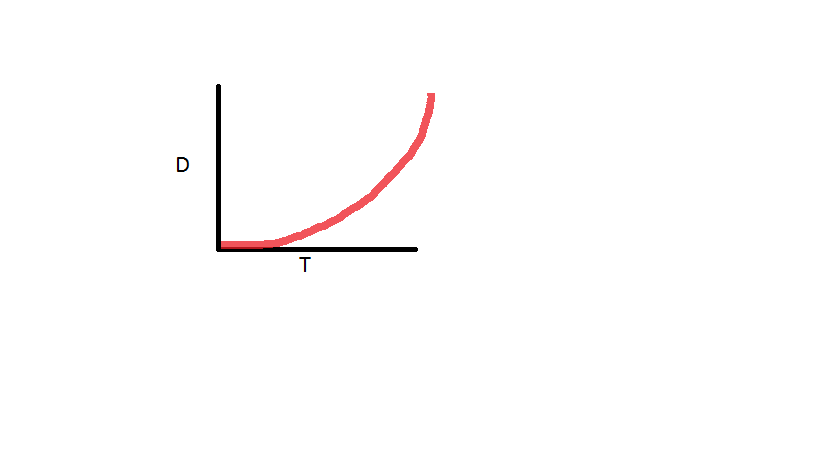
The graph represents

a)

No motion

b)

Velocity

c)

Positve Acceleration

d)

Negative Acceleration

32.

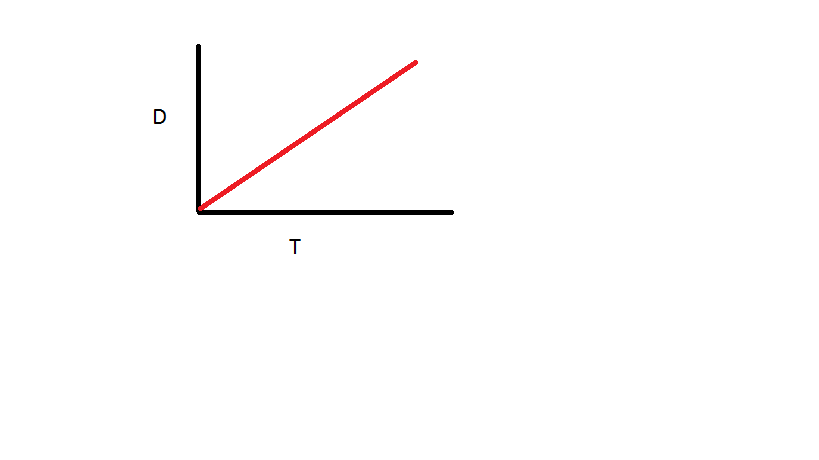
The graph represents

a)

Positive Acceleration

b)

No motion

c)

Negative Acceleration

d)

Constant Velocity

33.

The graph represents

a)

No motion

b)

Constant Velocity

c)

Positive Acceleration

d)

Negative Acceleration

34.

The graph represents

a)

no motion

b)

Constant velocity

c)

positive acceleration

d)

negative acceleration

35.

The graph represents

a)

no motion

b)

constant velocity

c)

positive acceleration

d)

negative acceleration

36.

g is defined as

a)

acceleration of all objects in motion

b)

acceleration of objects moving horizontally

c)

acceleration of gravity

d)

I only care about OGs

37.
If a car is traveling forward at 15 m/s, how fast will it be going in 1.2 seconds if the acceleration is -10 m/s/s?
a)
27 m/s
b)
3 m/s
c)
-27 m/s
d)
-3 m/s
38.
A roller coasters accelerates from an initial velocity of 6.0 m/s to a final velocity of 70 m/s over 4 seconds.  What's the acceleration?
a)
24 m/s2
b)
18 m/s2
c)
16 m/s2
d)
16 m/s
39.
A rock is dropped off a roof and falls for 1.26 seconds.  How tall is the roof?
a)
16 m
b)
7.8 m
c)
6.2 m
d)
38 m
40.

A water balloon is dropped from a window. The water balloon hits an unsuspecting 9th grader 0.55 seconds later. What was the velocity of the balloon as it hit the 9th grader?

a)

5.4 m/s

b)

-5.4 m/s

c)

-2.96 m/s

d)

2.96 m/s

41.
An object in free fall has a ____________ acceleration.
a)
constant
b)
increasing
c)
decreasing
d)
random
42.

An object in free fall has a ____________ velocity.

a)

constant

b)

increasing

c)

random

d)

decreasing

43.

What is the vi and vf of the graph above?

a)

75 m/s , 15 m/s

b)

75 m/s , 0 m/s

c)

0 m/s , 15 m/s

d)

Can't be found

44.

What is the acceleration shown in the graph above?

a)

-75 m/s2

b)

15 m/s2

c)

60 m/s2

d)

-5 m/s2

45.

What type of motion is shown in the graph above?

a)

positive acceleration, slowing down

b)

positive acceleration, speeding up

c)

negative acceleration, slowing down

d)

negative acceleration, speeding up

46.

A water balloon is dropped from a window. The water balloon hits an unsuspecting 9th grader 0.55 seconds later. How far above the 9th graders head was the window? (Δx)

a)

5.4 m

b)

2.96 m

c)

1.48 m

d)

When do we get to do this lab...?

47.

What is happening at t=2s?

a)

A is passing by B

b)

A and B are in the same place

c)

A and B have the same velocity

d)

A and B aren't moving

48.

Who is traveling faster at t=1s?

a)

A

b)

B

c)

Same

d)

They aren't moving