
 Worksheets
Stars and Solar system
Total questions: 43
Worksheet time: 25mins
The star which appears stationary from the earth
Pole star
Shooting Stars
Sirius
Alpha Centauri
Brightest star in the night sky
sun
Sirius
Pole star
Proxima centauri
Stars appears to move from
west to east
north to south
east to west
south to north
What is are home galaxy?
Snickers Galaxy
Kit Kat Galaxy
Milky Way Galaxy
Nebula Galaxy
A group of billions of stars, the objects that orbit the stars, gas, and dust
Stars
Galaxy
Astronomy
Planet
All existing matter and space considered as a whole
Universe
Galaxy
Stars
Planet
Huge balls of hot glowing gas (Sun)
Galaxy
Universe
Planet
Stars
The study of objects in space and their characteristics
Solar System
Astronomy
Moon
Stars
Farthest from the Sun: Jupiter, Saturn, Uranus, and Neptune
Inner Planets
Outer Planets
Stars
Planets
Closest to the Sun: Mercury, Venus, Earth and Mars
Stars
Outer Planets
Inner Planets
Planets
The path the earth takes around the Sun
Universe
Stars
Orbit
Planet
An imaginary line about which a body rotates.
Moon
Orbit
Revolution
Axis
A large, round body that revolves around a star in clear orbit
Stars
Planet
Earth
Pluto
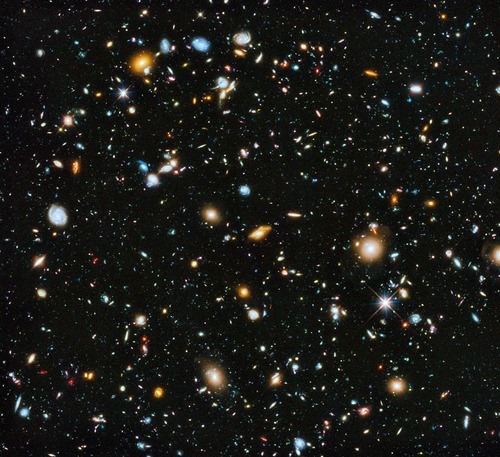
The Universe is a group of:
Celest bodies, matter and energy that are in the space.
Gas, dust and millions of stars
A great ball of gas that proyects light.
The MIlky way
Galaxies are:
gropus of Asteroids
Groups of planets
Groups of stars, gas and dust.
Group of satellites
What´s the red planet ?
Mars
Saturn
Venus
Mercury is the smallest planet in the Solar System.
True
False
Objects which exists in the sky are known as
Celestial Objects
Moons
Galaxies
Space Junks
It is also called as shooting stars
Meteors
Meteorites
Comets
Asteroids
The Natural satellite of earth (a)
Moon produces its own light
True
False
It is dusty, barren, has many craters, has large number of steep and high mountains and has no atmosphere
Moon
Sun
Comet
Meteor
Stars mainly consists of
Hydrogen
Nitrogen
Phosphorus
Sodium
What chemical process in stars produce heat and light?
(a)
A group of stars which forms some recognizable pattern is known as (a)
(Capitalize the first letter of each word)
Unit of measuring distances in the universe
Light Year
Kilo-meters
Meter
Centi-meters
How are the gas giants similar to each other? (Select all that apply)
Made up of hydrogen and helium
No solid surfaces
Rocky surfaces
Closer to the sun
The various shapes of the bright part of the moon as seen during a month are called _________ __ _____
use lower case
(a)
Which constellation looks like a distorted W or M?
Cassiopia
Ursa Major
Ursa Minor
Orion
Other name for Ursa Major
Saptarshi
Shani
Prithvi
Brihaspati
India's first mars orbiter mission - (a)
{capitalize the first letter}
Where is the asteroid belt located?
Between Mars and Jupiter
Between Earth and Mars
Between Jupiter and Saturn
Between Mercury and Venus
"They revolve around the sun in highly elliptical orbits
Its tail grows in size as it approaches the sun"
Which celestial object is being mentioned here?
Comet
Asteroid
Planet
Alpha Centauri
Swarms of _________ are seen when the earth crosses the tail of a comet. they also occur at regular Intervals. These are known as _________ _________
Meteor, Asteroid
Meteors, Meteor Showers
Asteroid, Meteor Showers
Asteroid, Asteroid Showers
INSAT, IRS, Kalpana - 1, EDUSAT are ____________
Satellites
Comets
Space Junk
Stars

