wayground logo

Free Printable Worksheets

Font size

S
M
L
XL
Worksheets

Geography Test Review

Total questions: 80

Worksheet time: 13hrs 20mins

Name
Class
Date
1.

Which is NOT one of the Five Themes of Geography

a)

Location

b)

Language

c)

Movement

d)

Region

2.

Places that are near each other and have something in common with each other are called _____.

a)

Regions

b)

Places

c)

Locations

d)

States

3.

People, ideas, goods, etc that are transported from one location to another describe the theme of _____.

a)

Place

b)

Region

c)

Interaction

d)

Movement

4.


Human-environment interaction is the relationship between _____ and _____.

a)

people, the world

b)

people, other people

c)

people, the government

d)

God, man

5.

A positive example of how the world impacts us is...

a)

A Tornado

b)

An Earthquake

c)

A Flood

d)

A gentle Spring rain

6.

A negative way we impact the world around is...

a)

pollution.

b)

mining all the resources.

c)

deforestation.

d)

All of the examples

7.

This photo best represents...

a)

H. E. I.

b)

Location

c)

Region

d)

Movement

8.

This photo best represents...

a)

Movement

b)

Location

9.

Explains how people, ideas & animals move from one place to another.

a)

Place

b)

Location

c)

Movement

d)

Human-Environment Interaction

10.

This photo best represents...

a)

Movement

b)

H. E. I.

c)

Region

d)

Location

11.

A famous place is the Grand Canyon, known for its steep rock walls that were carved by the Colorado River.

a)

Region

b)

H. E. I.

c)

Movement

d)

Place

12.

This photo best represents...

a)

H. E. I.

b)

Movement

c)

Location

13.

Provides a way of locating places. Absolute location is the exact point where a place is located, such as GPS (Global Positioning System) coordinates.

a)

Location

b)

Movement

c)

Place

d)

Region

14.

This photo best represents...

a)

Location

b)

H. E. I.

c)

Region

15.

This photo best represents...

a)

Movement

b)

Region

c)

Human Environment Interaction

16.

This photo best represents...

a)

Movement

b)

Location

c)

Region

17.

This photo best represents...

a)

Human-Environment Interaction

b)

Movement

c)

Region

d)

Location

18.

This photo best represents...

a)

Location

b)

Movement

19.

A group of places that have common characteristics.

a)

Location

b)

H. E. I.

c)

Region

d)

Movement

20.

This photo best represents...

a)

Movement

b)

Location

c)

Regiojn

21.

_______________ is the study of Earth and its people.

a)

Chemistry

b)

Biology

c)

Geography

d)

Physiology

22.

Which of the following is NOT one of the five themes of geography?

a)

location

b)

human-environment interaction

c)

states

d)

regions

23.
How many continents are on the Earth?
a)
7
b)
4
c)
5
d)
2
24.

What continent is this?

a)

Africa

b)

South America

c)

Australia

d)

Eurasia

25.

What continent is this?

a)

Africa

b)

South America

c)

Australia

d)

Antarctica

26.

What continent is this?

a)

Eurasia

b)

North America

c)

South America

d)

Australia

27.

What continent is this?

a)

Eurasia

b)

North America

c)

South America

d)

Australia

28.

What continent is this?

a)

Eurasia

b)

North America

c)

South America

d)

Australia

29.

The largest continent in the world is?

a)

Asia

b)

Africa

c)

Europe

d)

Australia

30.
The United States is a country on which of the following continents? 
a)
Africa
b)
Australia
c)
North America
d)
Europe
31.

The imaginary line that divides the Earth into two parts is called the ________.

a)

Equator

b)

Hemisphere

c)

Prime Meridian

d)

North Pole

32.

The world is divided between the Northern and Southern ___________.

a)

Equator

b)

Hemispheres

c)

Continents

d)

Oceans

33.

North America is located in which hemisphere?

a)

Northern

b)

Southern

34.

What ocean is located at Blue #3?

a)

Pacific

b)

Indian

c)

Arctic

d)

Atlantic

35.

What ocean is located at Blue #5?

a)

Arctic

b)

Pacific

c)

Indian

d)

Atlantic

36.

What ocean is located at Blue #1?

a)

Pacific

b)

Atlantic

c)

Indian

d)

Arctic

37.

What ocean is located at Blue #4

a)

Atlantic

b)

Pacific

c)

Indian

d)

Arctic

38.

What ocean is at C?

a)

Indian Ocean

b)

Southern Ocean

c)

Pacific Ocean

d)

Atlantic Ocean

39.

What ocean is at B?

a)

Indian Ocean

b)

Southern Ocean

c)

Pacific Ocean

d)

Atlantic Ocean

40.

What ocean is at E?

a)

Indian Ocean

b)

Southern Ocean

c)

Pacific Ocean

d)

Atlantic Ocean

41.

What ocean is at H?

a)

Arctic

b)

Atlantic

c)

Indian

d)

Pacific

42.

What ocean is at G?

a)

Arctic

b)

Atlantic

c)

Indian

d)

Pacific

43.

What ocean is at F?

a)

Arctic

b)

Atlantic

c)

Indian

d)

Pacific

44.

What ocean is at I?

a)

Arctic

b)

Atlantic

c)

Indian

d)

Pacific

45.

What ocean is at A?

a)

Indian Ocean

b)

Southern Ocean

c)

Pacific Ocean

d)

Atlantic Ocean

46.

What ocean is at C?

a)

Indian Ocean

b)

Southern Ocean

c)

Pacific Ocean

d)

Atlantic Ocean

47.
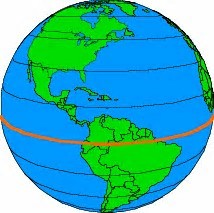
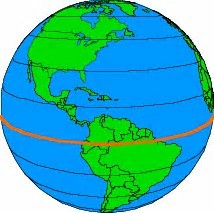
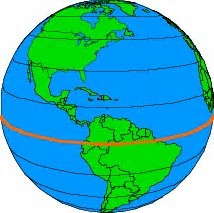
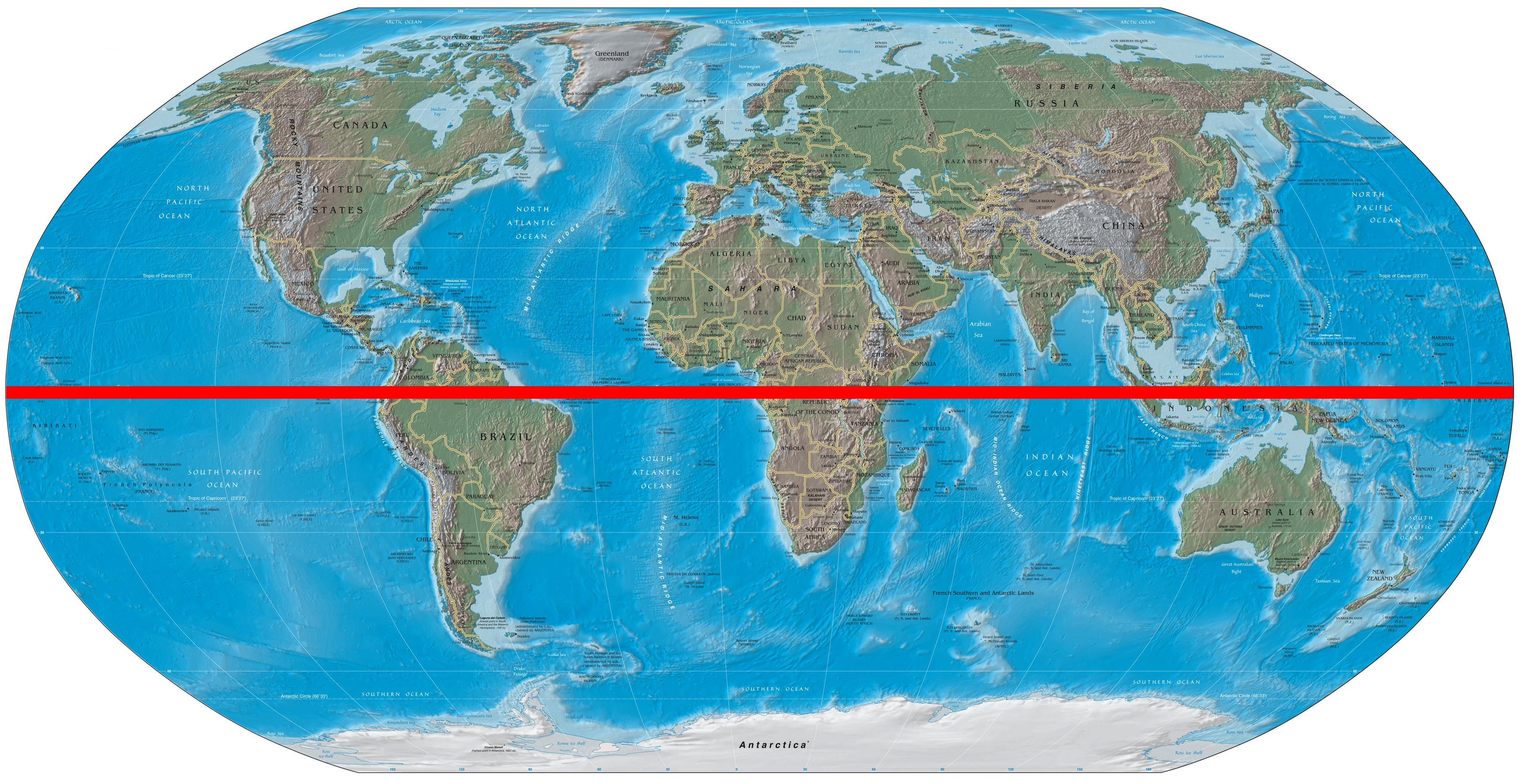
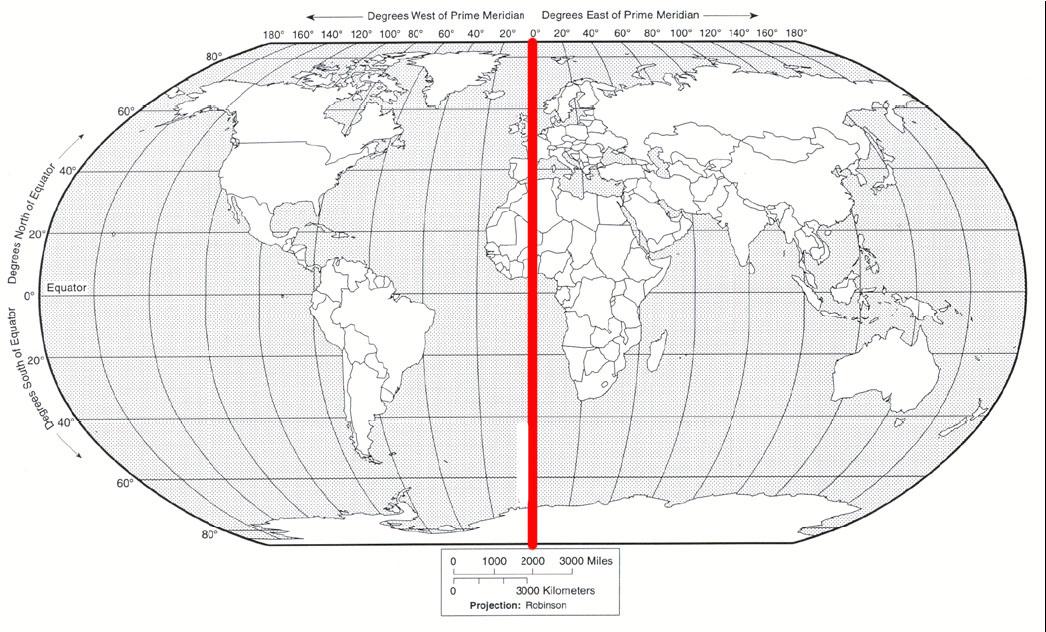
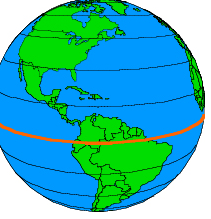
What is the name of this line at 0 degrees latitude?
a)
Prime Meridian
b)
Equator
c)
North Pole
d)
South Pole
48.
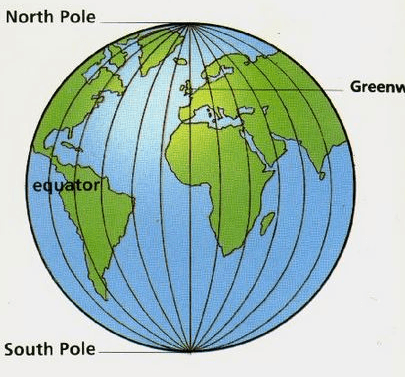
What is the name of the line at zero degrees longitude?
a)
Equator
b)
Prime Meridian
c)
North Pole
d)
South Pole
49.
a)
The map show the lines of longitude.
b)
The map shows the lines of latitude.
50.
a)
The map shows lines of longitude.
b)
The map shows lines of latitude.
51.
Which runs horizontally around the earth?
a)
Equator and lines of latitude
b)
Prime Meridian and lines of latitude
c)
Equator and lines of longitude
d)
Prime Meridian and lines of longitude
52.
Which runs vertically around the earth?
a)
Equator and lines of latitude
b)
Prime Meridian and lines of latitude
c)
Equator and lines of longitude
d)
Prime Meridian and lines of longitude
53.
What city is located at 32 degrees south and 150 degrees east?
a)
Shanghai
b)
Sydney
c)
Durban
d)
Calcutta 
54.
Europe, Asia and North America are in what hemisphere?
a)
Northern
b)
Southern
c)
Western
d)
Eastern
55.
The Prime Meridian separates the Earth into what two hemispheres?
a)
Northern and Southern
b)
Western and Eastern
c)
Northern and Eastern
d)
Southern and Western
56.
Lines of Longitude measure how far from the _______ a place is located.
a)
Equator
b)
International Date Line
c)
Prime Meridian
d)
Tropic of Cancer
57.
Lines of Longitude run from the _____ to the ______.
a)
East, West
b)
North, South
c)
South, East
d)
North, West
58.
Lines of ______ measure how far from the equator a place is located?
a)
Longitude
b)
Latitude
59.
Latitude lines run from the _____ to the  _______.
a)
West, East
b)
North, South
c)
North, East
d)
South, West
60.
The invisible line at 0 degrees longitude is called the _________.
a)
International Date Line
b)
Prime Meridian
c)
Equator
d)
Antarctic Circle
61.
Lines of longitude are also called  ____________.
a)
Hemispheres
b)
Meridians
c)
parallels
d)
International Date Lines
62.
Which lines run on a globe from east to west? 
a)
longitude lines
b)
latitude lines
c)
north pole
d)
south pole
63.
Latitude and longitude are measured in ________.
a)
inches
b)
feet
c)
degrees
d)
grams
64.

This line is .....

a)

Horizontal

b)

Vertical

c)

Sideways

d)

A panda

65.

This line is ....

a)

A lama

b)

vertical

c)

horizontal

d)

to complicated

66.

How many oceans are on the Earth?

a)

4

b)

8

c)

5

d)

6

67.

The equator DIVIDES the Earth into _____ and ______ HEMISPHERES.

a)

Northern, Southern

b)

Eastern, Western

c)

Front, Back

d)

Top, Bottom

68.

The Prime Meridian goes from _____ to ______?

a)

East. West

b)

Left, Right

c)

North, South

d)

Front, Back

69.
Lines of ______ measure how far from the equator a place is located?
a)
Longitude
b)
Latitude
70.
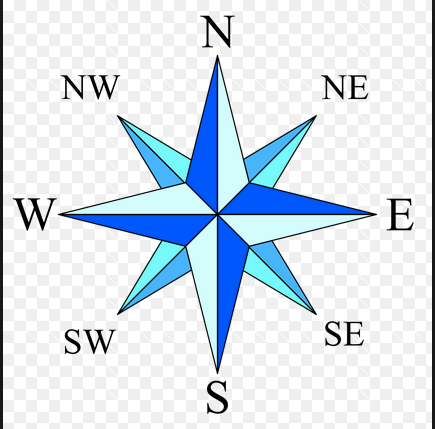
What is this object known as?
a)
map symbol
b)
map key
c)
map scale
d)
compass rose
71.

North, East, South, and West are what kind of directions?

a)

Cardinal Directions

b)

Intermediate Directions

72.
Which movement of Earth causes day and night?
a)
rotation
b)
revolution
73.
How long does it take for the Earth to make one full orbit around the Sun?
a)
one day
b)
one week
c)
one month
d)
one year
74.
What motion of the Earth takes 365 days?
a)
Rotation
b)
Tilting 
c)
Revolution
d)
Spinning
75.
What does REVOLUTION mean?
a)
To SPIN
b)
To ORBIT or GO AROUND
76.
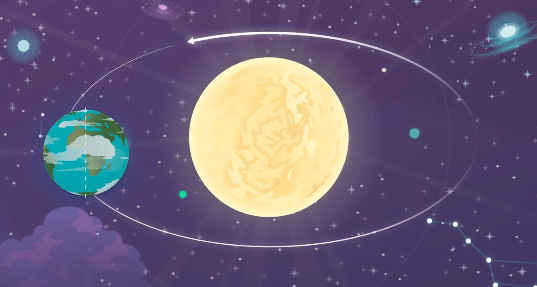
This picture shows Earth's
a)
Rotation
b)
Revolution
77.
This picture shows Earth's 
a)
Rotation
b)
Revolution
78.
In this diagram, the motion of the EARTH can best be described as -
a)
Rotation
b)
Revolution
79.
In this diagram, the motion of the Earth can best be described as -
a)
Rotation
b)
Revolution
80.

Earth revolves around the sun every

a)

365.25 days

b)

365 days

c)

24 hours