wayground logo

Free Printable Worksheets

NEW

Font size

S
M
L
XL
Worksheets

3.1-11 | Unit 3 Review

Total questions: 50

Worksheet time: 2hrs 57mins
Name
Class
Date
1.
Different isotopes have...
a)
different masses
b)
different atomic numbers
c)
different electrons
d)
different protons
2.
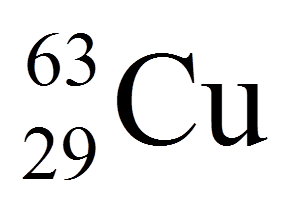
According to the isotopic notation for copper-63, how many neutrons are present in this type of atom?
a)
29
b)
34
c)
63
d)
92
3.
What do these isotopes of carbon all have in common?
a)
neutrons & mass number
b)
atomic number and neutrons
c)
atomic number and electrons
d)
protons, atomic number, and mass number
4.
which explanation of this notation is correct?
a)
 12 is proton #
b)
6 tells you there are 6 neutrons
c)
6 tells you there are 6 protons
d)
12 is not a mass # here
5.
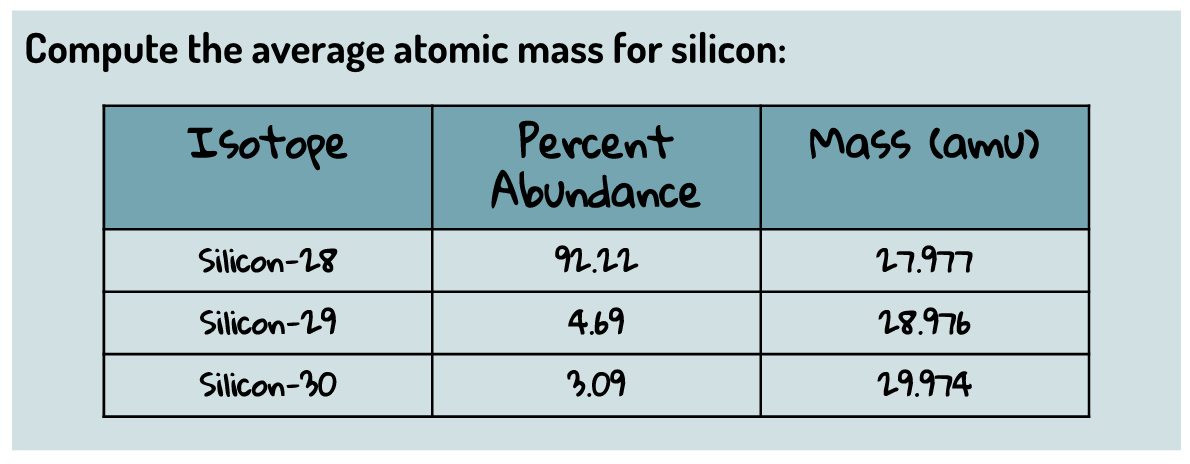
Compute the average atomic mass for silicon:
a)
27.977
b)
28.09
c)
28.976
d)
The average mass cannot be determined from provided information.
6.
Do the following atoms belong to the same element? Explain
       Aluminum-27
       An atom with 14 protons and 13 neutrons

a)
Yes because they have the same number of protons
b)
Yes because they have the same mass
c)
No because they have different number of protons
d)
No because they have different number of neutrons
7.
A neutral atom of the isotope 2612Mg would consist of
a)
12 protons, 26 neutrons, 26 electrons
b)
26 protons, 12 neutrons, 26 electrons
c)
26 protons, 14 neutrons, 14 electrons
d)
12 protons, 14 neutrons, 12 electrons
8.
A neutral atom would become an ion that has a charge of 2+ by 
a)
Losing two protons
b)
Losing two neutrons
c)
Losing two electrons
9.

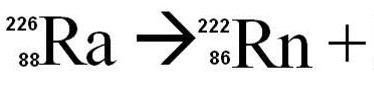
What particle completes this reaction?

a)

alpha particle

b)

beta particle

c)

gamma particle

d)

neutron

10.
Complete the nuclear equation and determine the type of decay that is occurring in this reaction. 
a)
alpha
b)
beta
c)
gamma
d)
none
11.
Solve this equation for alpha decay.
20985At = ___ + 42He
a)
20583Bi
b)
20986Rn
c)
20781Tl
d)
20885At
12.
Solve this equation for beta decay.
6027Co = ___ + 0-1e
a)
5625Mn
b)
6028Ni
c)
5823V
d)
5927Co
13.
 Fermium-253 has a half-life of 0.334 seconds. A radioactive sample is considered to be completely decayed after 10 half-lives. How much time will elapse for this sample to be considered gone?
a)
0.334 seconds
b)
3.34 seconds
c)
1.77 seconds
d)
13.4 seconds
14.
After the third half-life, how much of the sample is left?
a)
1/2
b)
1/3
c)
1/16
d)
1/8
15.
Barium-122 has a half-life of 2 minutes. A fresh sample weighing 80 g was obtained. If it takes 10 minutes to set up an experiment using barium-122, how much barium-122 will be left when the experiment begins?
a)
0.25g
b)
2.5g
c)
25g
d)
80g
16.

If the half-life of uranium-232 is 70 years, how many half-lives AND how long will it take for 10 g of it to be reduced to 1.25 g?

a)

1 half-life, 70 years

b)

2 half-lives, 140 years

c)

3 half-lives, 210 years

d)

4 half-lives, 280 years

17.

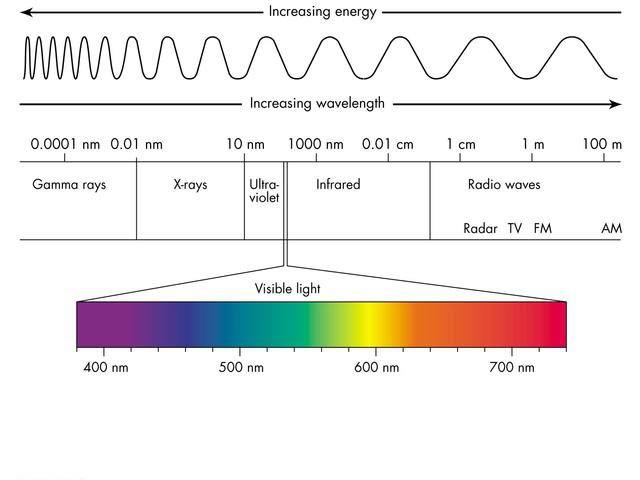
What is the correct order of the visible light spectrum starting with the longest wavelength?

a)

Red, yellow, orange, blue, violet, indigo

b)

Violet, indigo, blue, green, yellow, orange, red

c)

Green, yellow, blue, indigo, red, orange

d)

Red, orange, yellow, green, blue, indigo, violet

18.

This could be the dot diagram of

a)

Mg

b)

Cl

c)

C

d)

O

19.

This is a correct dot diagram for nitrogen (N)

a)

true

b)

false

20.

This is a correct dot diagram for neon (Ne)

a)

true

b)

false

21.

Elements that have atoms with full valence shells in the ground state are in

a)

Group 1

b)

Group 2

c)

Group 17

d)

Group 18

22.
What atom matches this electron configuration?
1s22s22p63s23p64s23d10
a)
Zinc
b)
Copper
c)
Nickel
d)
Germanium
23.
How many electrons can the first energy level hold?
a)
1
b)
2
c)
8
d)
0
24.
Which electron configuration belongs to Chlorine (Cl)?
a)
1s2s2p3s3p5
b)
1s2s2p3s3p6
c)
1s2s2p3s3p7
25.
Which of the following is an Alkali Metal? 
a)
Magnesium
b)
Chromium
c)
Sodium
d)
Fluorine 
26.
Which of the following is a Noble Gas? 
a)
Krypton
b)
Chlorine
c)
Radium
d)
Gallium
27.
How many valence electrons does an alkaline earth metal have? 
a)
1
b)
2
c)
7
d)
8
28.
How many valence electrons does a halogen have? 
a)
1
b)
2
c)
7
d)
8
29.

Which has the greater electronegativity:  Cl or Al?

a)
Cl
b)
Al
30.
Which of the following will have a larger radius than Zinc?
a)
Gallium
b)
Aluminum
c)
Magnesium
d)
Strontium
31.
Which of the following will have a lower ionization energy than Scandium (Sc)?
a)
Helium (He)
b)
Titanium (Ti)
c)
Calcium (Ca)
d)
Magnesium (Mg)
32.
As you move down the periodic table atoms get bigger.  This is because ____________.
a)
The atoms have more mass.
b)
The atoms have more protons.
c)

The atoms have more energy levels.

d)

The atoms have more neutrons.

33.

As you move left to right across the periodic table, atoms tend to get smaller because ______________.

a)
the atoms have more mass.
b)

the atoms have less mass.

c)
the atoms have more protons.
d)
the atoms have less electrons.
34.
Which statement correctly and completely identifies a trend?
a)
Atomic radius decreases across a period and increases down a group.
b)
Electronegativity decreases across a period and decreases down a group.
c)
Ionization energy increases across a period and increases down a group.
35.

Select the sequence that correctly orders from smallest to largest atomic radius.

a)

Sn < Rb < Y

b)

Cu < Ga < Br

c)

Al < S < Na

d)

F < N < Li

36.

Select the sequence of increasing electronegativity.

a)

Sn < Ag < I

b)

I < Sn < Ag

c)

Ag < Sn < I

d)

Sn < I < Ag

37.

Arrange the particles of radioactive decay in order from greatest to least penetrating ability.

a)

Beta, gamma, alpha

b)

Alpha, gamma, beta

c)

Gamma, beta, alpha

d)

Alpha, beta, gamma

38.

What nuclear process is shown in the picture?

a)

alpha decay

b)

gamma emission

c)

fusion

d)

fission

39.

Which nuclear process if shown in the picture?

a)

alpha decay

b)

beta decay

c)

fusion

d)

fission

40.
An electron occupies the lowest energy orbital that can receive it.
a)
Hund’s rule
b)
Pauli exclusion principle
c)
Bohr model of the atom
d)
Aufbau principle
41.

Which guideline is violated in the following orbital diagrams?

a)

Hund's Rule

b)

Aufbau Principle

c)

Pauli Exclusion Principle

42.

Which guideline is violated in the following orbital diagrams?

a)

Aufbau Principle

b)

Hund's Rule

c)

Pauli Exclusion Principle

43.
What is incorrect about this orbital diagram?
a)
Both arrows in the 2p box should be pointing up
b)
There is nothing incorrect with this diagram
c)
In the 2p box there should only be 1 electron in the first 2p box and one in the 2nd 2p box
d)
All the arrows should be pointing up.
44.

What happens when an electron gains energy?

a)

The electron goes to an excited state, and electrons move to an outer shell

b)

The electron goes to an excited state, and electrons move to an inner shell

c)

The electron goes to the ground state, and electrons move to an outer shell

d)

The electron goes to the ground state, and electrons move to an inner shell

45.

What happens when an electron releases energy?

a)

The electron goes to an excited state, and electrons move to an outer shell

b)

The electron goes to an excited state, and electrons move to an inner shell

c)

The electron goes to the ground state, and electrons move to an outer shell

d)

The electron goes to the ground state, and electrons move to an inner shell

46.

Each row on the periodic table represents:

a)

an energy level

b)

a sublevel

c)

an electron

d)

an orbital

47.

Elements in a _________ have similar chemical properties.  

a)
period
b)
group
c)
row
48.

Why do electrons enter the 4s orbital before entering the 3d orbital? 

a)

because the 3d orbital is at a lower energy level

b)

because both the 4s and 3d orbitals are at the same energy level

c)

because the 4s orbital is at a lower energy level

d)

because the 4s orbital is at a higher energy level

49.

The number of orbitals for the p sublevel is...

a)
2
b)
1
c)
4
d)
3
50.
How many electrons can the d sublevel hold?
a)
8
b)
10
c)
2
d)
4