wayground logo

Free Printable Worksheets

Font size

S
M
L
XL
Worksheets

Unit 2 - Triangles EXAM REVIEW

Total questions: 87

Worksheet time: 3hrs 53mins
Name
Class
Date
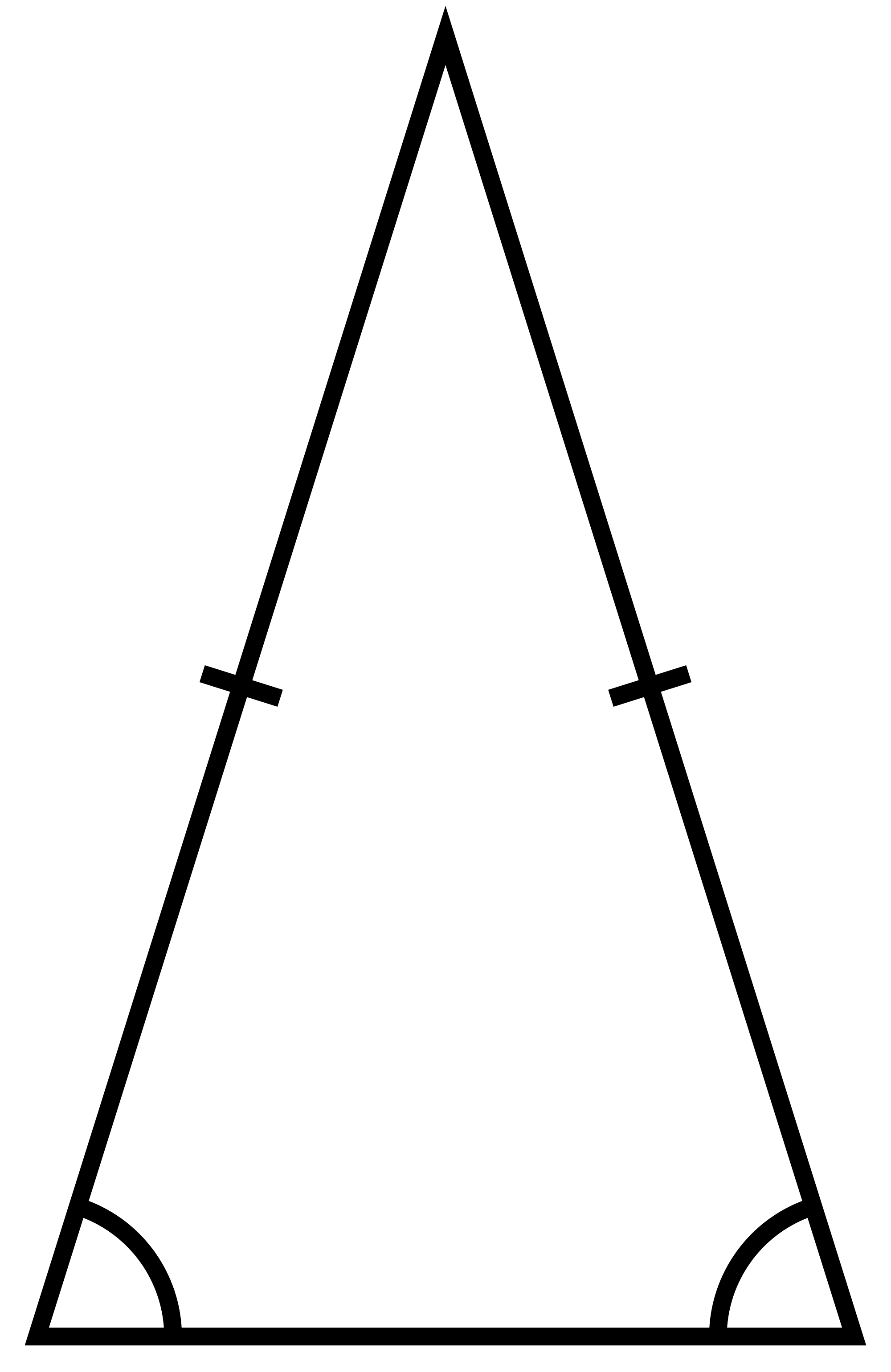
1.
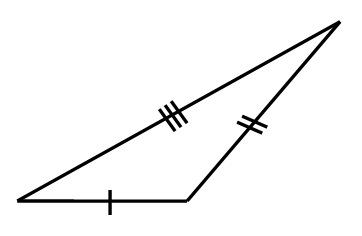
Look at the sides of this triangle. What type of triangle is this?
a)
scalene
b)
acute
c)
equilateral
d)
isosceles
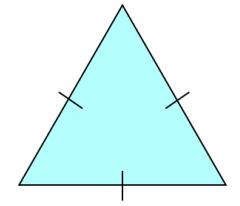
2.
Look at the sides of this triangle. What type of triangle is this?
a)
Equilateral
b)
Isosceles
c)
Scalene
d)
Obtuse
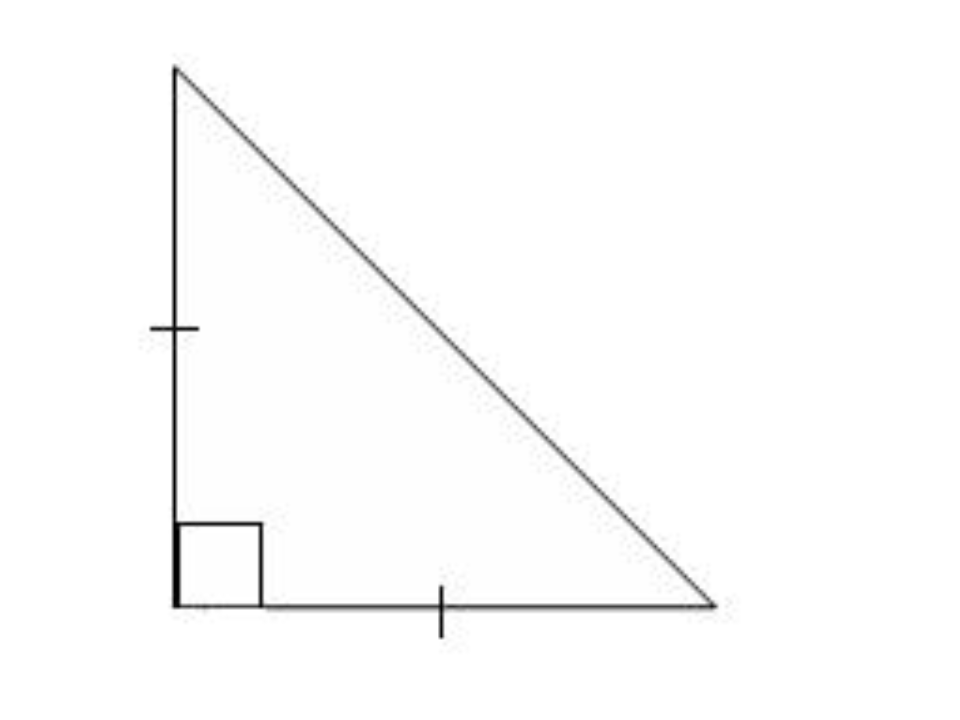
3.

What type of triangle is shown?

a)

Isosceles

b)

Right-angled

c)

Equilateral

d)

Scalene

4.

In an ______________ triangle, all three angles are less than 90 degrees.

a)

acute

b)

right

c)

obtuse

d)

360 degrees

5.

In a ____________ triangle one angle is exactly 90 degrees.

a)

acute

b)

right

c)

obtuse

d)

360 degrees

6.

What kind of triangle is this?

a)

acute

b)

right

c)

obtuse

d)

360 degrees

7.
A triangle has angle measurements of 54°, 52°, and 74°. What kind of triangle is it?

a)
acute triangle
b)
right triangle
c)
obtuse triangle
d)
none of the above
8.
If a triangle has all angles less than 90° and two equal sides, what type of triangle is it?
a)
Acute Isosceles
b)
Acute Scalene
c)
Obtuse Scalene
d)
Obtuse Isosceles
9.
Look at the sides and angles of this triangle. Which type of triangle is pictured?
a)
Equilateral Triangle
b)
Right Isosceles Triangle
c)
Obtuse Scalene Triangle
d)
Obtuse Equilateral Triangle
10.
If a triangle has one angle greater than 90° and no equal sides, what type of triangle is it?
a)
Acute Isosceles
b)
Acute Scalene
c)
Obtuse Scalene
d)
Obtuse Isosceles
11.
If a triangle has all three angles equivalent and all three sides equivalent, what type of triangle is it?
a)
Acute Isosceles
b)
Equilateral
c)
Obtuse Scalene
d)
Obtuse Isosceles
12.
What are complementary angles?
a)
Angles that add up to 180°
b)
Angles that add up to 90°
c)
Angles that are equal to each other
d)
Angles that are opposite of each other when lines intersect.
13.
What is an example of a pair of complementary angles?
a)
13° and 45°
b)
10° and 170°
c)
81° and 9°
d)
90° and 3°
14.
Find the value of x.
a)
15
b)
16
c)
18
d)
19
15.
Vertical angles are always
a)
acute
b)
total 180 degrees
c)
congruent (equal measures)
d)
adjacent angles
16.
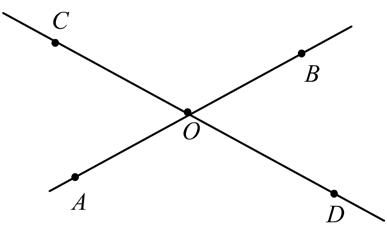
Which are pairs of vertical angles?
a)
∠COB & ∠COA
b)
∠AOD & ∠AOC
c)
∠COB & ∠AOD
d)
∠BOD & ∠AOD
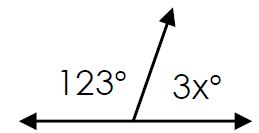
17.

What is the value of x?

a)

130

b)

65

c)

123

d)

61.5

18.

What angle corresponds to 1\angle1 ?

a)

4\angle4

b)

5\angle5

c)

3\angle3

d)

2\angle2

19.

What is the length of the missing side?

a)

80

b)

80\sqrt{80}

c)

48\sqrt{48}

d)

48

20.

What is the length of the missing side?

a)

149\sqrt{149}

b)

51\sqrt{51}

c)

149

d)

51

21.
a)

67.72

b)

41.8

c)

67.72\sqrt{67.72}

d)

41.8\sqrt{41.8}

22.

a)

105.79

b)

136.21

c)

105.79\sqrt{105.79}

d)

136.21\sqrt{136.21}

23.

Scott is using a 12 foot ramp to help load furniture into the back of a moving truck. If the back of the truck is 3.5 feet from the ground, what is the horizontal distance from where the ramp reaches the ground to the truck? Round to the nearest tenth.

(a)  

24.

A 31 foot support wire is attached from the top of a 25 foot telephone pole to a point on the ground.

How far from the poles base does the wire meet the ground? Round to the nearest tenth.

(a)  

25.

Determine if the following sides would form an acute, obtuse or right triangle.


3 inches, 7 inches, 9 inches

a)

Acute Triangle

b)

Obtuse Triangle

c)

Right Triangle

d)

Not a triangle

26.

Determine if the following sides would form an acute, obtuse or right triangle.


20 cm, 29 cm, 21 cm

a)

Acute Triangle

b)

Obtuse Triangle

c)

Right Triangle

d)

Not a triangle

27.

Determine if the following sides would form an acute, obtuse or right triangle.


16 feet, 11 feet, 4 feet

a)

Acute Triangle

b)

Obtuse Triangle

c)

Right Triangle

d)

Not a triangle

28.

Determine if the following sides would form an acute, obtuse or right triangle.


17 meters, 17 meters, 22 meters

a)

Acute Triangle

b)

Obtuse Triangle

c)

Right Triangle

d)

Not a triangle

29.
∠1 and ∠3 can best be described as -
a)
complementary angles
b)
supplementary angles
c)
vertical angles
d)
adjacent angles
30.
What line type is highlighted in red?
a)
Parallel Lines
b)
A Line Segment
c)
A Transversal
d)
A Wibbly Wobbly Line
31.

Will these three sides form a triangle?

a)

yes

b)

no

32.

Will these line segments form a triangle?

a)

yes

b)

no

33.

Which set of side lengths will form a triangle?

a)

3, 6, 12

b)

7, 7, 14

c)

9, 9, 9

d)

13, 6, 7

34.
In triangle ABC, the length of side AB is 10 inches and the length of side BC is 17 inches.  Which of the following could be the length of side AC?
a)
16 inches
b)
5 inches
c)
32 inches
d)
29 inches
35.

A set of points with which is part of a line and has 2 distinct endpoints is called a

a)

line

b)

line segment

c)

ray

d)

plane

36.

 A line that extends indefinitely in one direction.

a)

line

b)

line segment

c)

ray

d)

plane

37.

A flat surface made up of points that extends indefinitely in all directions.

a)

line

b)

line segment

c)

ray

d)

plane

38.

When 3 or more points are located on the same line they are

a)

coplanar

b)

collinear

c)

adjacent

d)

congruent

39.

An angle which measures exactly 90 degrees

a)

Acute

b)

Right

c)

Obtuse

d)

Straight

40.

An angle which has a measure that is greater than zero degrees but less than 90 degrees

a)

Acute

b)

Right

c)

Obtuse

d)

Straight

41.

An angle which has a measure greater than 90 degrees but less than 180 degrees

a)

Acute

b)

Right

c)

Obtuse

d)

Straight

42.

Identical geometric figures are

a)

Congruent

b)

Similar

c)

Coplanar

d)

Collinear

43.

The intersection of two rays at a common endpoint.

a)

Angle

b)

Plane

c)

Segment

d)

Line

44.

Choose the correct name for the angle marked  4.\angle4.  

a)

K\angle K  

b)

KVJ\angle KVJ  

c)

LVK\angle LVK  

d)

JKV\angle JKV  

45.

Choose the correct name for the angle marked 5.\angle5.

a)

V\angle V  

b)

JVK\angle JVK  

c)

IJK\angle IJK  

d)

IVJ\angle IVJ  

46.

Choose the correct name for the angle marked 3.\angle3.  

a)

V\angle V  

b)

IJV\angle IJV  

c)

IVH\angle IVH  

d)

JVI\angle JVI  

47.
Define: CIRCUMCENTER OF A TRAINGLE
a)
the intersection point of the three perpendicular bisectors of a triangle 
b)
when a circle passes through the three vertices of a triangle 
c)
the point of intersection of three or more lines 
d)
the intersection point of the three angle bisectors of a triangle 
48.
Define: INCENTER OF A TRIANGLE
a)
the intersection point of the three angle bisectors of a triangle 
b)
when three or more lines intersect at a single point 
c)
the intersection point of the three perpendicular bisectors of a triangle 
d)
the point of intersection of three or more lines 
49.
Which point is equidistant from the vertices?
a)
Circumcenter
b)
Incenter
c)
Neither
d)
Bilateral
50.
Which point is equidistant from the sides?
a)
Circumcenter
b)
Incenter
c)
Neither
d)
Bilateral
51.
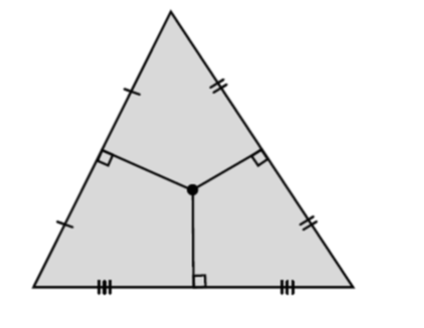
Name the point of concurrency shown.
a)
Circumcenter
b)
Incenter
c)
Supercenter
d)
Neither
52.
Point P is the circumcenter, which segment is equal to PB
a)
DA
b)
AC
c)
PC
d)
PF
53.
Use the Perp Bisector Theorem to find PQ
a)
10
b)
3
c)
-2
d)
5
54.
Use the Perp Bisector Theorem to find DC
a)
4
b)
1
c)
2
d)
3
55.

One of the examples from the video is shown. What is the length of BG?

a)

8

b)

16

c)

17

d)

34

56.

P is the incenter of triangle JKL. Find OP.

a)

8

b)

13

c)

17

d)

4

57.

P is the incenter of triangle JKL. Find ML.

Hint: you will have to use pythagorean theorem

a)

8.95

b)

9.35

c)

10.25

d)

12.65

58.
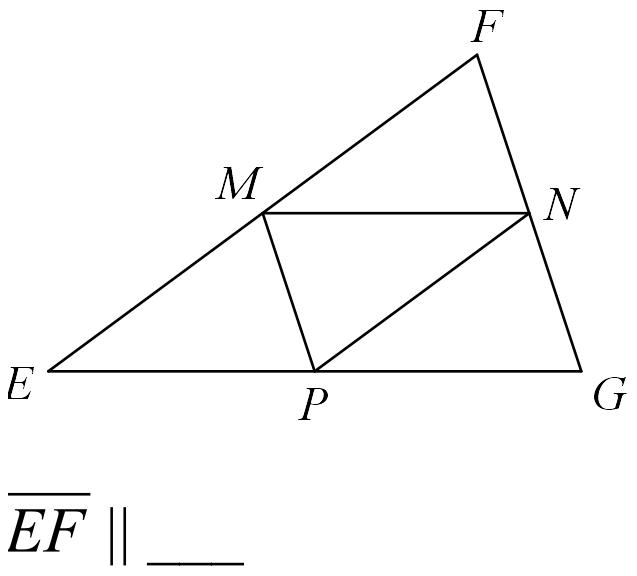
What segment is parallel to EF?
a)
Segment PM
b)
Segment MN
c)
Segment NP
d)
Segment FG
59.
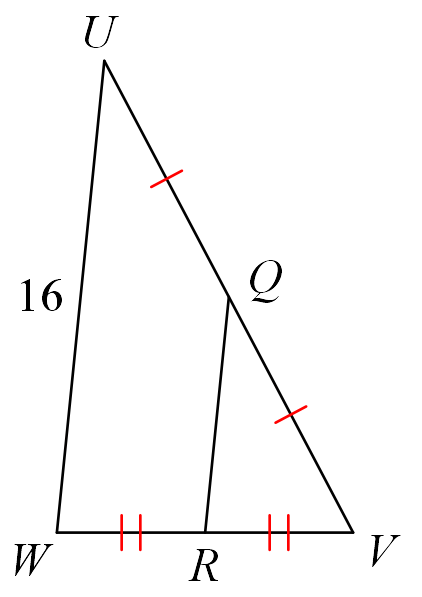
QR is a midsegment of triangle WUV. What is the length of segment QR?
a)
4
b)
8
c)
16
d)
32
60.
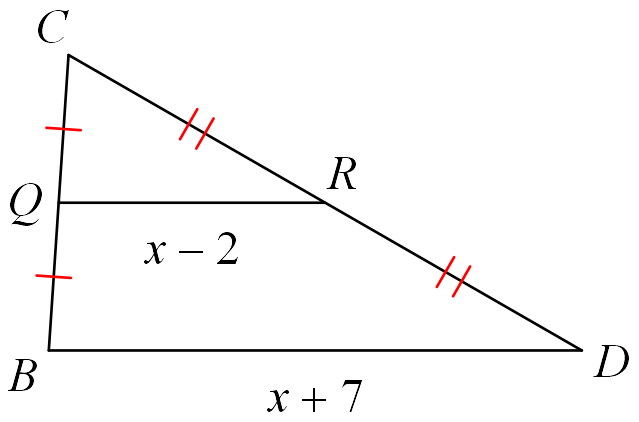
QR is a midsegment of triangle BCD. Solve for the value of x.
a)
11
b)
18
c)
9
d)
-7
61.
Find the length of AB
a)
6
b)
11
c)
17
d)
68
62.

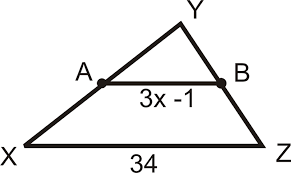
Find x

a)
x = 15
b)
x = 13
c)
x = 12
d)
x = 11
63.

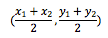
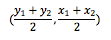
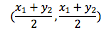
Which of the following is the correct midpoint formula given two endpoints (x1, y1) and (x2, y2)?
a)
b)
c)
d)
64.

The middle of a line is called the _______________.

a)

endpoint

b)

midpoint

c)

slope

d)

distance

65.

Find the midpoint of the line segment with the given endpoints (3,9) and (5,9)

a)

(-1,0)

b)

(4,9)

c)

(6,7)

d)

(7,9)

66.
What is the midpoint between (-4,4) and (-2,2)?
a)
(3,2)
b)
(-3,3)
c)
(4,5)
d)
(6,7)
67.

Find the midpoint of the line segment with the given endpoints (6,-6) and (-10,-10)

a)

(8,2)

b)

(-26,-14)

c)

(0,-10)

d)

(-2,-8)

68.

Find the distance between each pair of points. Round your answer to the nearest tenth, if necessary.

a)

A

b)

B

c)

C

d)

D

69.

Which of the following formulas is the distance formula?

a)

(x1+x22, y1+y22)\left(\frac{x_1+x_2}{2},\ \frac{y_1+y_2}{2}\right)

b)

(x2x1)2+(y2y1)2\sqrt{\left(x_2-x_1\right)^2+\left(y_2-y_1\right)^2}

c)

a2+b2=c2a^2+b^2=c^2

d)

y2y1x2x1\frac{y_2-y_1}{x_2-x_1}

70.

What is the slope between the points

(-3, -4) & (7, 6)?

a)

0

b)

-1

c)

2

d)

1

71.

Which image shows the construction of a perpendicular bisector?

a)
b)
c)
d)
72.

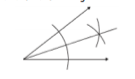
Which of the following shows the construction of an angle bisector?

a)
b)
c)
d)
73.

Which of these is a set of perpendicular lines?

a)
b)
c)
d)
74.

Which of these illustrates the construction of a perpendicular line through a given point

a)
b)
c)
d)
75.
Which of the following constructions is illustrated?
a)
An angle is congruent to a given angle
b)
The bisector of a given angle
c)
The bisector of a given segment
d)
The perpendicular bisector of a given segment.
76.
Nate is constructing angle bisector to angle ABC.  Where did he position his compass to create the two arcs that intersect at the interior of the angle?
a)
He fixed his compass on B and drew both arcs.
b)
He fixed his compass on points A and C.
c)
He fixed his compass on points D and E.
d)
He fixed his compass on points B and E.
77.
To inscribe a hexagon inside a circle, which length should you set your compass to?
a)
The radius
b)
The diameter
c)
Half of the radius
d)
It depends on the size of the circle
78.
Solve for x
a)
5
b)
90
c)
25
d)
10
79.
Find the measure of the indicated angle. 
a)
95
b)
85
c)
35
d)
45
80.

Find angle a


(you do not need the degrees ° symbol in your answer)

(a)  

81.

Find angle a


(you do not need the degrees ° symbol in your answer)

(a)  

82.

Find angle a


(you do not need the degrees ° symbol in your answer)

(a)  

83.

Find angle c


(you do not need the degrees ° symbol in your answer)

(a)  

84.
The dotted line represents a ?...
a)
median
b)
centroid
c)
midsegment
d)
midpoint
85.
The figure is an example of a(n) ...
a)
angle bisector
b)
perpendicular bisector
c)
median
d)
midsegment
86.
Which of the following segments represents an altitude?
a)
BX
b)
AZ
c)
AC
d)
BZ
87.

Use the figure to determine which of the following angles has the greatest measure:   4,  8, 9\angle\ 4,\ \angle\ 8,\ \angle9  

a)

4\angle4  

b)

8\angle8  

c)

9\angle9  

d)

Not enough information