wayground logo

Free Printable Worksheets

NEW

Font size

S
M
L
XL
Worksheets

Cells, Microscopes, Levels of organisation

Total questions: 20

Worksheet time: 11mins
Name
Class
Date
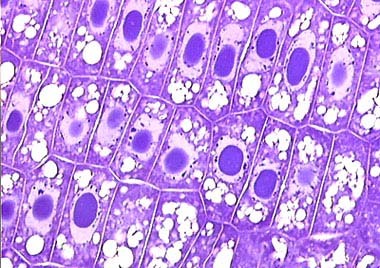
1.
This is a example of ........
a)
cell
b)
organ system
c)
organ
d)
tissue
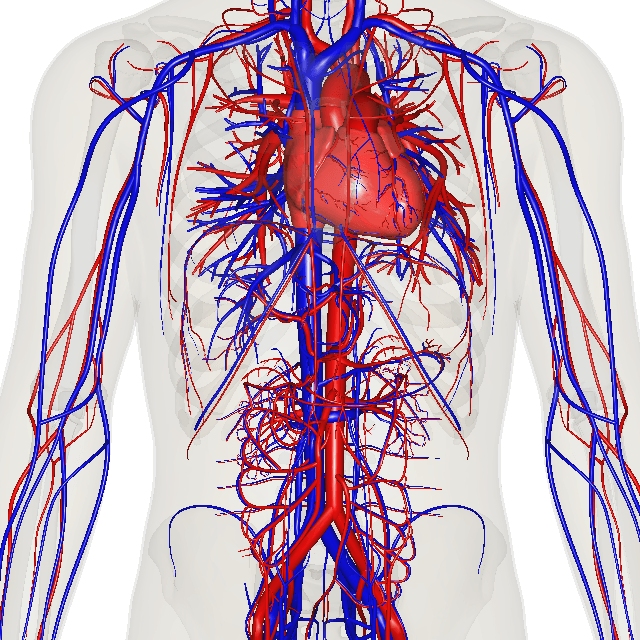
2.
This is a example of ........
a)
cell
b)
tissue
c)
organ 
d)
organ system
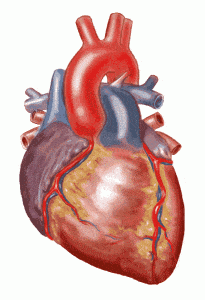
3.
This is a example of ........
a)
organ
b)
organ system
c)
tissue
d)
cell
4.
The second part of Cell Theory states: "All living organisms are made up of cells."
a)
True
b)
False
c)
I don't know
d)
If you say so
5.
All cells come from___________ cells.
a)
pregnant
b)
pre-existing
c)
paternal
d)
pin size
6.
There are three parts to the cell theory. Which is NOT one of those parts?
a)
All organisms are composed of one or more cells.
b)
The cell is the basic unit of structure and organization in organisms.
c)
Cells spontaneously arise from carbon and nutrients carried in the bloodstream.
d)
All cells come from pre-existing cells.
7.
What is the name of the structure labeled #10?
a)
objective lens
b)
ocular lens
c)
aperture
d)
nosepeice
8.
A microscope has an ocular magnification of 10 and a high power objective magnification of 50. What is the highest total magnification of the microscope?
a)
500x
b)
400x
c)
50x
d)
40x
9.
What is wrong this how the student is carrying the microscope in the image?
a)
They are using two hands.
b)
They are carrying it close to their body.
c)
The plug is not wrapped around the base.
d)
They are walking. 
10.
When looking at a specimen on your slide, you should always start with the
a)

low objective lens (x4)

b)
medium objective lens
c)
high objective lens
d)
super extra high power lens
11.

What piece is a larger knob usually found on either the body tube or the arm and it is used to focus the image under low power?

a)

Aperture

b)

Fine Adjustment Knob

c)

Diaphragm

d)

Coarse Adjustment Knob

12.

When would you use the diaphragm?

a)

When you wanted to move the stage

b)

When you wanted to adjust the brightness of the light that enters the microscope

c)

When you wanted to put the microscope away

d)

When you sneeze

13.

Which organelle is the command center or BRAIN for eukaryotic (plant and animal) cells? It contains the DNA for the cell.

a)

Cell wall

b)

Nucleus

c)

Mitochondria

d)

Lysosome

14.

What is the difference between mitochondria and chloroplast?

a)

Mitochondria produces oxygen and chloroplasts breaks down waste products.

b)

There is no difference, they are the same.

c)

Mitochondria breaks down energy from food so that it can be used by the cell and chloroplasts produce energy from sunlight.

d)

Mitochondria contains DNA and chloroplasts are blue

15.

What does a plant cell have that an animal cell does NOT have?

a)

Cell Membrane and Cell Wall

b)

Cell Wall and Mitochondria

c)

Cell Wall and Nucleus

d)

Cell Wall and Chloroplast

16.

What is the jelly-like substance that keeps the organelles in place?

a)

Cell Membrane

b)

Nucleus

c)

ER

d)

Cytoplasm

17.
Which organelle is sometimes called the "powerhouse" of the cell because it supplies the cell with energy?
a)
Mitochondria
b)
Vacuole
c)
Nucleus
d)
Cell Membrane
18.
Which organelle provides the plant cell with extra support and protection? 
a)
Cell Wall
b)
Chloroplast
c)
Cytoplasm
d)
Nucleus
19.

The _____________ stores food, water, wastes, and other materials in both plant and animal cells.

a)

Vacuole

b)

Mitochondria

c)

Cytoplasm

d)

Nucleus

20.

Which structures shown in the above diagram are most useful for identifying this type of cell?

a)

I, II, V

b)

I, IV, V

c)

I, III, IV

d)

All structures are helpful to identify this cell