
 Worksheets
Energy Stores and Transfers
Total questions: 34
Worksheet time: 25mins
A car moves faster? Which energy store increases?
Gravitational Potential Energy
Kinetic Energy
Thermal Energy
The energy in which store decreases as a candle burns?
Chemical energy store
Kinetic energy store
Nuclear energy store
An elastic band is stretched. Which energy store increases in energy?
Gravitational Potential
Chemical
Elastic
Kinetic
Energy is transferred _______________ due to charge flowing around a circuit.
Electrically
Kinetic
Mechanically
By radiation
________ is when energy is transferred between areas that have different temperatures.
By radiation
By heating
Mechanically
Nuclear
When you eat fruits and vegetables, the energy is stored as ...
a. thermal energy
b. food energy
c. electrical energy
d. chemical energy


Food, fuels and batteries have energy in this energy store
Chemical
Thermal
Gravitational Potential
Elastic

Two negatively charged particles which are close together have energy in this energy store
Electrostatic
Magnetic
Nuclear
Elastic

Shooting an arrow from a bow converts ____ into kinetic energy.
Elastic potential energy
Chemical energy
Gravitational potential energy
Thermal energy
A ____ converts chemical energy into kinetic energy?


Two magnets close together have energy in this energy store.
Chemical
Elastic
Magnetic
Gravitational Potential
Energy can not be (a) or destroyed, it can only be (b) from one (c) to another
Match the equations to what they are used to find

Kinetic Energy

Work Done

Elastic Potential Energy

Gravitational Potential Energy

Energy Efficiency
Energy store or Transfer Pathway?
Kinetic
Elastic Potential
Gravitational Potential
Magnetic
Electrostatic
Chemical Potential
Mechanically
Electrically
Heating (conduction)
Radiation (EM Waves)
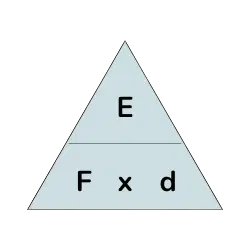
Calculate the force needed to move an object 2m using 50J of energy
(a)
Calculate the energy needed to move an object 2km using a force of 500N?
(a)
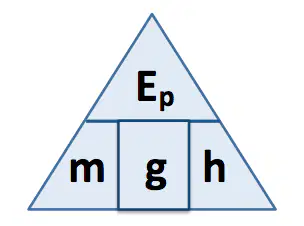
Calculate the energy required to hold a mass of 2kg at a high of 2m when the gravity on Earth is 10N/Kg
(a)
An object that weighs 10kg is lifted 5m in the air using 2000J of energy. What is the gravity on the planet?
(a)
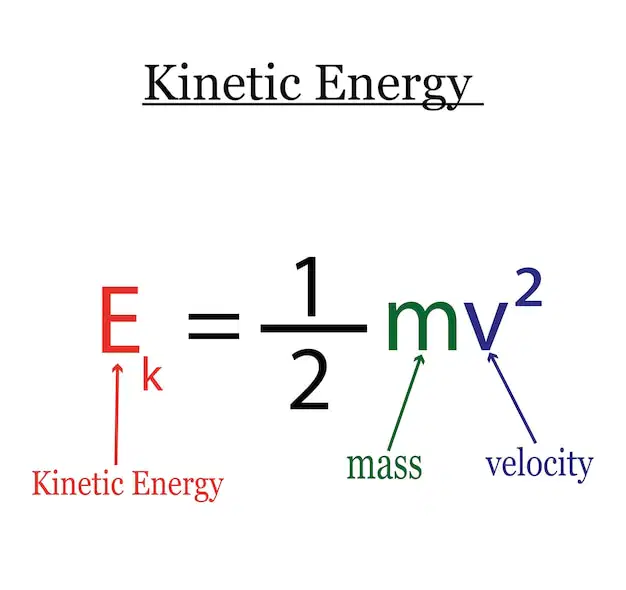
A car travels at 20m/s and has a mass of 500kg. How much kinetic energy does it have?
(a)

A washing machine has an energy efficiency of 60%. 2000J are transferred to the machine over 10 minutes. How much useful energy is transferred?
(a)
A fridge has an input of 5kW. 2.3KW are transferred as useful energy. What is the efficiency?
(a) %
Which two of the following statements are good reasons for using fossil fuels to generate electricity?
Supplies of fossil fuels are limited.
Fossil fuels can be used to generate electricity at any time.
Fossil fuels are non-renewable.
A few large power stations can generate the electricity for a million homes.
Burning fossil fuels produces carbon dioxide.
Which of the following is/are not a renewable energy source?
oil
solar
wind
coal
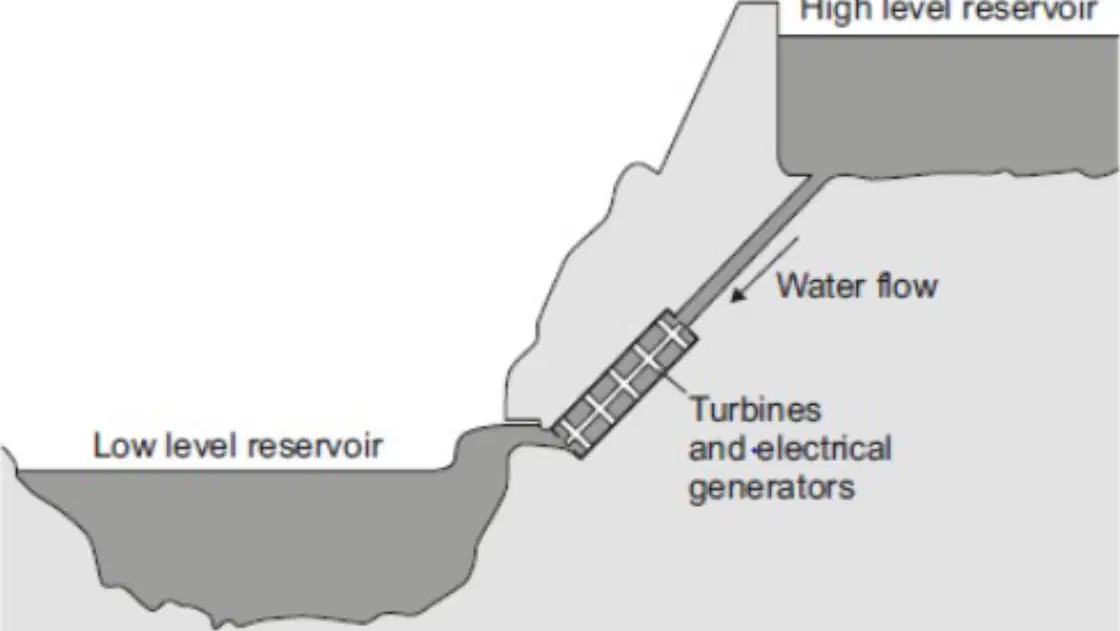
Energy is stored and released in a pumped storage power station by:
Using solar panels to generate electricity
Pumping water to a higher elevation and releasing it to generate electricity
Burning fossil fuels to produce steam
Using wind turbines to generate electricity
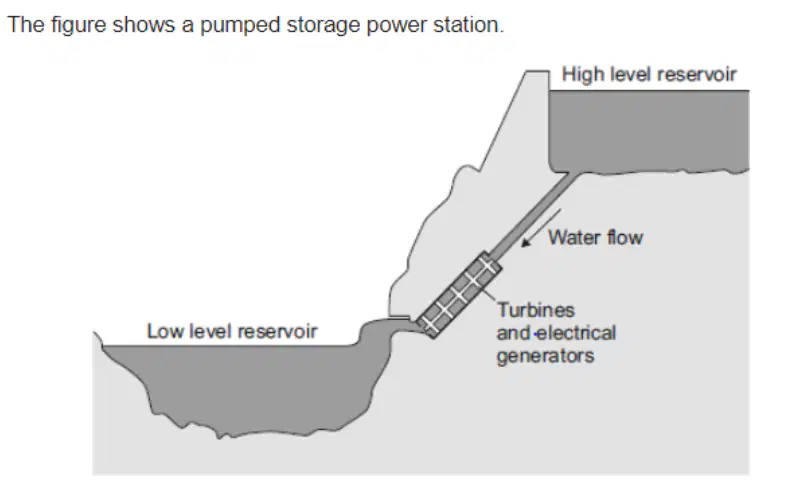
When electricity is needed the water in the high level reservoir is allowed to flow to the low level reservoir. The flowing water generates electricity. The flowing water has a store of .............................. energy.
kinetic
potential
thermal
chemical
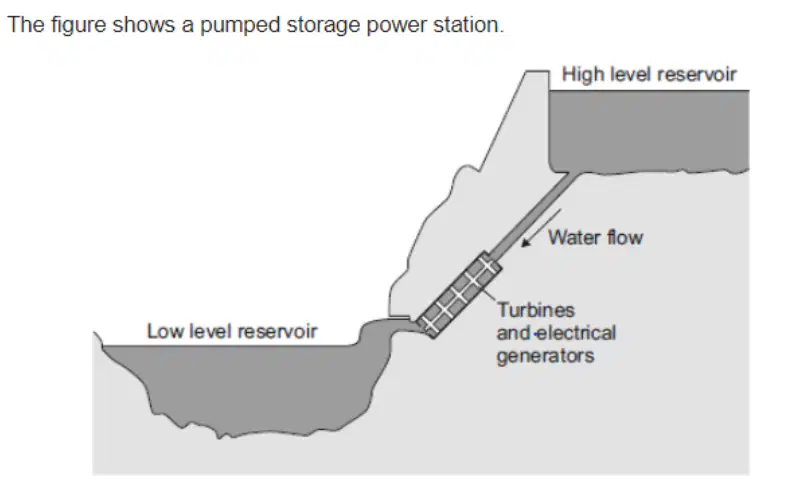
When electricity is needed the water in the high level reservoir is allowed to flow to the low level reservoir. The flowing water generates electricity. The water turns the ........................... which is connected to a generator.
turbine
wheel
pump
valve
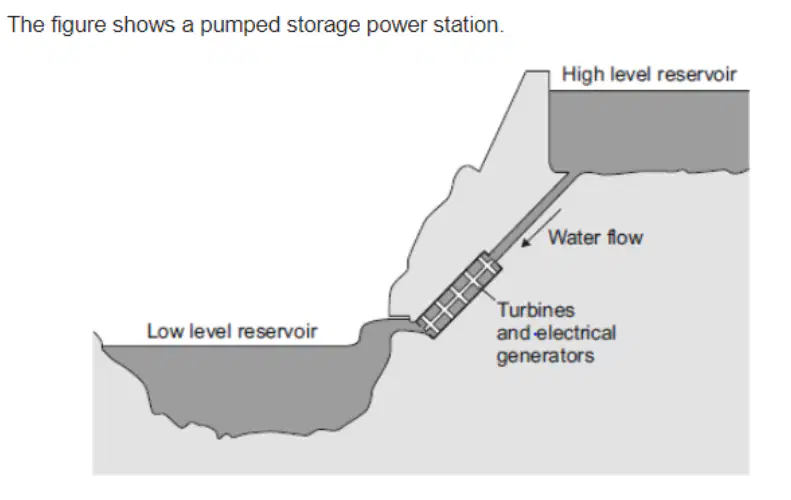
When electricity is needed the water in the high level reservoir is allowed to flow to the low level reservoir. The flowing water generates electricity. The generator transfers some energy as ................................ which is wasted.
heat
light
sound
kinetic energy
Different energy sources are likely to be used up first. Which two of these energy sources is likely to be used up first?
tides
Sun
oil
gas
waves
Wind is a renewable energy resource. Which of the following describes the source of energy that creates wind?
A. The Earth turning on its axis.
B. The Gravitational pull of the Moon.
C. Heat energy from the Sun.
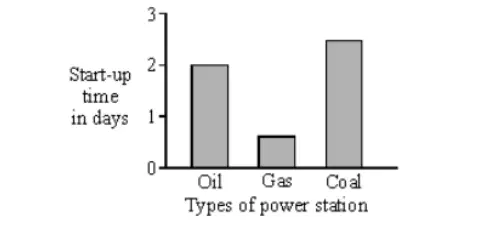
The bar chart shows the start-up time for different types of fuel-burning power station. Which power station would be slowest to start generating electricity?
oil
gas
coal
Mix and match the items from List A with List B.
Uses energy from falling water
Hydroelectric
Uses energy from inside the Earth
Geothermal
Is unpredictable
Nuclear
Produces dangerous waste
Nuclear
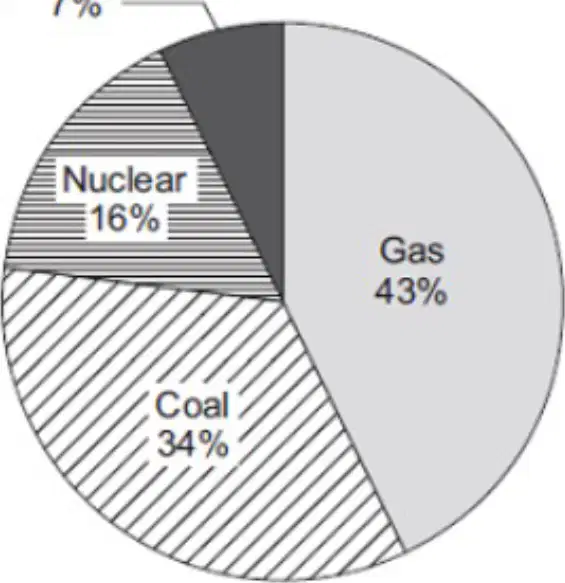
Calculate the percentage of electricity generated using fossil fuels. Use the pie chart to determine the answer.
25%
50%
75%
100%

