wayground logo

Free Printable Worksheets

NEW

Font size

S
M
L
XL
Worksheets

Electricity Remediation

Total questions: 37

Worksheet time: 35mins

Name
Class
Date
1.
Which best describes a parallel circuit?
a)
Electricity flows along one pathway.
b)
The flow of electricity comes from one source. 
c)
Electricity flows along more than one pathway. 
d)
The flow of electricity comes from more than one source. 
2.
Which best describes a series circuit? 
a)
It has two light bulbs. 
b)
The same current flows through both light bulbs. 
c)
It uses a single battery.
d)
The current is divided between the light bulbs. 
3.
This is an example of a _______ circuit
a)
open
b)
series
c)
parallel
d)
square
4.
this is the symbol for a _____?
a)
switch
b)
light 
c)
battery
d)
wires
5.
What will happen if one light bulb is removed from this circuit?
a)
the other bulbs will go out
b)
the other bulbs will get dimmer
c)
the other bulbs will get brighter
d)
the battery will become stronger
6.
A particle that carries a negative electric charge is called a(n) ______.
a)
neutron
b)
atom
c)
proton
d)
electron
7.
When you charge an electroscope by touching it with a charged balloon, the process is called _____.
a)
friction
b)
conduction
c)
induction
d)
grounding
8.
The potential difference that causes charges to move in a circuit is ___.
a)
voltage
b)
resistance
c)
current
d)
electric discharge
9.

Which of these materials is a good conductor of electricity?

a)

Rubber

b)

Metal

c)

Newspaper

d)

Glass

10.

How can it be explained that someone's hair can stick to a balloon?

a)

There is static electricity

b)

There is too much dust in the air

c)

A parallel circuit was too long

d)

The person needs to wash his hair

11.

A penny is an example of

a)

An insulator

b)

an electron

c)

a proton

d)

a conductor

12.
The flow of electricity in a circuit-
a)
current
b)
flow
c)
circuit
13.
To complete a circuit the switch must be
a)
unattached
b)
open
c)
closed
14.
If the lights are on, the circuit is
a)
closed
b)
open
15.
What subatomic particles would you find in the nucleus of an atom?
a)
Protons only
b)
Protons and Neutrons
c)
Neutrons and Electrons
d)
Protons and Electrons 
16.

What is the effect of two negatively charged objects coming near each other.

a)

The objects repel each other.

b)

The objects attract each other.

17.

An object with a negative charge will be most strongly attracted to which of the following?

a)

an object with a weak positive charge

b)

an object with a strong positive charge

c)

an object with a weak negative charge

d)

an object with a strong negative charge

18.
The accumulation of excess electric charge on an object is called
a)
Static electricity 
b)
Electric discharge
c)
Resistance
d)
Circuit 
19.
If a substance has an excess number of electrons on its surface, what type of charge does it have?
a)
A negative charge
b)
A positive charge
c)
A neutral charge
d)
A nuclear charge
20.

If one object is positively charged and the other is negatively charged, what will happen?

a)

nothing will happen

b)

they will repel each other

c)

they will attract each other

d)

they will push each other away

21.
What size resistor would produce a 3 Amp current flow with a 12 Volt battery
a)
1 Ohm
b)
3 Ohms
c)
4 Ohms
d)
12 Ohms
22.

The total resistance (RT) is equal to the sum of all of the resistances (i.e., R1 + R2 + R3) in a series circuit.

a)

True

b)

False

23.

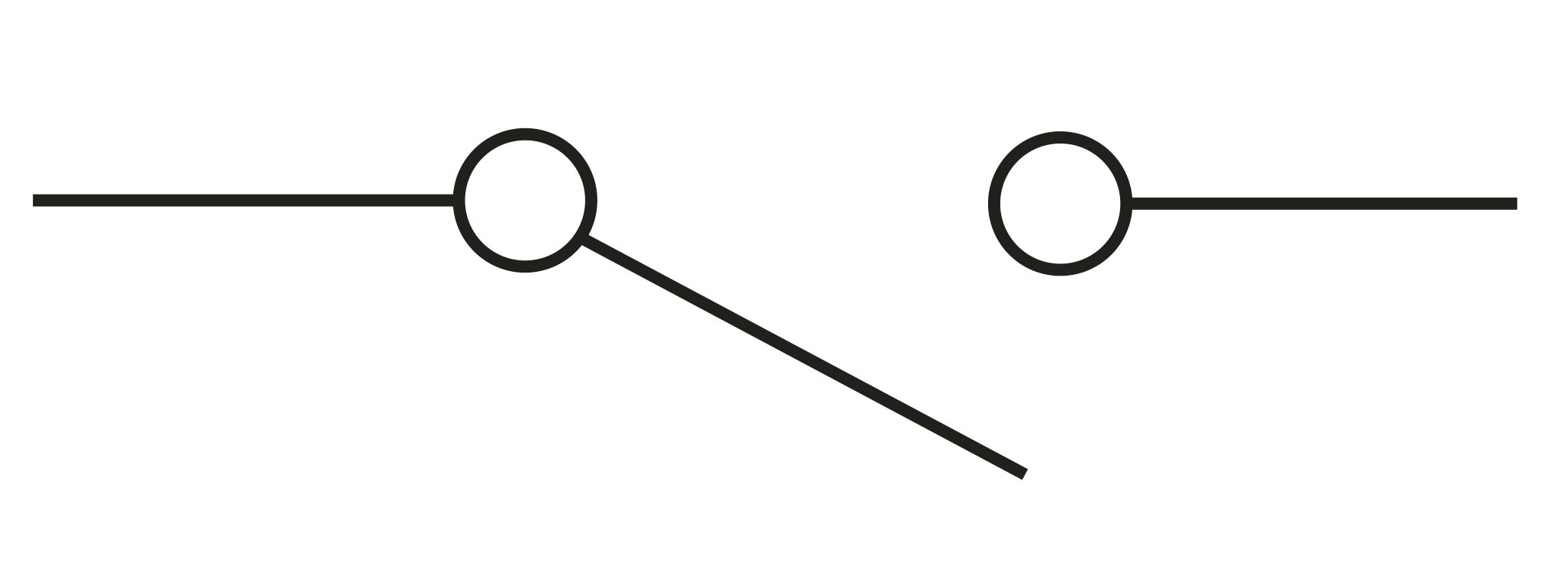
Identify the symbol?

a)

Switch

b)

Electric cell

c)

Battery

d)

Bulb

24.

What needs to be done to this circuit so that the lamp lights up?

a)

Close the switch

b)

Add an energy source and close the switch

c)

Add another lamp

d)

Add another lamp and a switch

25.
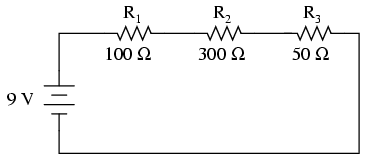
The total resistance in this circuit is 
a)
100 ohms
b)
450 ohms
c)
400 ohms
d)
30 ohms
26.
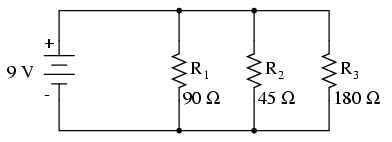
The total resistance of this circuit is 
a)
25.7 ohms
b)
315 ohms
c)
324 ohms
d)
90 ohms
27.
If a negatively charged rod touches a conductor, the conductor will be charged by what method? 
a)
Friction
b)
Conduction
c)
Induction
d)
Convection
28.
The process of transferring charge between objects by touching or rubbing
a)
charging by induction
b)
static discharge
c)
charging by contact
d)
proton
29.
An object becomes negatively charged by
a)
losing protons
b)
gaining electrons
c)
losing electrons
d)
gaining protons
30.
An object becomes positively charged by
a)
losing protons
b)
gaining electrons
c)
losing electrons
d)
gaining protons
31.
Charging by friction requires rubbing. Charging by contact requires ...
a)
rubbing
b)
touching
c)
no contact
32.
If you rub a glass rod with a piece of silk, the rod becomes positively charged. This means that
a)
friction destroyed electrons in the rod.
b)
the silk has become negatively charged.
c)
protons have moved to the rod.
d)
glass attracts more protons.
33.
In a series circuit, which of the following is the same throughout the circuit?
a)
Resistance
b)
Voltage
c)
Current
d)
Power
34.
What is current measured in?
a)
Ω (Ohms)
b)
V (Volts)
c)
A (Amps)
d)
W (Watts)
35.
What is voltage?
a)

The flow of protons

b)
The number of charged particles that pass each second
c)
The difference in potential energy of charged particles
d)
The rate at which energy is being transformed
36.
What voltage is needed to produce 2A of current through a 10Ω resistor?
a)
20V
b)
0.2V
c)
5V
d)
2V
37.
A circuit with 3 resistors, 20 Ohms, 10 Ohms, and 20 Ohms are in series. What is the total resistance?
a)
43 Ohms
b)
50 Ohms
c)
60 Ohms
d)
33 Ohms