
 Worksheets
TEST 4 Review - Nucleic Acids, Central Dogma/Protein Synthesis
Total questions: 41
Worksheet time: 41mins

The monomers and building blocks of proteins are called ...
Carbohydrates
Hydrochloric Acids
Nucleic Acids
Amino Acids

The monomers of nucleic acids are called...
Monosaccharide
Amino Acid
Fatty Acid
Nucleotide
Enzymes are an example of which macromolecule?
Carbohydrates
Lipids
Proteins
Nucleic Acids
This is the only macromolecule that contains Phosphorus (P)
Proteins
Carbohydrates
Lipids
Nucleic Acids
(previous knowledge)
Which of the following provides the Energy needed for the process of Protein Synthesis?
ATP
Ribosome
Karyotype
DNA
Which one is NOT a part of a nucleotide?
a base
a protein
5-carbon sugar
a phosphate group
What is the function of DNA?
Provides cellular energy
Carries genetic information
Creates proteins
Allows things to enter and leave the cell

The function of this biomolecule is to:
form the building blocks of structure-
(hair, muscle, skin, nails, bones)
as well as enzymes
and hormones to regulate life processes.
Nucleic Acids
Carbohydrates
Lipids
Proteins

What is the type of bond created when two amino acids bond together in translation?
Hydrogen Bond
Covalent Bond
Ionic Bond
Peptide Bond
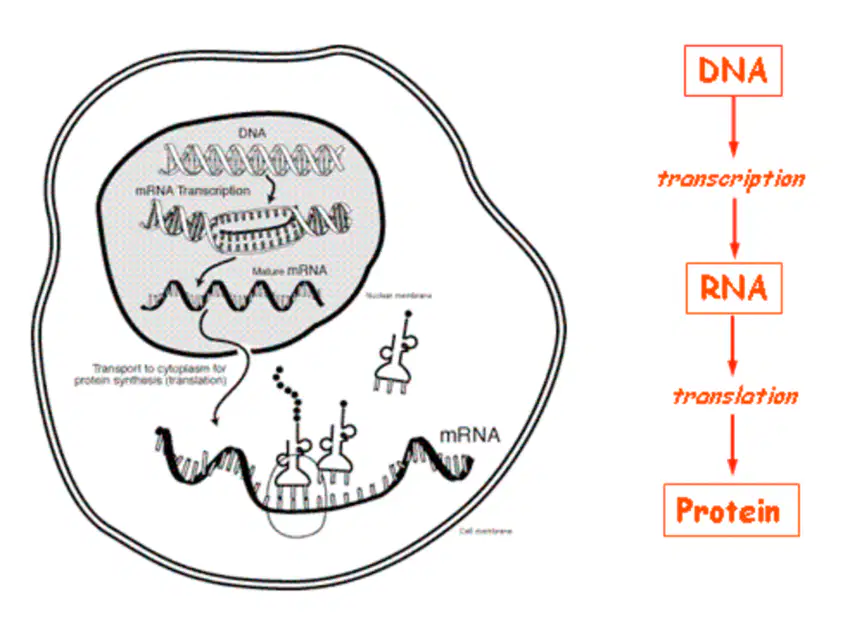

Which organelle reads the mRNA to synthesize (make) a protein?
Ribosome
Nucleus
Cytoplasm
Nucleotide

Which type of RNA brings amino acids to the ribosome to make a protein?
DNA

A ←→ U
C ←→ G
T → A
What do these represent?
Homeostasis
Mitosis
Base Pairing Rules for Replication
Base Pairing Rules for Transcription
What are the three types of mutations that occur in DNA?
Deletion, Inversion, Substitution
Inversion, Deletion, Insertion
Insertion, Inversion, Substitution
Normal-
GAG-CTC-GAC
Mutant
GAG CTC-CAC
Which of the following is an example of a beneficial mutation?
Increases immunity to a disease
Decreases immunity to a disease
Increases weight gain
Causes cystic fibrosis
DNA molecule segment is : TTA CGC AAG
The mutated DNA segment is TTC GCA AG. This is an example of ___ mutation.
a Substitution
a Deletion
an Insertion
an Inversion

Does this karyotype belong to a male, or a female?
Male
Female
Karyotypes are pictures of
Cells
Specific genes
Chromosomes
Proteins
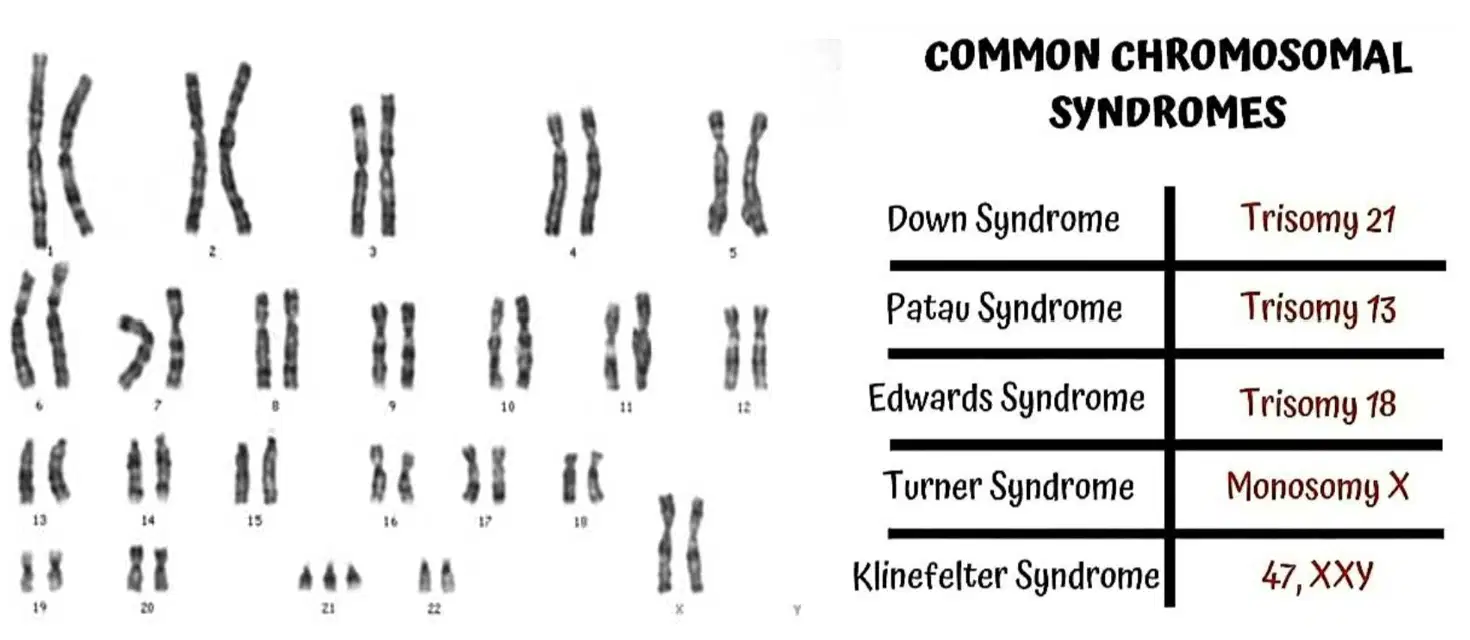
This syndrome occurs when a person has an extra chromosome on the 21st pair.
Patau Syndrome
Turner Syndrome
Kleinfelter Syndrome
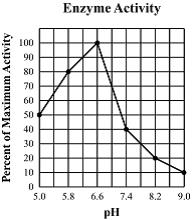
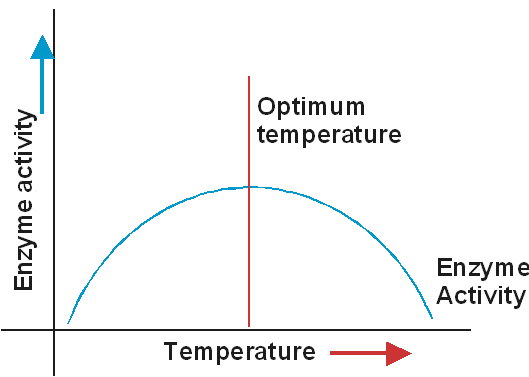
Which of the following conclusions can be drawn from this graph?
Optimum = Best
The optimum pH of the enzyme is 6.6.
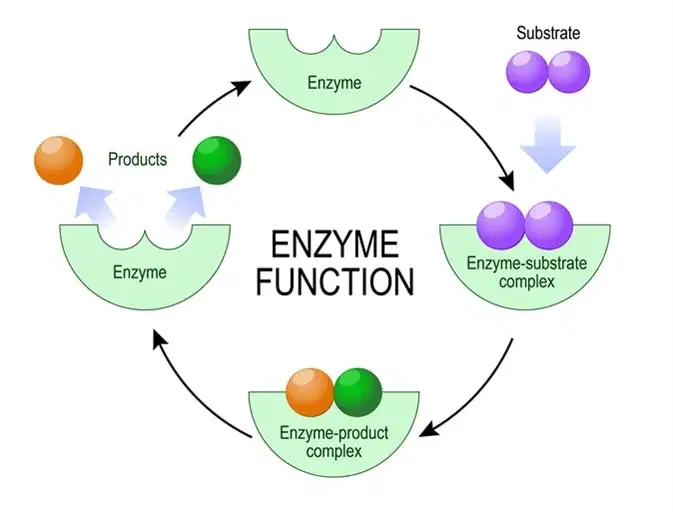
Which of the following statements about enzymes is NOT true?
Enzymes can denature (change shape) when the temperature gets too high.
Enzymes can only be used once, then must be replaced.
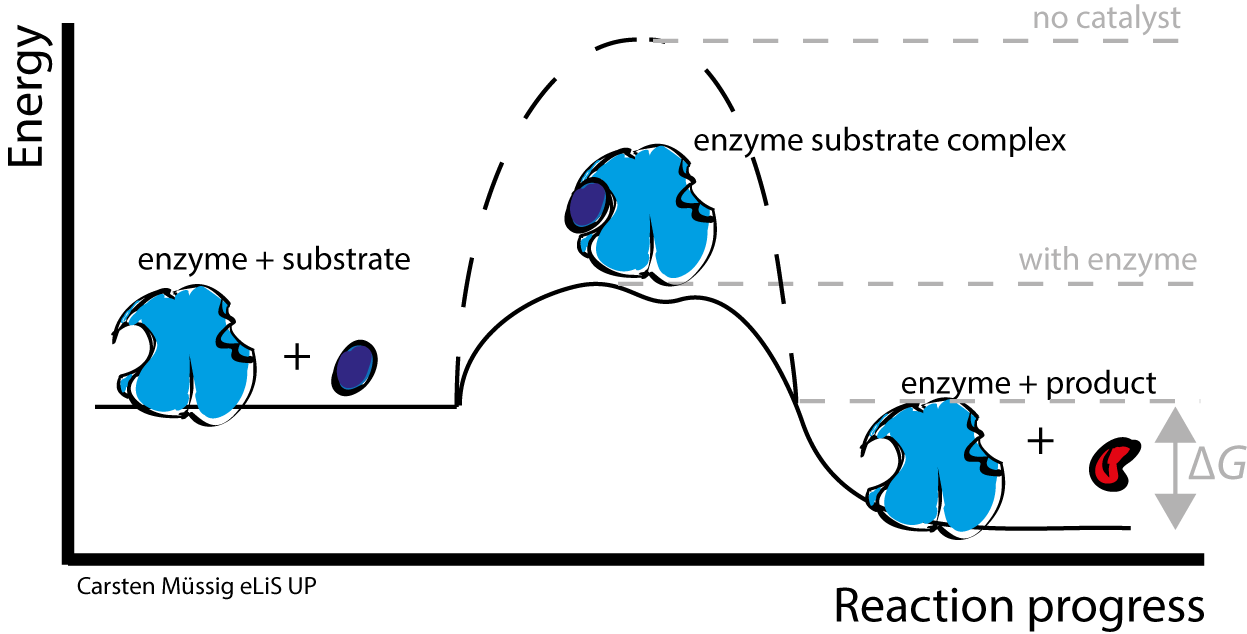
A ___ is a substance that speeds up chemical reactions.
reusable
catalyst
specific
fragile

What does the structure at letter B represent?
substrate
active site
enzyme
products

What does the structure at letter C represent?
products
substrate
enzymes
active site
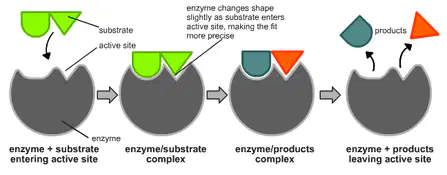
What is the name for the mechanism of enzyme activity that is seen in the image?
Jigsaw Puzzle
Hammer and Nail
What does an enzyme need in order to work properly?
The right amount of oxygen & CO2
The right temperature & amount of water
The right temperature & pH
The right temperature & pressure
Enzymes are specific. This means that an enzyme only works with molecules that are....
the right size and shape
broken down already
present in water
too big for the body to handle
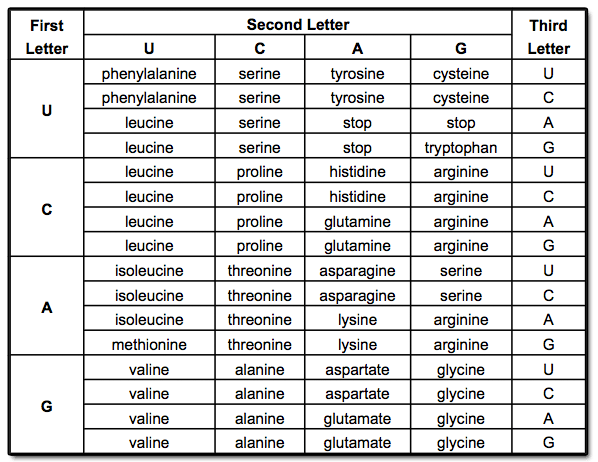
What is the correct amino acid sequence for the mRNA code
AUG CCA GUA UGA
Met-Pro-Val
(Met-Pro-Val-Stop)
Tyr-Gly-His
(Tyr-Gly-His-Stop)

What is the correct sequence of protein synthesis?
A. tRNA brings amino acids to the ribosome
B. DNA molecules serve as the templates for mRNA.
C. mRNA molecules move to ribosomes.
D. Polypeptides are formed on ribosomes.
C-D-A-B
B-C-A-D
C-B-A-D
B-A-C-D

