
NEW
Font size
 Worksheets
Progressive Era Assessment
Total questions: 37
Worksheet time: 19mins


What did the Supreme Court case, Plessy v. Ferguson (1896) do?
it banned segregation in public schools
it legalized public segregation under the "separate but equal" doctrine
it banned segregation in public transportation
it delegated the issue of segregation to the states
The Gilded Age (1880s-1900s) featured the growing power of big business and their monopolization of industries. Such economic power prevented competition and manipulated consumer prices. What did Congress do as a response?
Congress passed the Sherman Antitrust Act
Congress passed the Voting Rights Act of 1965
Congress passed laws protecting monopolies
Congress passed the Clayton Antitrust Act
What did the 19th amendment do?
It allowed for the direct election of senators.
It banned the sale of alcohol.
It allowed women's suffrage
It allowed 18 year olds and over to vote
Famer's Political Party
A.I.M.
Populists
Chicanos
Famer's Unite
Organization founded by WEB Dubois
NAACP
NCAPP
AANP
CAPP
Jane Addams MOST contributed to Progressivism by --
supporting the emerging philosophy of Social Darwinism
promoting social reform on American Indian reservations
forming the Women’s Christian Temperance Union
spreading the settlement house movement by founding Hull House

Reforming means
Changing something for the better
Controlling something
Buying something
Approving Something
Suffrage is -
the right to vote
the right to suffer
the right to live
the right to speak

In the cartoon above, President Theodore Roosevelt is depicted doing which of the following?
Standing guard to protect big business
Enforcing the Sherman Anti-Trust Act
Leading a government take-over of large industries
Putting an end to industries that might harm the environment

A major purpose of the Progressive movement (1900-1917) was to....
stimulate the economy
support government control of factory production
encourage immigration from southern and eastern Europe
correct the economic and social abuses of industrial society
What do you call a change to the Constitution?
amendment
introduction
preamble
articles
During the Progressive Era more American achieved individual rights
True
False
Which goal was shared by both the Populists and the Progressives?
the free coinage of silver
expansion of opportunities for immigrants
greater control of the government by the people
equality for African Americans
“Today three-fourths of the people in New York City live in tenements, in the 19th century drift of the population to the cities is sending ever-increasing multitudes to crowd them. The fifteen thousand tenant houses that were the despair of the sanitarium in the past generation have swelled into thirty seven thousand, and more than twelve hundred thousand persons call them home.”
-Jacob Riis How the Other Half Lives, 1890
The main idea of this excerpt from Jacob Riis’ book is that-
Cities are unable to handle the flow of new arrivals
The treatment of African Americans remains almost as bad as under slavery
Farmers can find a higher living standard if they leave the farm and move to the city
Certain laws are needed to protect consumers from deceptive practices
What is another name for trust?
Belief
Banking
Anti-Trust
Monopoly
What did the Temperance Movement believe was contributing to the moral decline of the United States?
Drugs
Alcohol
Relgion
All of the above
What did the Temperance Movement lead to?
Prohibition of alcohol
World War II
Extreme riots and protests
Increased consumption of alcohol
Jim Crow laws
Segregated blacks and whites
Killed minorities
Resulted in slavery
Were ended after the Civil War
This was the Supreme Court case that legalized segregation in America
Dred Scott v. Sanford
Marbury v. Madison
Plessy v. Ferguson
Garrett v. NFL
Forcing a person to read a paragraph before they were allowed to vote is called a
Poll Tax
Literacy Test
Grandfather Clause
Lynching
Forcing a person to pay a fee to vote is called a
Poll tax
Lynching
Literacy Test
Grandfather clause
This civil rights leader thought that Black Americans should accept racism and embrace a long term fight for equality
W.E.B DuBois
Booker T. Washington
Where Were Jim Crow Laws Mainly Used?
Eastern Shore
South
North
WEB DuBois
founded the NAACP
worked in a salt mine at age 9
was born in Tennessee
taught job skills to African-Americans
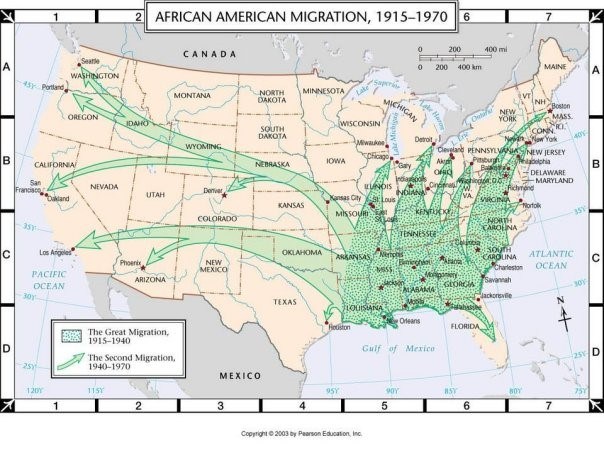
By 1910 where did the majority of African-Americans live?
The South
The North
The East
The West

It was hard for black people to find jobs in the south because of __________, which made segregation legal.
Jim Crow laws
Slave laws
Segregational Act of 1900
Civil Rights

What area of New York did many African Americans move to? It became known for artistic, poetic, intellectual and musical creativity.
The Bronx
Harlem
Staten Island
Queens
True or False: The Great Migration had a huge impact on the Harlem Renaissance?
True
False

